How Bright Are LED Neon Signs? Lumens, Intensity and Dimmers
- LED neon signs typically emit 100 to 300 lumens per meter of tube, a few hundred lumens overall for a mid-sized sign. That is ambient glow like a soft bedside lamp, not ceiling-level task light.
- You get what drives intensity, how dimmers work day and night, and how LED neon compares with glass tube.
LED neon signs are bright enough to read from across a street at night, yet they're ambient lighting, not task lighting: a typical sign emits a few hundred lumens, comparable to a soft lamp rather than a ceiling light. Brightness depends on color, tube length and LED density, and a dimmer adjusts it to the moment.
Brightness is the question buyers ask third, after price and size, and it's the one with the most confusing answers online. So let's clear it up properly. Every Helioneon sign ships with a dimmer as standard, and when you design your own neon sign, the free 3D mockup within 24 hours helps you judge scale and presence before anything is made.
Lumens vs watts: what actually measures brightness
Watts measure how much power a light consumes. Lumens measure how much light it emits. The two used to travel together in the incandescent era, when a 60W bulb reliably meant about 700 lumens, but LEDs broke that link: a modern LED produces the same 700 lumens from 8 to 10 watts.
So ignore watts when judging brightness. For scale: a candle gives roughly 12 lumens, a bedside lamp 300 to 500, a living room ceiling light 1,500 or more. LED neon tube typically emits somewhere in the range of 100 to 300 lumens per meter depending on color and density, which places a mid-sized sign firmly in bedside-lamp territory. That's by design, and it's the right design.
Total lumen output is only half the story of how bright a tube looks on the wall. The Wikipedia page Luminance defines luminance as luminous intensity per unit area in a given direction, which tracks more closely with the punch you see on a glowing line than a single lumen total alone.
Is a neon sign bright enough to light a room?
Not on its own, and anyone who tells you otherwise is selling something. A neon sign is accent lighting: it creates atmosphere, color and a focal point, while your main lights handle actual visibility. Think of it the way you'd think of a fireplace. Nobody reads by firelight, but nobody calls a fireplace pointless.
What it does do superbly is dominate a dim room. Switch the ceiling light off in the evening and a single 31 in (80 cm) sign will wash a wall in color, light faces for photos and make the space feel deliberately designed. In a fully lit room it reads as a glowing graphic. At night it becomes the room. That range is the product.
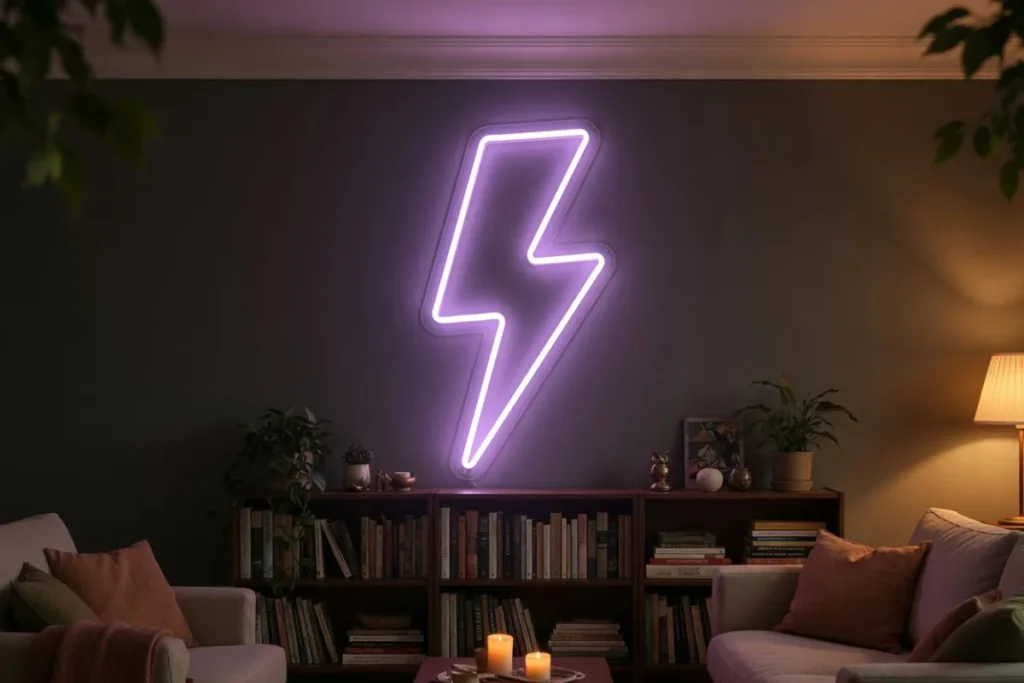
A neon sign thrives as the colored focal point once the rest of the room has a quiet base layer. If you are starting from a dim space, the method in how to light a dark room helps you build visibility first, then let the neon set the mood.
What affects a neon sign's brightness?
Three factors do most of the work:
- Color. White and yellow tubes emit the most light for a given tube; deep blue, purple and red sit noticeably lower. That's physics, not a defect: the human eye is most sensitive to the green-yellow middle of the spectrum.
- Tube length. More meters of lit tube means more total lumens in the room. A 1-meter word and a 3-meter logo differ enormously in overall presence.
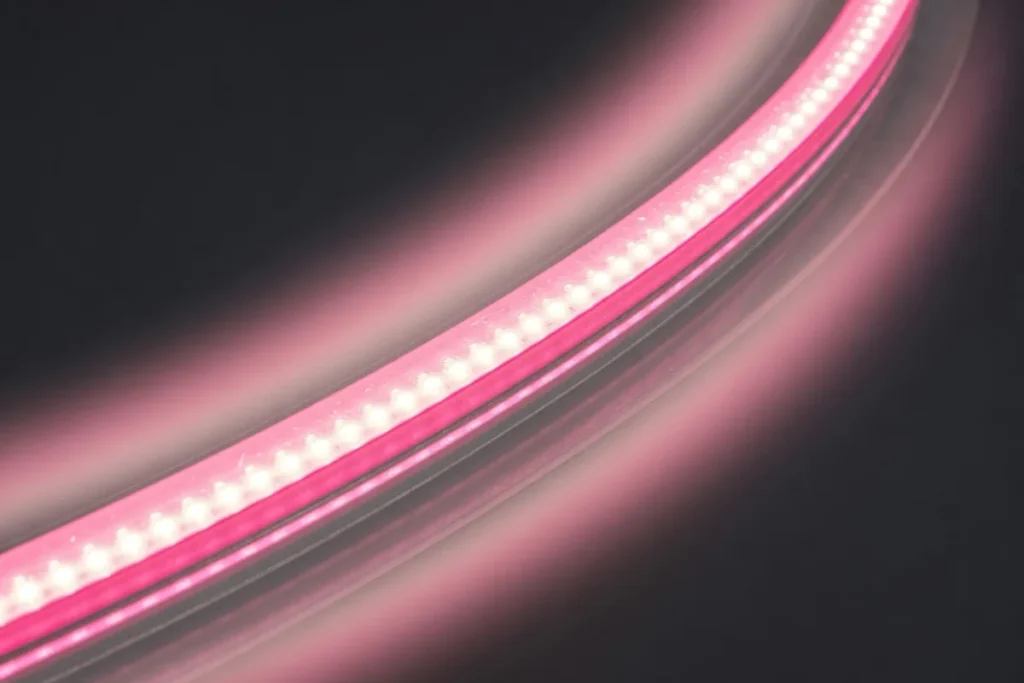
- LED density. Quality tube packs more chips per meter (often 100-120), which raises brightness and keeps the line perfectly continuous. Our 6 mm silicone tube diffuses those chips into one unbroken stroke with no visible dots.
Background matters too, and people forget it. The same sign looks twice as punchy on a dark green wall as on white paint, because perceived brightness is really contrast. If you want maximum impact for minimum lumens, darken the wall, not the order form. More sizing guidance lives in our article on how to choose a neon sign.
Dimmers and remotes: brightness on demand
The dimmer is the most underrated part of the whole product. Every Helioneon sign includes one, and it changes what the sign is: 100% for a party, 50% for dinner, 10% as a night glow. One object, three moods, no electrician.
Dimming also trims power draw, which was modest to begin with: a typical sign consumes about as much as a laptop charger at full brightness, and our power consumption breakdown shows the running cost lands at a few cents per evening. Since LEDs dim by pulsing rather than starving, the color stays true at every level, unlike old filament dimming that turned everything orange.
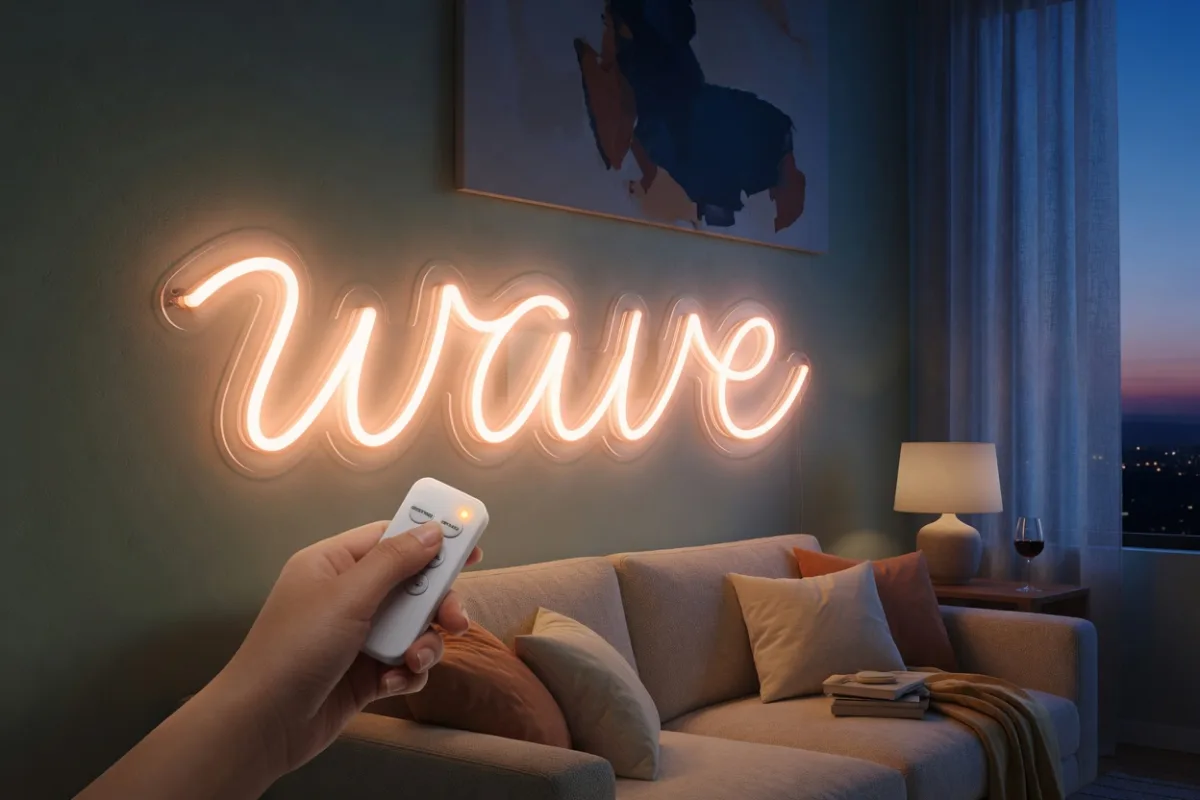
Remote-control options take the same idea further, with brightness steps and timers managed from the sofa. Whichever controller you use, set a level for each scenario once and stick to those presets. Rooms feel calmer when their lighting is repeatable rather than improvised nightly.

Day vs night: tuning the glow
Daylight is the stress test. Direct sun delivers tens of thousands of lux, so no decorative sign competes with a bright window at noon; in a sunlit room a neon reads as colored line art, softly lit. From late afternoon onwards it takes over, and by night even 30% intensity feels vivid.
A practical evening routine: full brightness until dinner, half after, and for bedrooms, 10-20% or off at sleep time, because glare is real. If a sign faces your bed or sofa head-on, mount it slightly above eye level and let it graze the wall; you get the glow without the stare. Businesses should think in reverse: run brighter during opening hours for street visibility, then dim overnight. The tube is rated for around 100,000 hours, so a decade of daily glow barely dents its lifespan.
How does it compare with glass neon?
Brightness parity is one reason LED took over. Meter for meter, quality LED neon matches or exceeds the perceived brightness of traditional glass tube, and it does so at 12V instead of several thousand volts, from a fraction of the power. Glass also fades as its gas and electrodes age, while LED output declines far more slowly across a roughly 100,000-hour life. The full picture, weight and safety included, sits in our glass neon vs LED neon guide.
Against backlit box signs, neon trades floodlight power for shape: it draws its message in light rather than lighting a panel around it. That's why it reads at a glance and photographs so well. If you want a wall bathed evenly, buy a different product. If you want the words themselves to glow, this is the one.
How the eye judges neon brightness
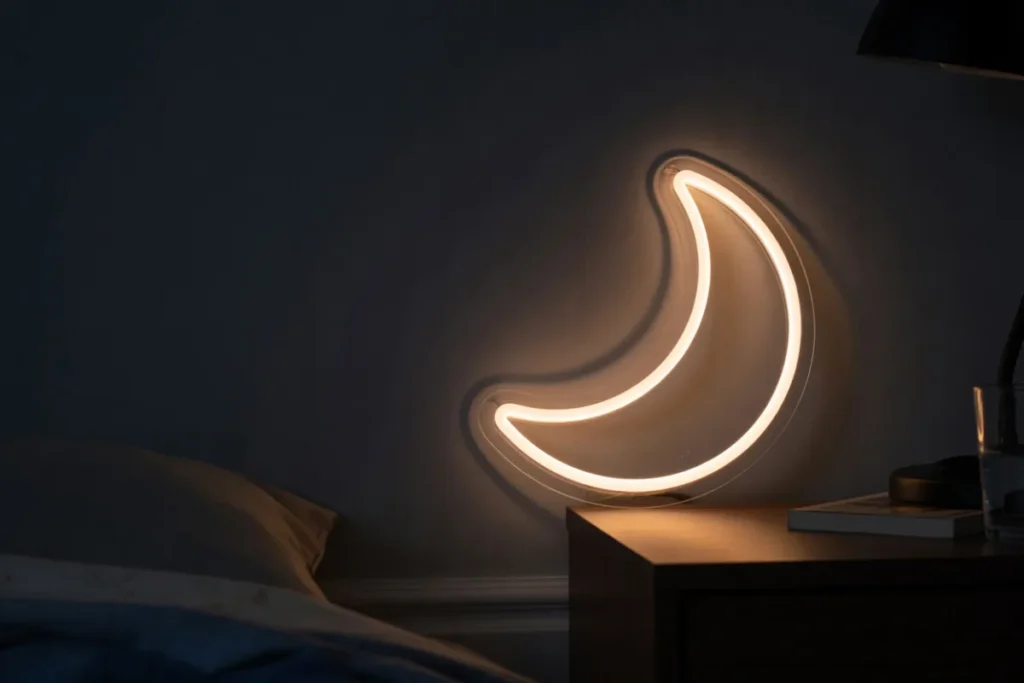
Lumens count the light leaving the tube. Standing in the room, you mainly notice contrast, tube width, color, and distance. A narrow, continuous stroke can look vivid even when the lumen number is modest, because the light is concentrated into a clean line rather than spread across a wide shade.
That is why a mid-sized logo can read from across a shop floor while a diffuse lamp with a similar lumen rating feels softer and less graphic. The sign draws its message in light. It does not try to flood every corner.
Color temperature shifts the impression too. Cool white often feels sharper and “brighter” than warm white at the same lumen level. Warm white feels calmer and more relaxed, which suits bedrooms and evening lounges. If you are weighing those looks for a real wall, our guide on warm white vs cool white neon breaks down the tradeoffs without mixing up power draw and perceived intensity.
Distance is simple physics in daily use. At arm’s length, a high dimmer setting can feel intense if the tube sits at eye level. From several steps back, the same setting becomes a colored wash on the wall. When a sign faces a sofa, desk, or bed, mount it slightly above eye line so the glow grazes the surface instead of staring back at you. Then lock a lower preset for long evenings.
Background finishes the effect. The same tube looks stronger on a dark or richly colored wall than on fresh white paint, because perceived brightness is largely contrast. If daytime presence matters, pair a lighter tube color with a quieter backdrop rather than chasing ever higher output figures on the spec sheet.
When you compare products, treat lumens per meter as a useful band, not a full room forecast. LED density, silicone diffusion, acrylic backing, and wall color all shape what you actually see. For a plain-language bridge between decorative lumen ranges and familiar household lamps, keep our lumen to watt equivalence chart nearby while you plan size and placement.
Brightness goals by room and use
Decide what the sign should do, then set intensity around that job. One object can cover several moods if the dimmer is part of the routine from day one.
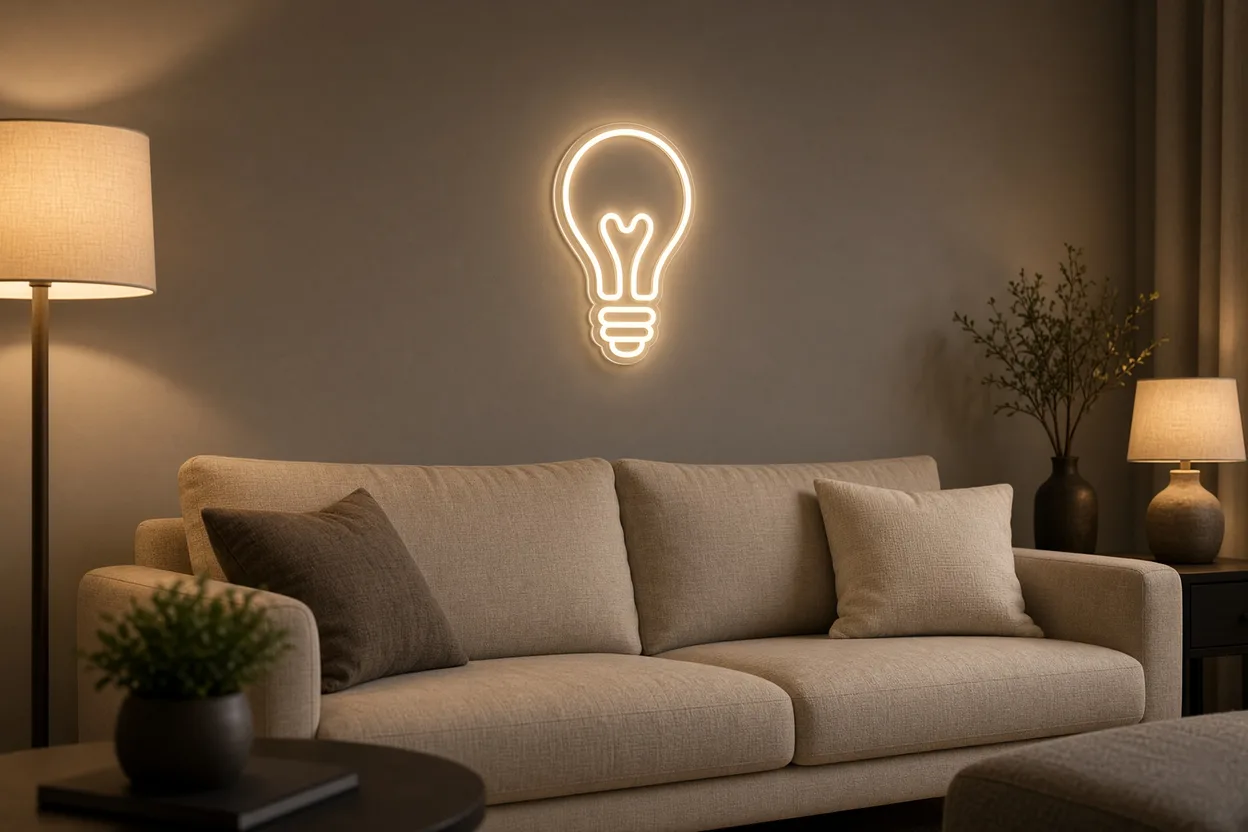
Living rooms and open lounges. Treat neon as accent light beside ceiling fixtures and lamps. Full brightness works for guests, parties, and photos. Half power suits dinner and conversation. A low glow keeps the wall alive after the main lights drop. Layering soft sources around the sign stops the room from feeling like one bright object in a dark box.
Bedrooms. Aim for a controllable night glow, not a spotlight. Warm colors at roughly 10 to 20 percent feel gentle and stay below most bedside lamps. Keep the brightest face of the tube off the pillow line. A side wall, a spot above the headboard, or a slight upward offset gives you color without glare. Turn it down as sleep time approaches, or switch it off if you are sensitive to any residual light.
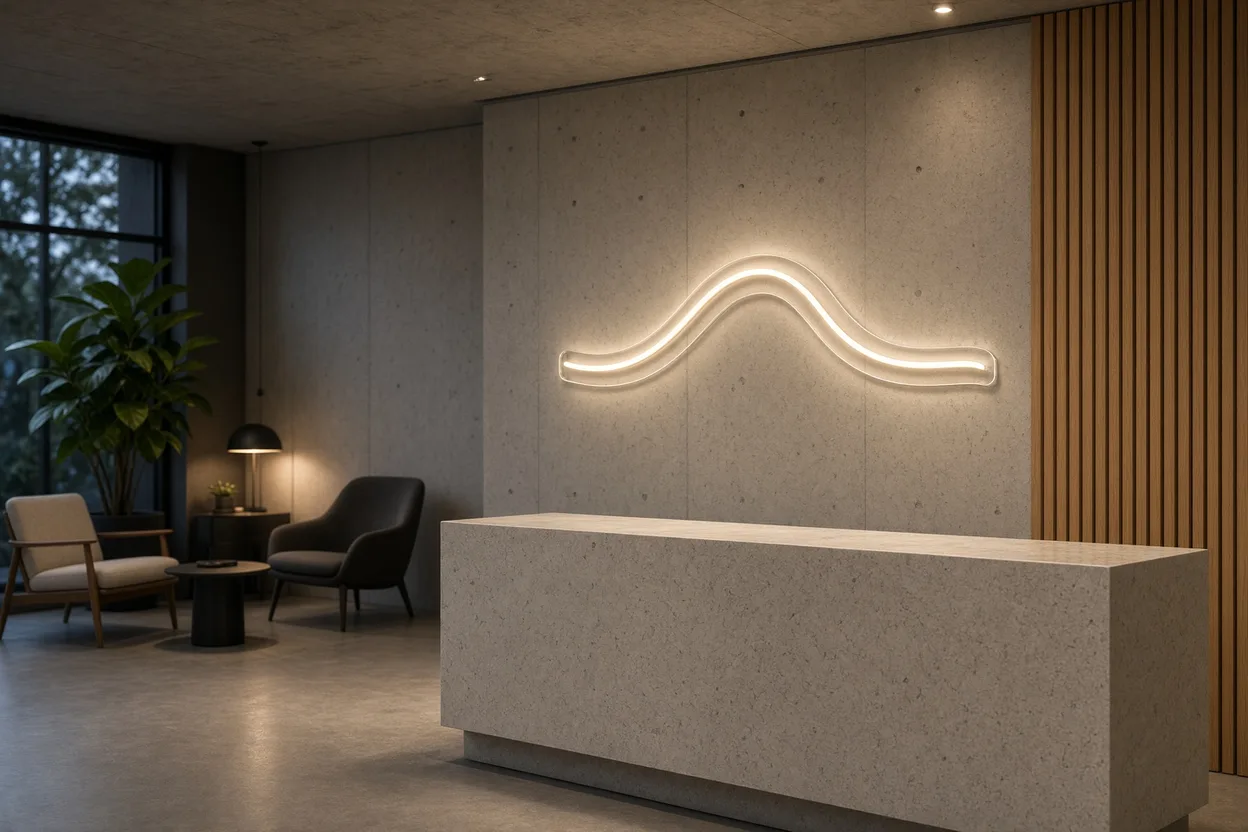
Shops, windows, and reception desks. You want faster recognition against street light, reflections, and daylight bounce. Lighter colors, longer tube runs, and higher dimmer settings during open hours help the message hold. After closing, drop the level so the sign still marks the space without washing the sidewalk. Darker window backdrops raise contrast so you need less raw output for the same punch.
Photos, streams, and small events. Brightness becomes a camera tool. Too high and skin tones wash out in close shots. Too low and the tube vanishes behind room light. Test one mid setting with your phone camera before guests arrive, then save that level on the remote. Repeatable presets keep the scene steady when people move in and out of frame.
Helioneon builds each piece as LED neon in silicone on an acrylic backboard, powered at 12 V low voltage, with a dimmer included as standard. Mounting takes about 3 minutes, the cable run is 3 m total, and a free 3D mockup helps you judge scale on your own wall before anything is cut. Most orders arrive in 7 to 10 days. The tube is rated around 100,000 hours, backed by a 3-year warranty, so daily dimming and scene changes are normal use, not hard wear.
Brightness mistakes worth skipping
Ordering the longest tube that fits, then running it at 100 percent in a small room, is a common path to “too harsh.” Length raises total lumens in the space. The dimmer exists to bring the scene back to a comfortable level. Size the sign for clear presence on the wall, then tune intensity for the hour and the company in the room.
Judging brightness only under bright showroom spots or only on a phone screen is another miss. Screens compress glow and hide wall contrast. Walk the real mounting height in your head: eye line, seating distance, nearby lamps, and whether daylight hits that wall at noon. The free mockup is there so proportions get checked against furniture you already own, not against a blank product photo.
People also chase more lumens when the wall is working against them. A pale tube on a bright white surface at midday will always look quieter. A darker paint, a shadowed niche, or a lighter tube color often fixes the “I can barely see it” complaint without changing the order size. Contrast is free brightness.
Finally, skip one-setting-for-everything habits. A party level is the wrong bedroom level. A shopfront level is the wrong late-night apartment level. Set two or three presets once (full, mid, low) and reuse them. Rooms feel calmer when lighting is repeatable. With more than 500 Helioneon signs already delivered on that simple workflow, the pattern stays steady: choose scale for the wall, pick color for the mood, then let the dimmer handle the hour.
FAQ: LED neon sign brightness
How many lumens is an LED neon sign?
Roughly 100 to 300 lumens per meter of tube, depending on color and LED density. A typical 31 in (80 cm) to 1 m sign therefore emits a few hundred lumens overall, similar to a soft bedside lamp: designed for atmosphere rather than task lighting.
Can I dim an LED neon sign?
Yes. Helioneon signs ship with a dimmer as standard, letting you slide from full brightness down to a faint glow. LED dimming keeps the color accurate at every level, and running the sign dimmed also reduces its already low power consumption.
Which neon color is the brightest?
White and yellow appear brightest, because the human eye is most sensitive to the middle of the visible spectrum. Deep blue, red and purple emit less perceived light from the same tube. If daytime visibility matters, choose a light, warm color.
Is a neon sign too bright for a bedroom?
Not with a dimmer. At 10-20% intensity a neon sign works as a gentle night glow, softer than most bedside lamps. Choose a warm color, mount it slightly above eye level to avoid glare, and dim it down as bedtime approaches.
Can you see an LED neon sign in daylight?
Yes, though with less drama than at night. In a sunlit room the sign reads as glowing line art rather than a beacon, since daylight delivers far more lux than any decorative light. Lighter colors and darker backgrounds improve daytime presence considerably.
Your custom neon, designed for free in 24 h
- Describe your ideaA text, a logo or a simple sketch. It takes one minute.
- Get your mockup and priceWithin 24 h by email, no commitment.
- Approve, we make itFree express delivery in 7 to 10 days, set up in 3 minutes.
- Mockup and price within 24 h, no commitment
- Free express delivery, received in 7 to 10 days
- 3-year warranty, set up in 3 minutes
Get your free mockup

Guillaume Schlupp
Founder of Helioneon
Over 10 years of entrepreneurship in premium interior design. 500+ LED neons delivered across 13 countries under Helioneon and Light Genius. Leads product strategy, design and professional accounts.