Light Pollution: Definition, Effects and Rules for Lighting Without Harming the Night
- Light pollution is excess artificial light at night: it disrupts wildlife, sleep and stargazing. In the United States there is no federal law, so states, counties and cities set outdoor lighting rules through local ordinances.
- Inside: causes, effects on wildlife and health, rules for signs and storefronts and simple settings for a neon sign.
Light pollution is the excess of artificial light at night and everything it does: skies that never get truly dark, disoriented wildlife, disrupted sleep and wasted energy. Most of it comes from street lighting, signs, storefronts and buildings that stay lit for no reason. At Helioneon we make custom neon signs, so we make things that glow, and we believe anyone who sells light should be able to explain this problem and how to avoid it.
The topic comes back every spring with International Dark Sky Week, held each April around the new moon, when people are invited to notice the night sky and the light that hides it. But it goes well beyond that week: in the United States, there is no federal law on light pollution, and outdoor lighting is regulated by states, counties and cities through local ordinances. With more than 500 neon signs delivered, some of them for storefronts and building fronts, we keep these local rules in mind on every project. Here is what you need to know, from the definition to good practice.
What is light pollution?
Light pollution is the abnormal or disruptive presence of artificial light at night, along with all its consequences for the environment, human health and our view of the sky. You will also hear it called light trespass or nuisance lighting when it spills where it is not wanted.
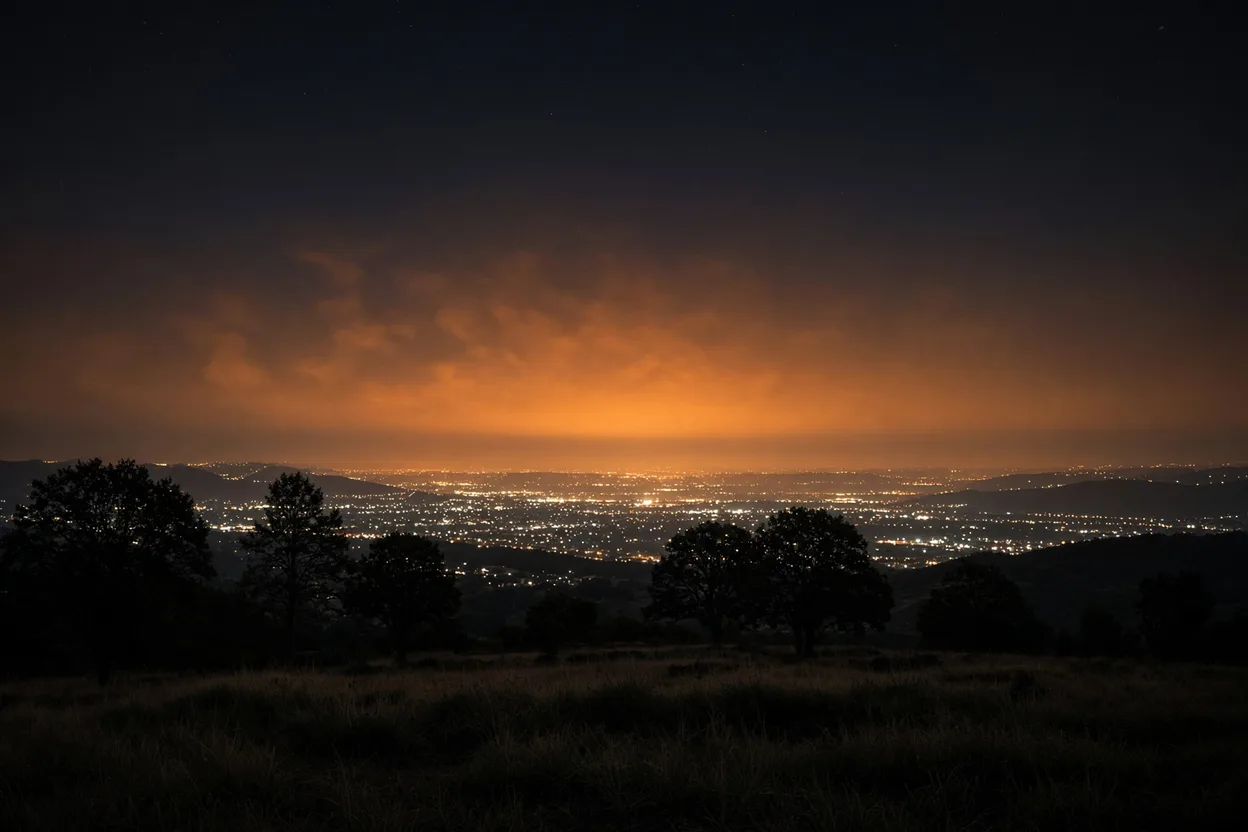
It takes several forms, because light can be a nuisance in several ways. The glow over cities, visible from dozens of miles away, is the best known. But the glare from a badly aimed floodlight, a streetlight shining into a bedroom, or a building facade lit all night for no reason count too.
- Sky glow: the orange haze that veils the sky above urban areas
- Light trespass: lighting that spills onto a home or a natural area
- Glare: a source that is too bright or badly aimed and impairs vision
- Over-lighting: more light than the use requires, or for longer than needed
So it is not the same thing as nighttime lighting in general. Lighting a street so people can get around safely is useful; lighting it toward the sky, all night, in a very cold white, is not. The whole point is to keep the useful light and get rid of the light that serves no one.
What causes light pollution?
The main causes of light pollution are street lighting, lighting on non-residential buildings (offices, shops, facades), signs and storefronts, parking lots, sports facilities and, to a lesser extent, lighting around homes and yards.
The problem is less the number of sources than how they are designed and used. A fixture that sends part of its light upward, a parking lot lit while it is empty, or a storefront left on until morning all create light that helps nobody. And when these sources pile up across an area, their effects add up to form the urban sky glow.
- Street lighting: roads, plazas, traffic circles, parks
- Commercial buildings: offices lit at night, illuminated facades
- Retail: illuminated signs and storefronts left on after closing
- Facilities: parking lots, stadiums, logistics sites
- Homeowners: yard floodlights, facade lighting, outdoor decorations
The color of the light matters too. Blue-rich light, like some cool whites, scatters more in the atmosphere and has a stronger effect on living things. That is why responsible lighting guidelines recommend warm tones for outdoor lighting.
What are the effects of light pollution on wildlife?
Nighttime lighting disrupts a large share of living things, because many species time their activity to the cycle of day and night. Insects, migrating birds, bats, amphibians and even plants are affected, each in its own way.
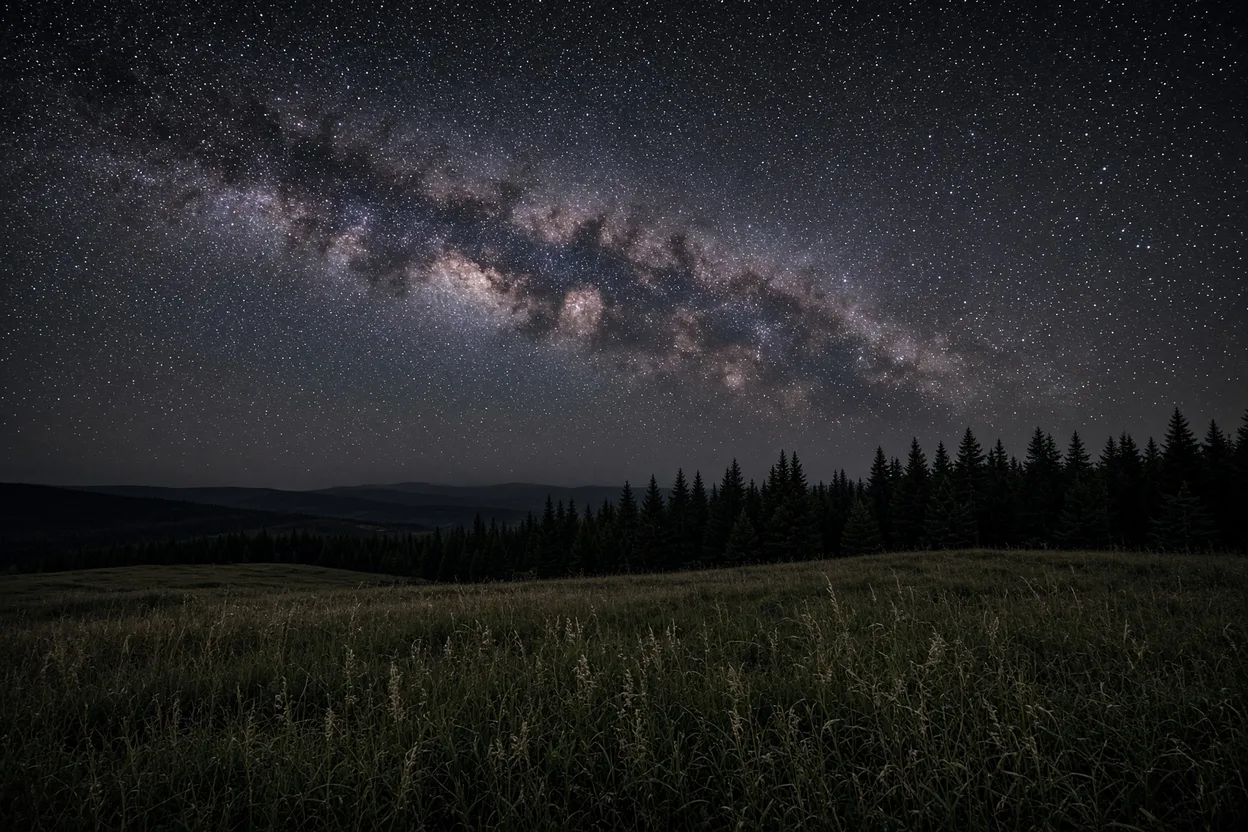
Nocturnal insects are drawn to light sources and circle them until they are exhausted, which leaves them exposed to predators. Migrating birds, which often travel at night, can be thrown off course by brightly lit cities. Many bat species avoid lit areas, which breaks up their hunting grounds. DarkSky International has documented these effects extensively.
- Insects: attracted to and trapped by light sources
- Birds: night migrations disoriented by urban sky glow
- Bats: hunting grounds cut off by lit areas
- Plants: flowering and leaf-drop cycles shifted near streetlights
These effects have practical consequences for land planning: the idea of dark corridors is to keep stretches of darkness that wildlife can move through. More and more communities take this into account in their lighting plans, turning off certain areas at night or sharply reducing light levels.
Does light pollution affect health?
Yes, artificial light at night can disrupt the human body clock. In its 2019 opinion on LEDs, Anses, the French public health agency, considers it established that exposure to blue-rich light in the evening or at night disrupts circadian rhythms, delaying or reducing the release of melatonin, the sleep hormone.
The agency notes that even low exposure can have an effect, and that children are more sensitive to it. It therefore recommends warm white lighting at home, limiting screens before bed and strengthening the contrast between day and night. At the scale of a city, light trespass into bedrooms feeds the same problem.
- Sleep: falling asleep later because of blue-rich light in the evening
- Melatonin: release delayed or reduced by exposure at night
- Sensitive groups: children, night-shift workers, people who sleep poorly
- Good habit: warm white light in the evening and a dark bedroom
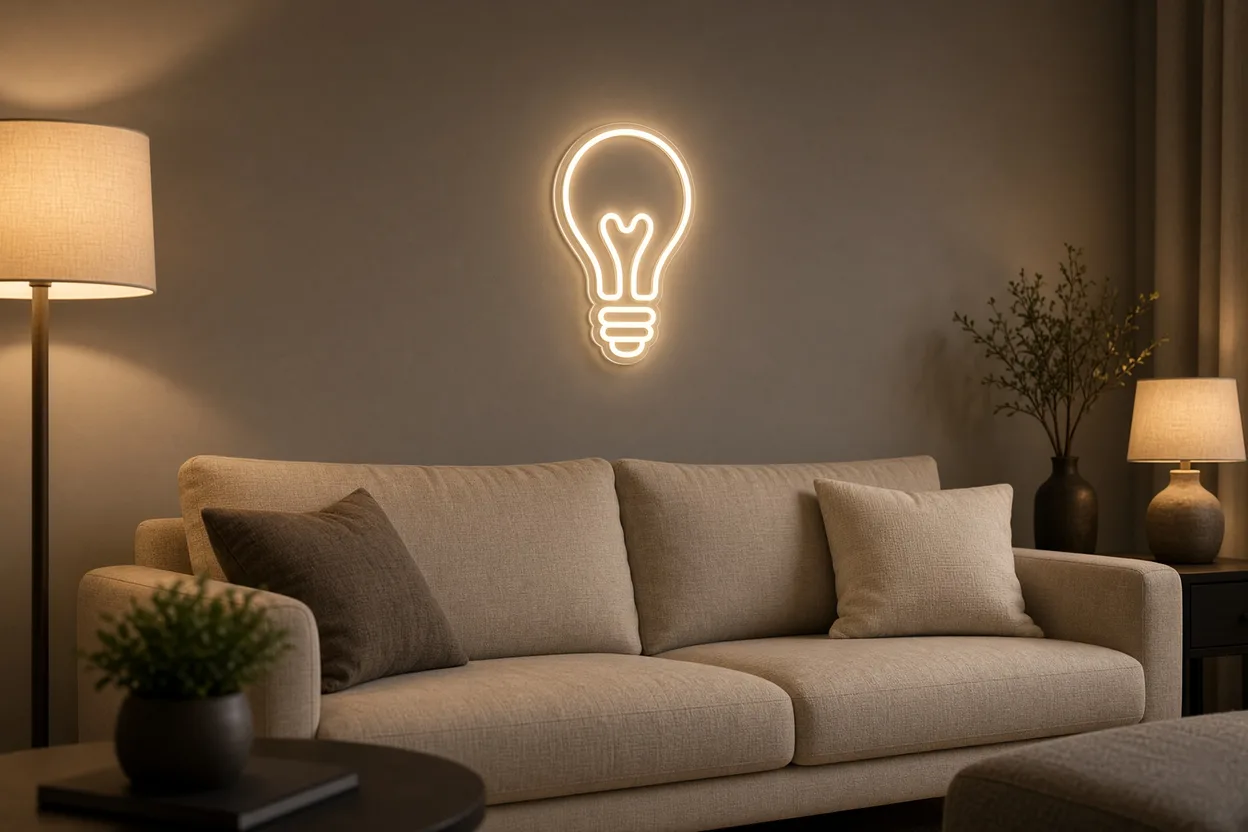
At home, the fix is blackout curtains, warm and dimmed lights in the evening, and switching off what you do not need. An accent lamp or a decorative neon sign in warm white, set on a dimmer, fits these recommendations, as long as it does not shine directly on the bed while you sleep.
What are the light pollution rules in the United States?
In the United States, there is no federal law on light pollution. Outdoor lighting is regulated by states, counties and cities, through local ordinances, so the rules vary a lot from one place to the next.
Some states go further than others. Arizona, for example, requires shielded outdoor light fixtures under a state law (ARS 49-1102). DarkSky International, formerly the International Dark-Sky Association and founded in Arizona, is the reference organization on the subject: it offers model regulations that communities can adopt, the DarkSky Municipal Code for Outdoor Lighting and the State Act for Responsible Outdoor Lighting. For signs, there is no national rule on when they must be turned off: it depends on the local sign ordinance, which you should check with your city or county.
- Who regulates: states, counties and cities, not the federal government
- Example: Arizona requires shielded outdoor fixtures under ARS 49-1102
- Models: DarkSky Municipal Code for Outdoor Lighting and State Act for Responsible Outdoor Lighting
- Signs: hours and limits set by the local sign ordinance
For a store owner, the simplest approach is to put the sign and storefront on a timer and follow the hours set by the local ordinance. We cover signage requirements on the retail side in our guide to store signage design, supports and rules.
How to reduce light pollution?
Reducing light pollution comes down to four principles: light only where it is useful, only when it is useful, downward, and with warm, low-intensity light. These steps work just as well for a town as for a shop or a backyard.
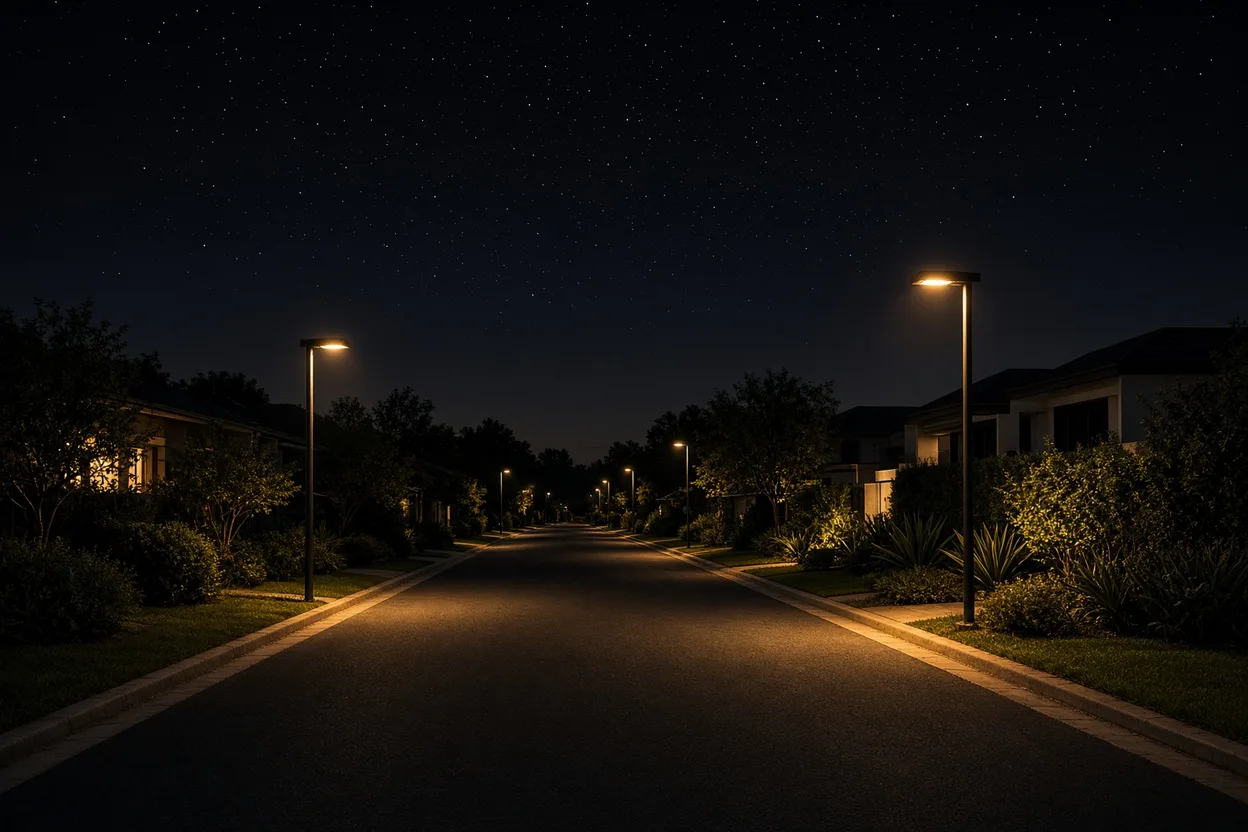
The table below lists the main sources of nighttime light, their impact and the good practice to adopt. Decorative lighting comes first, because it is the area we know best and the one where the right settings are easiest.
| Light source | Main impact | Good practice |
|---|---|---|
| Decorative LED neon | Low: soft, directed light | Timer, warm white, off at night |
| Street lighting | Urban sky glow, disturbed wildlife | Downward fixtures, partial switch-off |
| Signs and storefronts | Over-lit shopping streets | Scheduled switch-off after closing |
| Offices lit at night | Waste, light trespass | Occupancy sensors, switch-off |
| Yard floodlights | Glare, local wildlife | Low wattage, motion sensor, aimed low |
- Where: light the area you need, never the sky or natural spaces
- When: timers and sensors rather than all-night lighting
- How: fixtures aimed downward, with no upward spill
- What light: warm white or amber, at the minimum brightness needed
These principles match those of any good lighting project, where the goal is the right effect rather than the most light. We go into them in our guide to architectural lighting principles and criteria, which covers how to light building facades in particular.
Signs, storefronts and neon: how to light without polluting?
A sign or storefront can stay eye-catching without adding to light pollution, as long as you get three settings right: light aimed at passersby and not at the sky, brightness suited to the street, and a scheduled switch-off at the hours set locally.
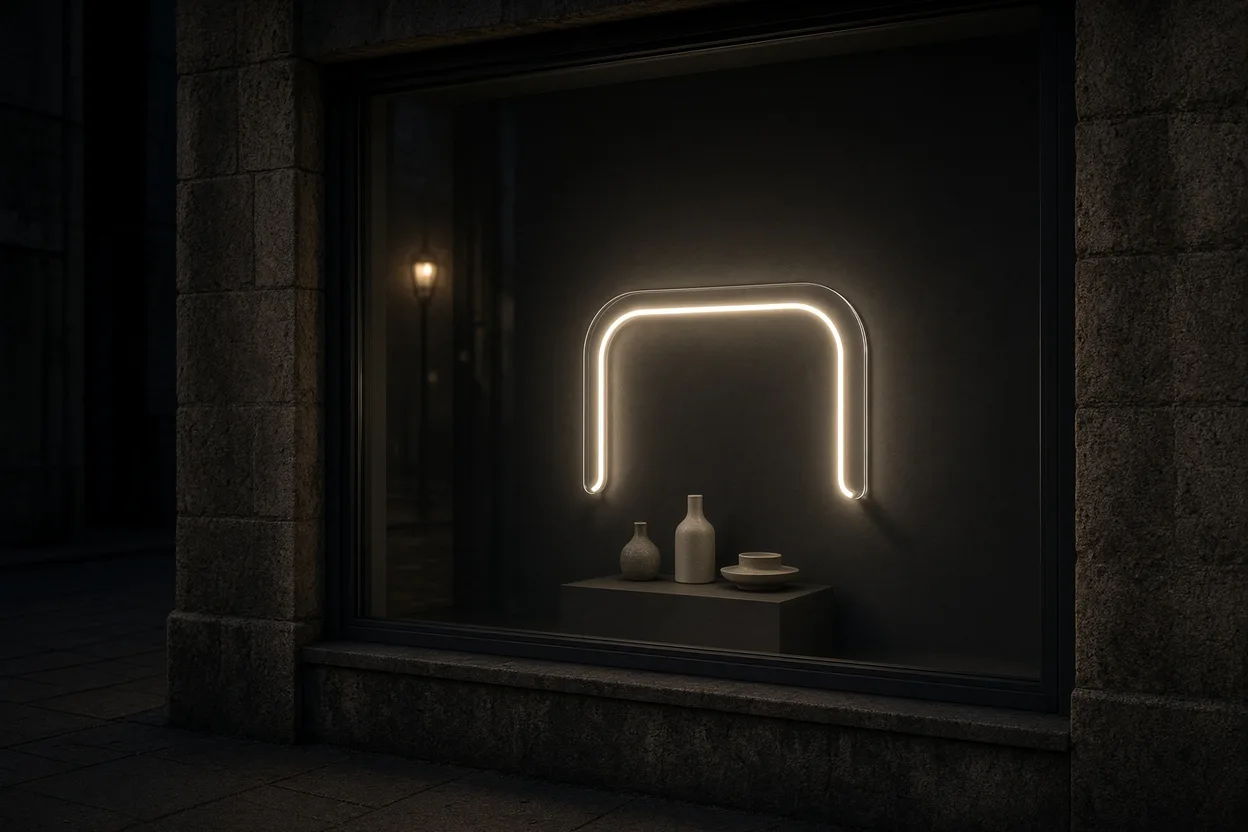
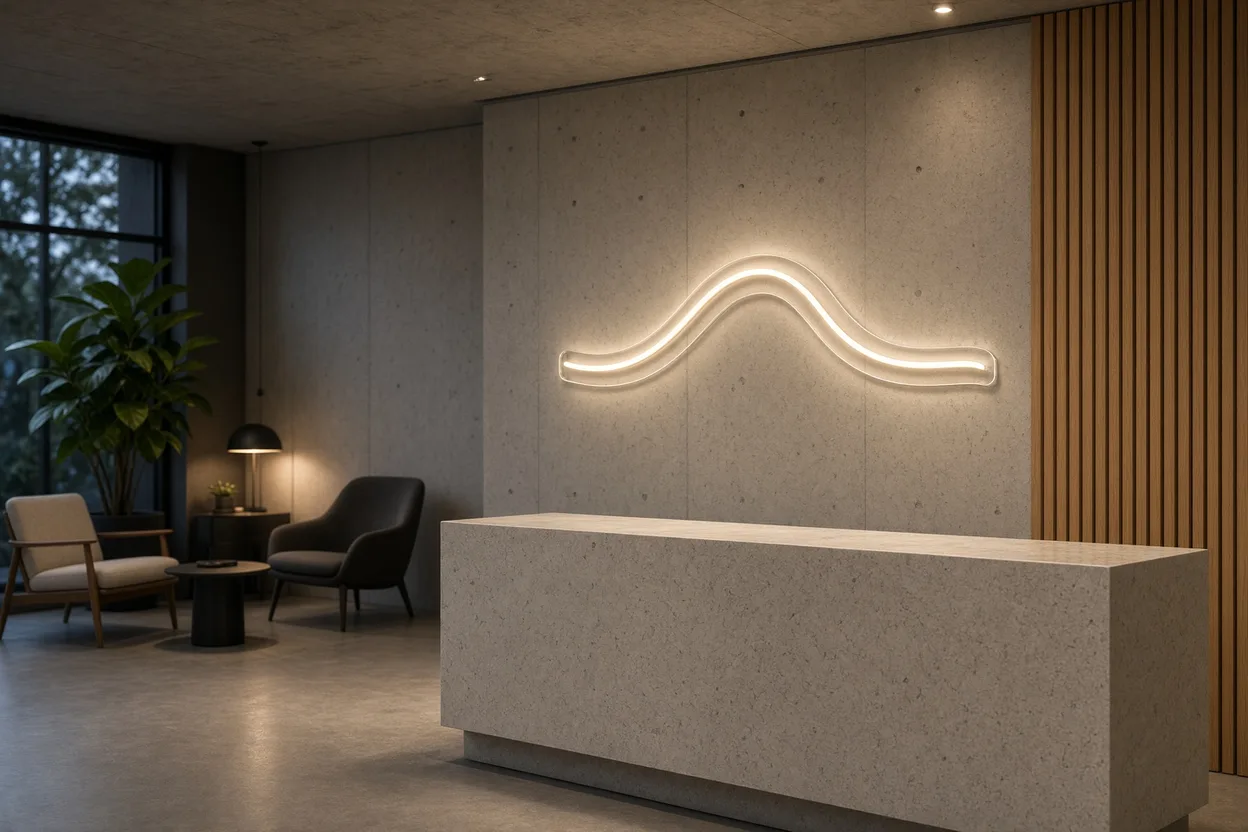
LED neon has several advantages here. Its light is soft and diffused, with no powerful beam, and it draws only a few watts, as we explain in our guide to LED neon sign power consumption. It is easy to put on a timer and comes in warm white or amber, two tones low in blue. Outdoors, the same logic of soft, low, warm light applies, and our patio lighting ideas with three light layers show how to combine sources without over-lighting.
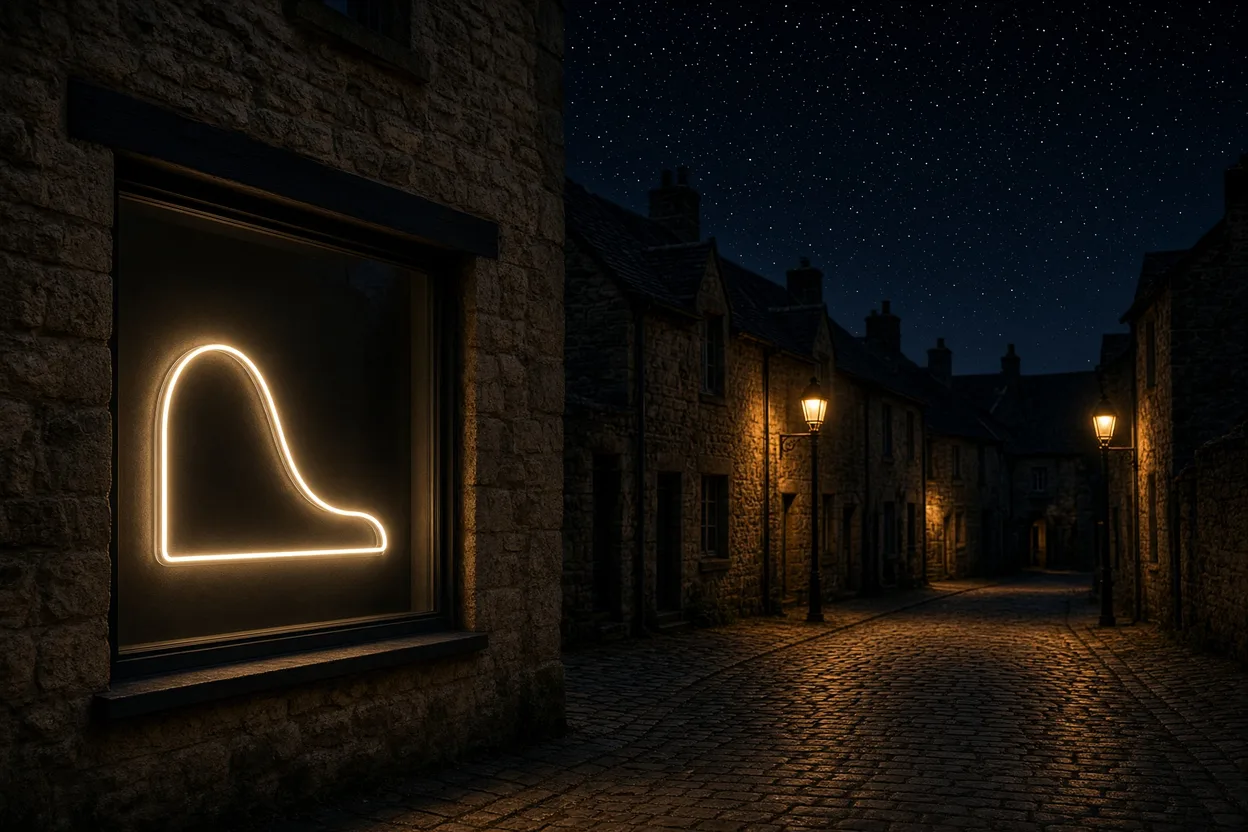
- Inside the window: a neon sign facing the street, not a floodlight aimed upward
- Timer: automatic switch-off after closing, at the hours set by your local ordinance
- Color: warm white or amber rather than a cool white
- Brightness: a dimmer to match the light to the street lighting
A great storefront at night does not need to be the brightest on the street. It needs to be readable and true to the brand, and a well-sized neon sign draws the eye better than strong lighting that dazzles. At night, contrast is what counts, not the amount of light.
Light pollution FAQ
What are the types of light pollution?
There are generally four types of light pollution: sky glow, the haze that veils the sky above cities; light trespass, which spills onto a home or a natural area; glare, caused by a source that is too bright or badly aimed; and over-lighting, when an area is lit more than needed or for longer than the use requires. These forms often combine in urban and commercial areas.
Why is light pollution a problem?
Too much light at night is a problem because it disrupts wildlife and plants, which time their activity to the cycle of day and night, and it affects human health too. Anses, the French public health agency, considers it established that blue-rich light in the evening disrupts circadian rhythms. It also wastes energy and hides the starry sky, to the point that the Milky Way can no longer be seen from most large cities.
What are the switch-off rules for signs and storefronts?
In the United States, there is no national rule on when signs and storefronts must be switched off. It depends on the local sign ordinance, set by your city or county, and the rules vary from place to place. Some states also regulate outdoor lighting: Arizona, for example, requires shielded outdoor fixtures under ARS 49-1102. Check with your city or county before installing an illuminated sign.
Where to see a sky without light pollution in the United States?
The best places are those certified by DarkSky International for the quality of their night sky, such as Big Bend National Park in Texas, Grand Canyon National Park in Arizona and the Central Idaho Dark Sky Reserve. More broadly, mountain areas, natural parks and rural areas far from large cities offer much darker skies. Pick a moonless night and give your eyes about twenty minutes to adjust to the dark.
Does a decorative LED neon sign contribute to light pollution?
A decorative LED neon sign contributes very little to light pollution when used well. Its light is soft, diffused and aimed into the room or toward the street, with no beam toward the sky, and it draws only a few watts. To stay beyond reproach, put it on a timer, choose warm white or amber, and switch it off at the hours set by your local ordinance if it can be seen from outside, like a sign.
Light pollution does not mean giving up on light, but thinking it through: light just what you need, at the right time, downward and in a warm tone. For a restrained, compliant sign or light piece, start your project through our contact page and get a free 3D mockup within 24 hours. To see what responsible lighting rules can look like, read DarkSky International's model outdoor lighting codes.
Your custom neon, designed for free in 24 h
- Describe your ideaA text, a logo or a simple sketch. It takes one minute.
- Get your mockup and priceWithin 24 h by email, no commitment.
- Approve, we make itFree express delivery in 7 to 10 days, set up in 3 minutes.
- Mockup and price within 24 h, no commitment
- Free express delivery, received in 7 to 10 days
- 3-year warranty, set up in 3 minutes
Get your free mockup

Guillaume Schlupp
Founder of Helioneon
Over 10 years of entrepreneurship in premium interior design. 500+ LED neons delivered across 13 countries under Helioneon and Light Genius. Leads product strategy, design and professional accounts.