Lumen to Watt Equivalence: Full Chart and Conversion Method
⚡ The essentials in 30 seconds
- LED neon sign power consumption 2026: 8-15 W/m, $6 to $8 per year at the US average electricity rate.
- Compare with gas neon and Helioneon saving tips.
Updated September 24, 2026, by Guillaume Schlupp, founder of Helioneon.
Common lumen to watt equivalence figures used in the U.S. put a “60 W equivalent” bulb at about 800 lumens, a “40 W equivalent” at 450 lumens, and a “100 W equivalent” at 1,600 lumens, based on values published by the Department of Energy. An LED reaches those light levels while using roughly 6 to 10 times less power. At Helioneon, we design every custom neon sign with LED technology, and this guide gives you the full chart, the conversion method, and clear benchmarks for choosing bulbs.
Since the phase-out of traditional incandescent bulbs in the United States in 2023, watts no longer tell you how much light you get. Watts measure electrical power draw, not brightness. Yet many shoppers still think in “60 W” terms at the store, which leads to rooms that feel too dim or too harsh. Here is how to read a bulb package correctly in 2026.
What is the difference between a lumen and a watt?
Lumens measure how much light a source emits, while watts measure how much electricity it uses. They are different quantities, which is why an 8 W LED can match the light of an old 60 W bulb. To know whether a bulb will light a space well, look at lumens, not watts: that is the whole point of lumen to watt equivalence.
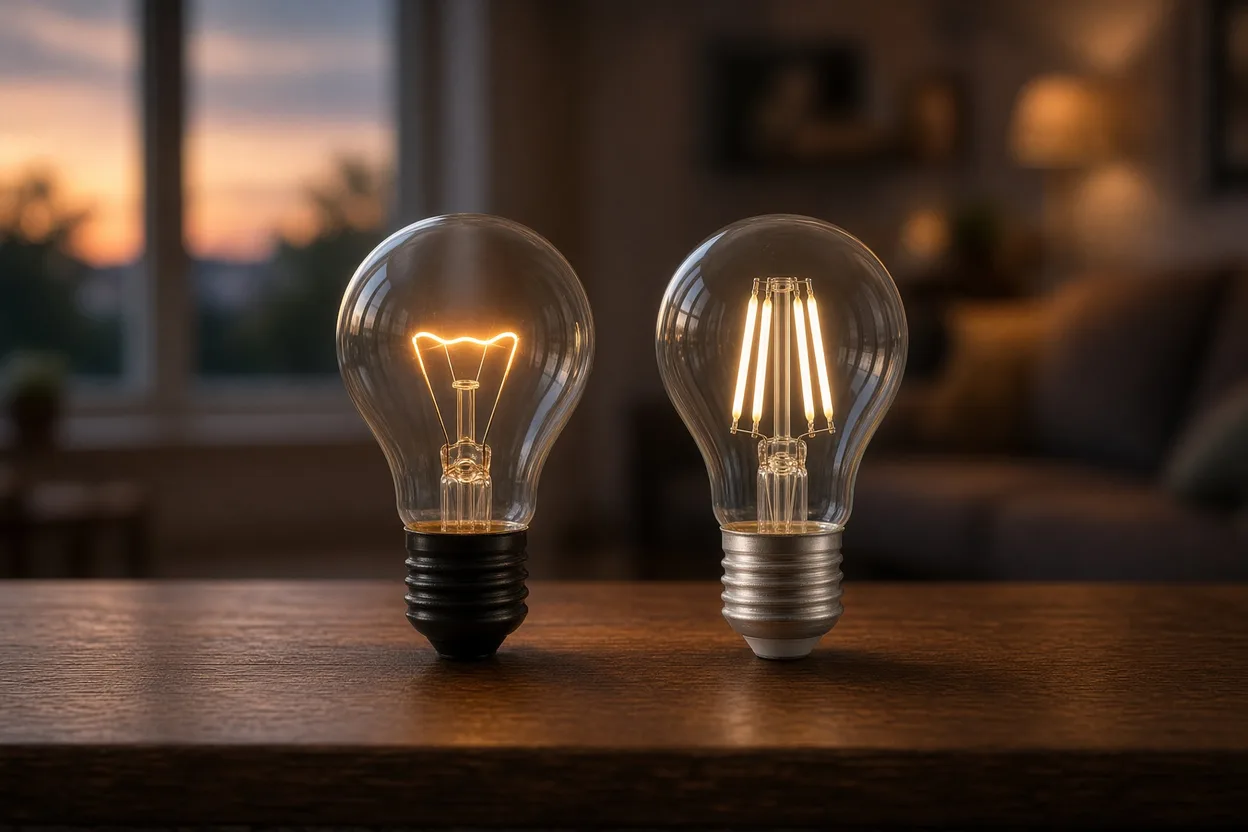
The link between the two is luminous efficacy, expressed in lumens per watt (lm/W). The higher that number, the more light you get for the same power. An incandescent bulb sat around 10 to 15 lm/W, while a typical LED reaches 80 to 150 lm/W depending on the model. Lux measures illuminance on a surface: 1 lux equals 1 lumen spread over 1 m² (about 10.8 sq ft).
- Lumen (lm): amount of light emitted, the figure to check when you buy
- Watt (W): electrical power consumed, useful for your bill
- lm/W: efficacy, the light you get for each watt
- Lux (lx): light received on a surface, 1 lx = 1 lm/m²
Lumen to watt equivalence chart: reference values
The lumen to watt equivalence chart below follows common Department of Energy benchmarks used on U.S. packaging: a maker can call a bulb a “60 W equivalent” when it delivers around 800 lumens. These values match the light output of older incandescent bulbs and remain the best guide when you replace a bulb without changing the feel of the room.
| Old bulb | Minimum lumens | Equivalent LED (approx.) |
|---|---|---|
| 25 W incandescent | about 250 lm | 2 to 3 W |
| 40 W incandescent | 450 lm | 4 to 5 W |
| 60 W incandescent | 800 lm | 7 to 9 W |
| 75 W incandescent | 1,100 lm | 9 to 11 W |
| 100 W incandescent | 1,600 lm | 13 to 15 W |
LED wattages in the last column are ballpark figures, because efficacy varies from model to model. When you compare two bulbs, always trust the lumen number printed on the package, never the “equivalent” claim alone.
How do you calculate lumen to watt equivalence?
To calculate lumen to watt equivalence, divide lumens by the technology’s efficacy: for an LED at about 100 lm/W, 800 lumens come out to roughly 8 W. To go from LED watts back to lumens, reverse it and multiply by 100. It is an approximation, but it is enough for a quick store comparison.
The lumen to watt formula changes with technology, because each type has its own efficacy. The table below lists average coefficients. Remember the gap: for the same light, incandescent used about ten times more power than LED, which is why those bulbs left U.S. shelves after the 2023 phase-out.
| Technology | Average efficacy | For 800 lm, you need about |
|---|---|---|
| LED | 80 to 150 lm/W | 6 to 10 W |
| CFL | 50 to 70 lm/W | 12 to 16 W |
| Halogen | 15 to 20 lm/W | 40 to 55 W |
| Incandescent | 10 to 15 lm/W | 55 to 80 W |
- Watts = lumens ÷ efficacy: 800 lm ÷ 100 lm/W = 8 W
- Lumens = watts × efficacy: 10 W × 100 lm/W = 1,000 lm
- Quick LED rule: watts × 100 ≈ lumens
- Quick incandescent rule: watts × 13 ≈ lumens
How many lumens do you need to light a room?
The lumens you need depend on floor area and how you use the space: multiply area by the target illuminance in lux. For a living room of about 215 sq ft (20 m²) lit around 150 lux, you need roughly 3,000 lumens, spread across several fixtures. A kitchen or home office needs more because you work there, while a bedroom can use less.
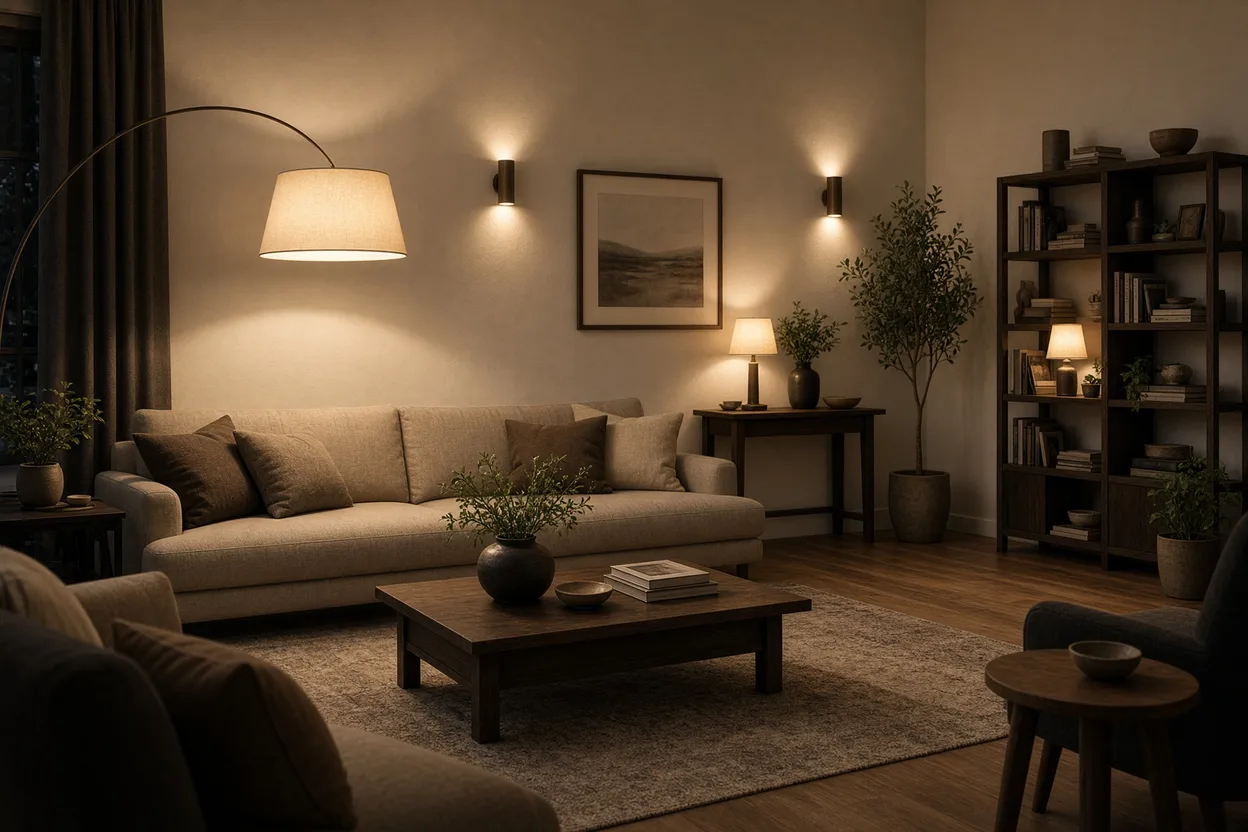
The figures below are common starting points for a home, not hard rules. Adjust for wall color, ceiling height, and habits. Dark walls soak up a lot of light, a point covered in our guide on how to light a dark room.
- Living room: about 100 to 200 lux, or 2,000 to 4,000 lm for about 215 sq ft (20 m²)
- Bedroom: about 100 to 150 lux, or 1,200 to 1,800 lm for about 130 sq ft (12 m²)
- Kitchen: about 250 to 300 lux on the countertop
- Office: about 300 to 500 lux on the work surface
- Distribution: several sources beat one very powerful fixture
Why the energy label matters as much as lumens
On U.S. packaging, the FTC Lighting Facts label shows lumens, estimated yearly energy cost, life, and color temperature, so you can compare brightness and running cost at a glance. ENERGY STAR certification flags models that meet higher efficiency and quality criteria. Together they help you judge how much light you get for the power you pay for.
Beyond lumen to watt equivalence, read lumens for brightness, watts for draw, and the Lighting Facts / ENERGY STAR details to compare similar models. Running cost for LED neon is covered in our guide on LED neon sign power consumption.
- Lighting Facts: lumens, yearly cost, life, and color temperature on the package
- ENERGY STAR: higher-efficiency LED models that meet stricter criteria
- Lumens: for how much light you get
- Kelvins: for color, from warm white to cool white
For a decorative LED neon, should you think in lumens?
For decorative LED neon, lumens matter less: a neon sign is not meant to light a whole room but to set mood and create a focal point. A living-room neon gives soft, diffuse glow, well below a ceiling bulb, and that is by design. What matters is even glow and the option to dim it.
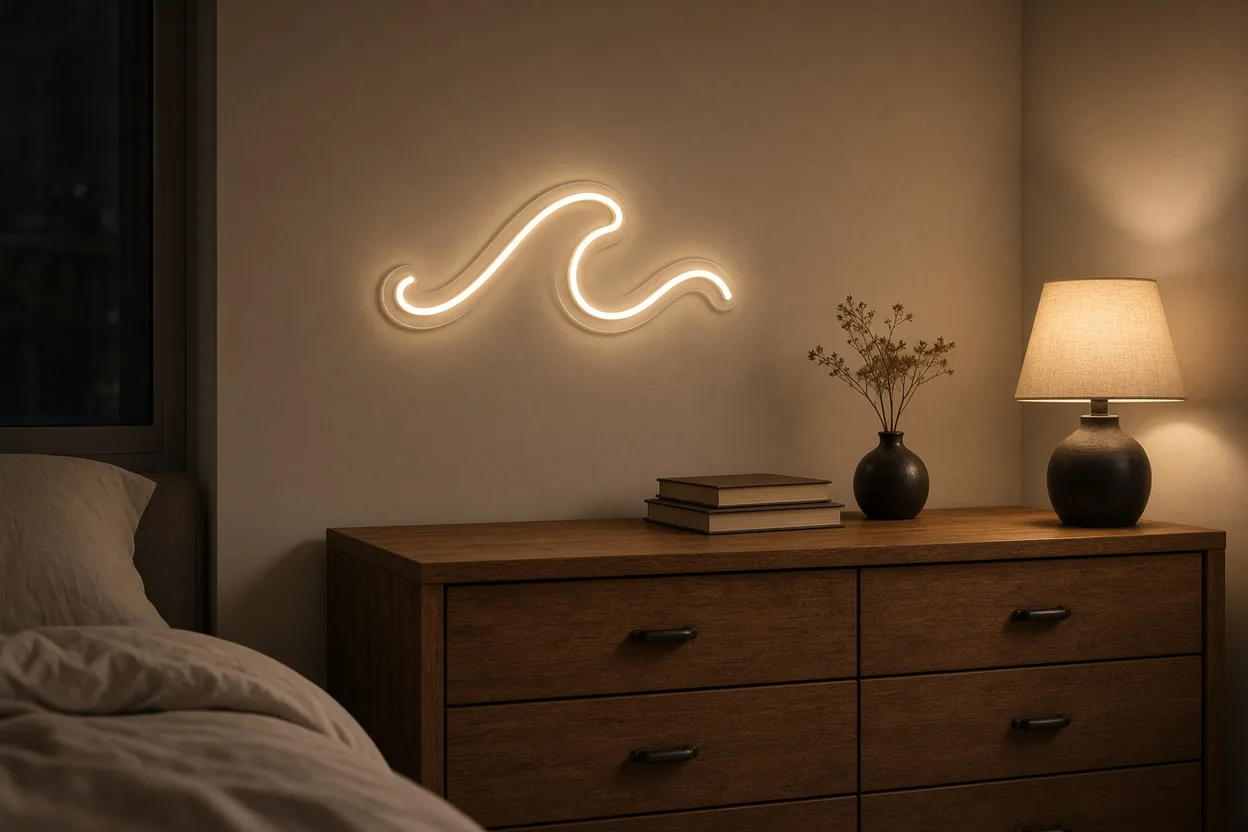
On power draw, LED neon stays thrifty: a few watts for a décor piece, thanks to the same efficacy as LED bulbs. It layers onto main lighting without weighing on the bill. For intensity, glare control, and dimmers, see our guide on how bright LED neon signs are, and for color, our warm white vs cool white neon comparison.
- Role: ambiance and décor, not primary lighting
- Look: even glow, no visible hot spots
- Power: a few watts, like a small LED bulb
- Control: dimmer to match the moment
What mistakes should you avoid with lumen to watt equivalence?
The most common mistake is buying by watts out of incandescent habit, even though lumen to watt equivalence fully shifted with LED. A true 60 W LED, for example, would put out about 6,000 lumens, ten times too much for a bedside lamp. Next, be wary of an “equivalent” claim that is not backed by a clear lumen number.
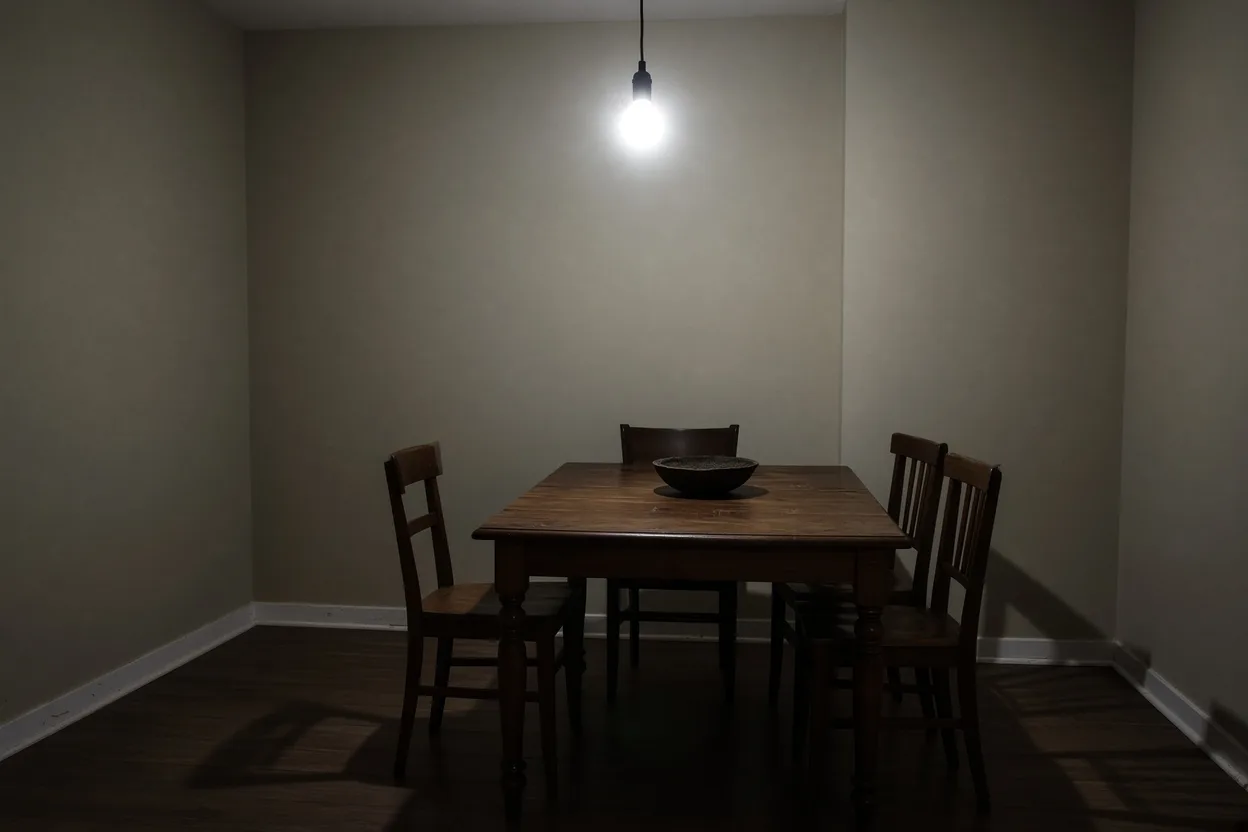
Other pitfalls involve color and layout. Mixing different color temperatures in one room looks inconsistent, and one very bright bulb creates glare without even coverage. Several sources of 400 to 800 lumens beat a single 3,000-lumen ceiling fixture, especially in a living space.
- Buying by watts: always compare lumens
- Trusting “equivalent” alone: check the lumen figure
- Mixing color temperatures: keep one kelvin range per room
- Relying on one fixture: spread light across several points
Frequently asked questions about lumen to watt equivalence
How many lumens to replace a 60 W bulb?
To replace an old 60 W bulb, choose an LED of about 800 lumens. That is the common Department of Energy benchmark behind “60 W equivalent” labeling in the U.S. A 7 to 9 W LED usually gets you there. Check the lumen number on the package rather than the “equivalent” line alone, and match the color temperature of your other bulbs so the room stays consistent.
How to convert lumens to watts?
Divide lumens by the technology’s efficacy in lumens per watt. For an LED at about 100 lm/W, 800 lumens equal roughly 8 W. For an old incandescent around 13 lm/W, those same 800 lumens needed about 60 W. The math is approximate because efficacy varies by model, but it is enough to compare two products. The most reliable figure remains the lumen count printed on the box.
What is the difference between lumen and lux?
Lumens measure light emitted by a source, while lux measures light received on a surface. One lux equals one lumen spread over one square meter. The same 800-lumen bulb therefore delivers high lux on a small table and low lux on a large wall. To size a room’s lighting, start from the lux level you want, then multiply by area in m² (or convert from sq ft) to get total lumens needed.
How many lumens to light a living room?
For a living room, plan on 100 to 200 lux, or about 2,000 to 4,000 lumens for roughly 215 sq ft (20 m²). Spread that total across several sources rather than one ceiling fixture: floor lamp, table lamps, sconces, and a décor accent. Adjust for wall color, which absorbs more or less light, and add dimmers for evening. These are starting points, not strict rules.
Does an LED neon sign give enough light to replace a lamp?
No. A decorative LED neon does not replace a task or ambient lamp, and that is not its job. It produces soft, diffuse light that sets mood and a wall focal point, well below the 800 lumens of a typical bulb. It layers onto main lighting, for example in a living room or bedroom at night. Its strengths sit elsewhere: a few watts of draw, 100 000 hours of life, and a graphic look no standard bulb can match.
Lumen to watt equivalence comes down to a simple rule: pick a bulb by lumens, estimate its draw with watts, and compare similar models with Lighting Facts and ENERGY STAR details. To add a decorative light piece that is efficient and covered by a 3-year warranty, start your project on our contact page and get a free 3D mockup within 24 hours. For a clear primer on brightness units, see Energy 101: Lumens, U.S. Department of Energy.