How to Light a Dark Room: The 3-Lever Method
⚡ The essentials in 30 seconds
- LED neon sign power consumption 2026: 8-15 W/m, $6 to $8 per year at the US average electricity rate.
- Compare with gas neon and Helioneon saving tips.
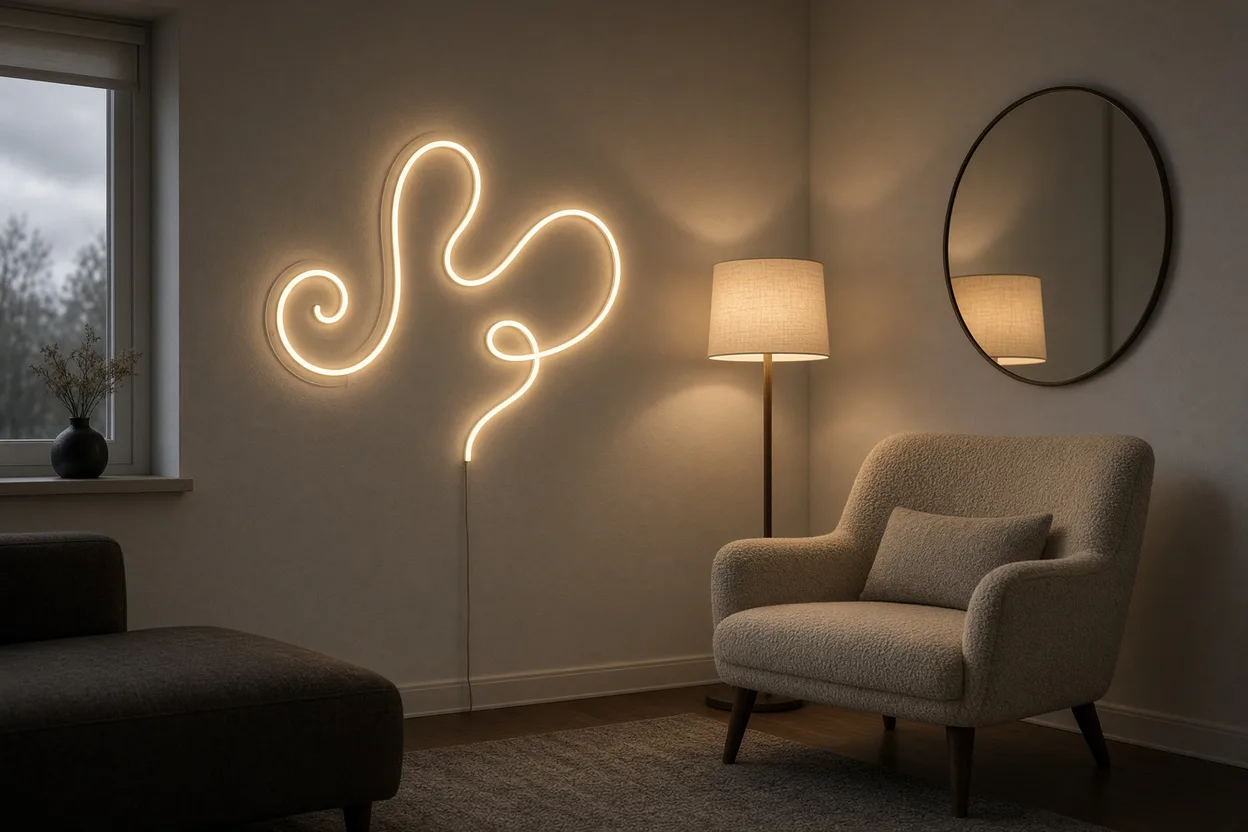
To light a dark room, you need to work three levers at once: maximize natural light with light-colored walls and mirrors, layer artificial sources at different heights, and add a warm light focal point that brings the main wall to life. A ceiling fixture alone is never enough. At Helioneon, our custom neon sign often plays that warm focal role in windowless rooms, and this guide shows how to light a dark room without major renovation work.
Windowless hallway, north-facing bedroom, ground-floor living room: the dark room is a classic in urban homes. It looks smaller, colder, and less welcoming than it really is. With more than 500 neon signs delivered, many of them for spaces short on light, we know what truly changes perception. Here is the method, from the simplest steps to the most decorative.
Why does a room look dark?
A room looks dark for three combined reasons: little natural light coming in, surfaces that absorb light instead of reflecting it, and artificial lighting concentrated in a single spot. In practice, a dark matte wall can absorb up to half the light it receives. In other words, the problem is as much about reflection as it is about the source.
That diagnosis drives the strategy. You gain first on surfaces and obstacles, then on the number of sources, and finally on atmosphere. As a result, the fix is rarely a more powerful lamp, but a room that bounces light better. Note that a warm light focal point, such as a neon sign, then shifts the emotional feel of the space.
- Little natural light: north exposure, small window, facing wall
- Absorbent surfaces: dark walls, matte paint, dark furniture
- Single source: one central ceiling fixture that leaves corners in shadow
- Obstacles: heavy curtains, furniture in front of the window
How to maximize natural light?
Lighting a dark room starts with daylight: light walls and ceiling in a satin finish, a large mirror facing the window, sheer curtains, and a window clear of furniture. These free or nearly free moves can double perceived light. They should come before any lighting purchase.
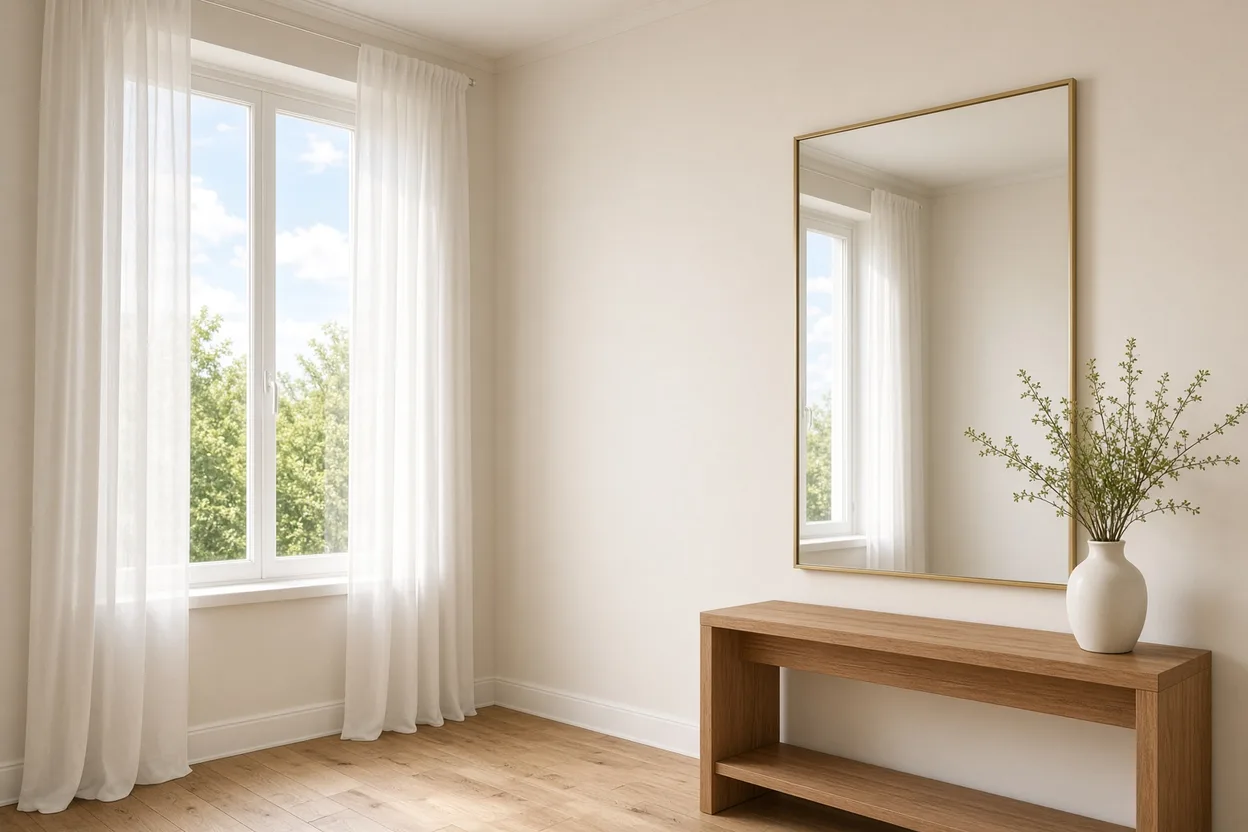
The mirror is the most powerful tool. Placed opposite or at an angle to the window, it sends natural light toward the back of the room. Glossy surfaces (lacquer, glass, polished metal) extend that effect. Off-white, light beige, and pearl gray bounce light best without looking cold.
- Light satin walls: off-white, beige, pearl gray
- Mirror facing the window: natural light roughly doubled
- Sheer curtains: privacy without blocking daylight
- Clear window: no tall furniture in front
How many artificial light sources and where to place them?
To light a dark room in the evening, combine at least three types of sources: soft general lighting at the ceiling, ambient lighting on the walls, and low task lighting near use zones. That layering removes the shadow corners that make a room feel dull. In short, you light the walls, not only the floor.
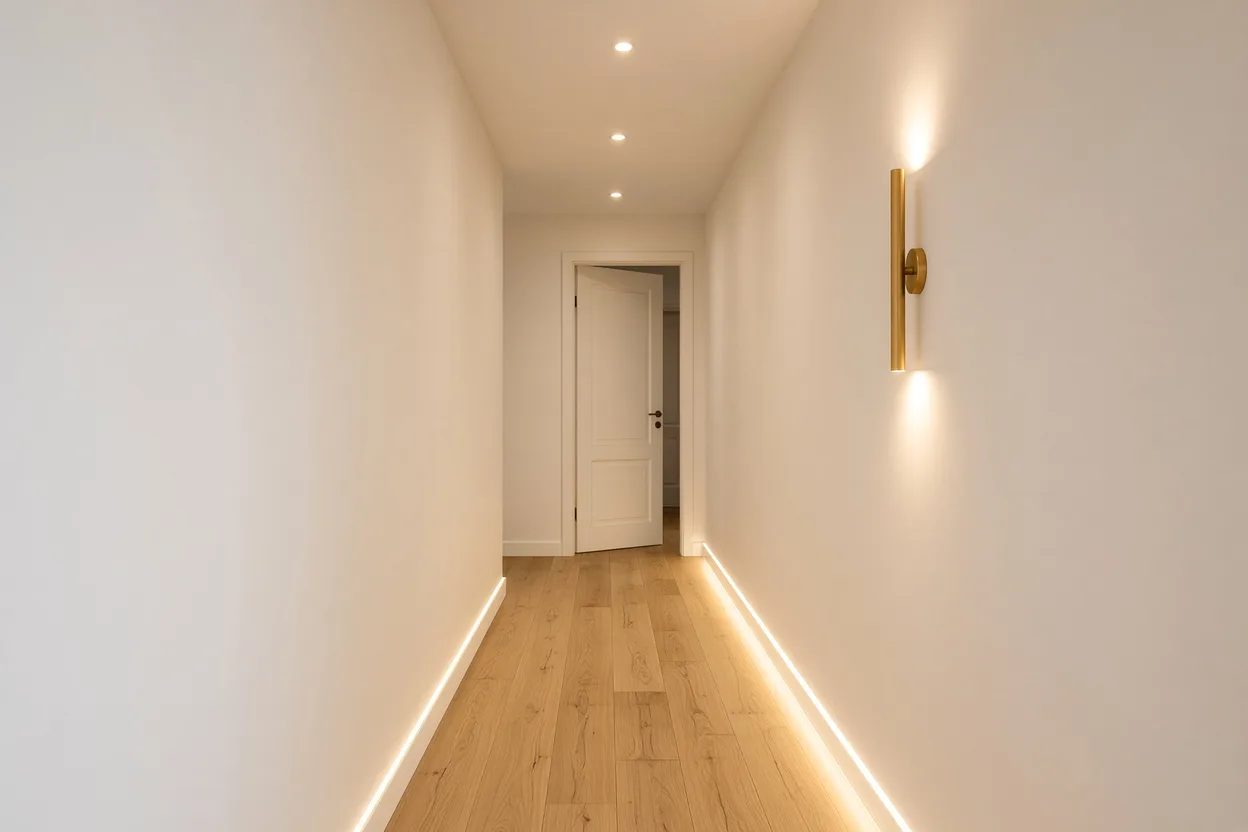
Walls are the key. A sconce, an uplight floor lamp, or a decorative neon lights vertical surfaces and visually pushes the room’s boundaries outward. That indirect lighting principle is covered in our indirect lighting room-by-room guide. The table below maps sources by room type.
| Dark room | Recommended sources | Warm light focal point |
|---|---|---|
| North living room | Soft ceiling light + floor lamp + sconce | Warm white neon on the sofa wall |
| Windowless hallway | Spots + low strip light | Welcome-word neon or light line |
| Dark bedroom | Bedside lamps + backlit headboard | Dimmed neon above the bed |
| Windowless kitchen | Ceiling light + under-cabinet strips | Friendly neon on a clear wall |
| Basement office | Desk lamp + sconce | Motivational neon outside the screen’s field of view |
What color temperature offsets the lack of daylight?
In a dark room, choose a neutral white of 3,000 to 4,000 K during the day to mimic daylight, then switch to warm white at 2,700 K in the evening for atmosphere. A windowless room lit in warm white all day looks yellowish and stuffy, while permanent cool white feels clinical. The answer is to vary by time of day.
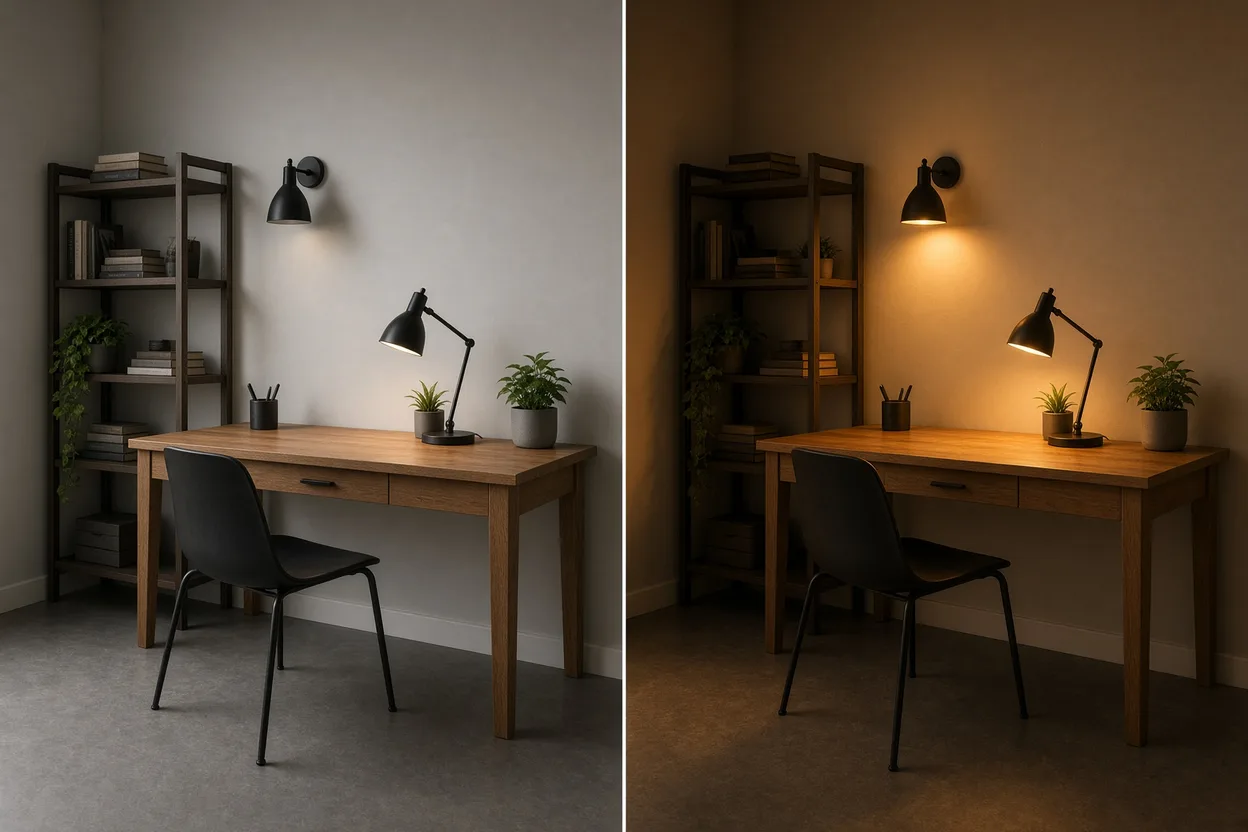
Tunable bulbs and neon signs make that switch easy. A warm white neon as the focal point, surrounded by adjustable neutral sources, is the best mix. The choice between warm and cool white is covered in our guide on warm white vs cool white neon, and the effect of each hue in our article on neon color psychology.
- Daytime: neutral white 3,000 to 4,000 K to mimic daylight
- Evening: warm white 2,700 K for comfort
- Focal point: a warm or colored neon that brings the wall to life
- Dimmable: bulbs and neon you can dim to vary the level
The warm light focal point: the trick that changes perception
Beyond light quantity, a dark room needs a warm, visible light focal point that draws the eye and gives the space personality: that is the role of a decorative neon, a design lamp, or a string of lights. The brain judges a room as welcoming by its luminous focal point, not by its lux level. In other words, a well-placed neon makes the room feel more alive than a ceiling fixture twice as powerful.
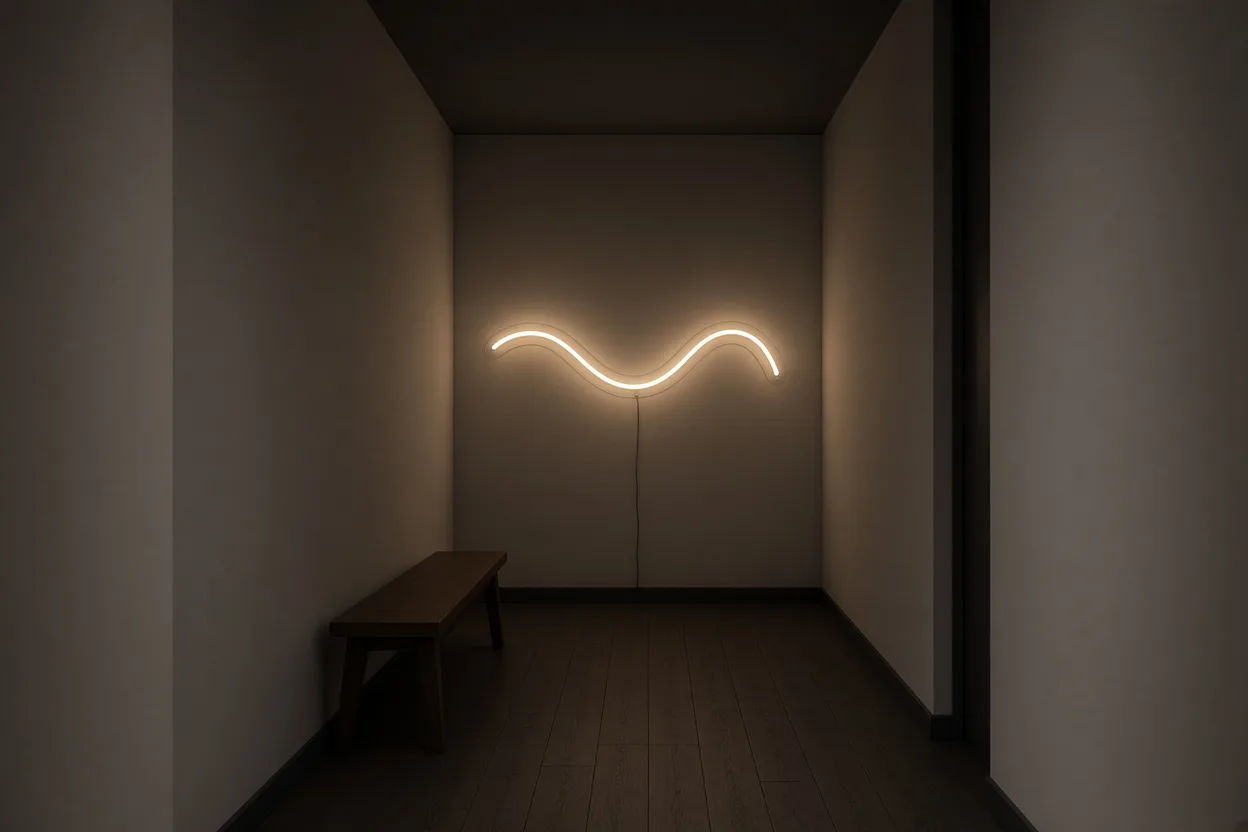
LED neon is especially well suited to this role. Its halo lights the wall indirectly, its message or shape adds character, and it runs on 12V without getting hot, so it works in a hallway or basement. Its brightness can be fine-tuned, as explained in our guide on how bright LED neon signs are.
- One focal point per room: neon, design lamp, or string lights
- On the main wall: where the eye lands when you enter
- Warm or colored: warmth offsets the lack of daylight
- Indirect halo: the neon lights the wall around its outline
Mistakes to avoid in a dark room
Classic mistakes when you light a dark room are overpowering a single ceiling fixture, keeping dark walls, blocking the window, and stacking dark furniture. Power does not replace distribution, and absorbent surfaces cancel every effort. Fix the room first, then the lighting.
Final coherence matters too. All sources should share the same color temperature at a given moment, and only one accent color is acceptable, carried by the focal point. Our neon decor room-by-room guide spells out placements and formats for each space. Efficient, long-lasting LED lamp technology is the right choice throughout.
- Overpowered ceiling fixture: flat, glaring light
- Dark matte walls: light gets absorbed
- Cluttered window: daylight cannot enter
- Mixed color temperatures: incoherent atmosphere
Frequently asked questions about lighting a dark room
How to light a dark room with no window?
With no window, everything rests on artificial lighting and surfaces. Paint walls and ceiling in a light satin tone to reflect light, add a large mirror that bounces the lighting, then combine three levels of sources: soft general lighting at the ceiling, sconces or a neon that light the walls, and a low task lamp. Choose a neutral white of 3,000 to 4,000 K during the day to mimic daylight, and warm white in the evening. A warm light focal point on the main wall, such as a neon, finally brings the room to life.
What paint color for a dark room?
Light tones in a satin finish reflect light best: off-white, light beige, pearl gray, or very soft pastels. Avoid pure white that feels too cold in an already dim room, and matte paints that absorb light. A satin white ceiling visually enlarges the space. A slightly deeper accent wall is still possible if you place the main light focal point there, such as a neon whose halo warms the surface. Paint is the lowest-cost and most effective lever before any lighting purchase.
What type of lamp for a dark room?
There is no single lamp but a combination: a ceiling fixture or pendant with diffuse light for general lighting, one or two sconces or an uplight floor lamp to light the walls, a table lamp near use zones, and a warm decorative light focal point on the main wall. LED neon fills that last role: its halo lights the wall indirectly, its message adds character, and it runs on 12V without getting hot. Prefer dimmable LED sources everywhere so you can vary intensity by time of day.
Can a neon light a dark room?
An LED neon does not light an entire room the way a ceiling fixture does, but it radically changes how the room feels. Its halo spreads soft light on the wall around its outline, and its role as a warm focal point makes the space feel more alive and welcoming. In a windowless hallway, a north bedroom, or a basement, a warm white or soft-color neon supplies the missing touch, alongside general lighting and sconces. It runs on 12V, stays cool, and dims with a dimmer for evening use.
How to make a dark room look larger?
Light the walls rather than the floor: sconces, an uplight floor lamp, or a decorative neon light vertical surfaces so they appear to recede. Add a mirror facing the window or the main source to double light and depth. Keep walls and ceiling light and satin, clear the window, and limit dark, tall furniture. Finally, a warm light focal point on the main wall draws the eye toward the back of the room and strengthens the sense of space. How you distribute sources matters more than how powerful they are.
Lighting a dark room comes down to a method: reflective surfaces, sources spread across the walls, a color temperature matched to the time of day, and a warm light focal point that brings the main wall to life. To create that focal point with a custom neon in warm white or color, with a 3-year warranty, start your project on our contact page and get a free 3D mockup within 24 hours.