LED Neon Signs: Pros and Cons, the Full Breakdown

⚡ The essentials in 30 seconds
- LED neon sign power consumption 2026: 8-15 W/m, $8 to $13 per year at average US electricity rates.
- Compare with gas neon and Helioneon saving tips.
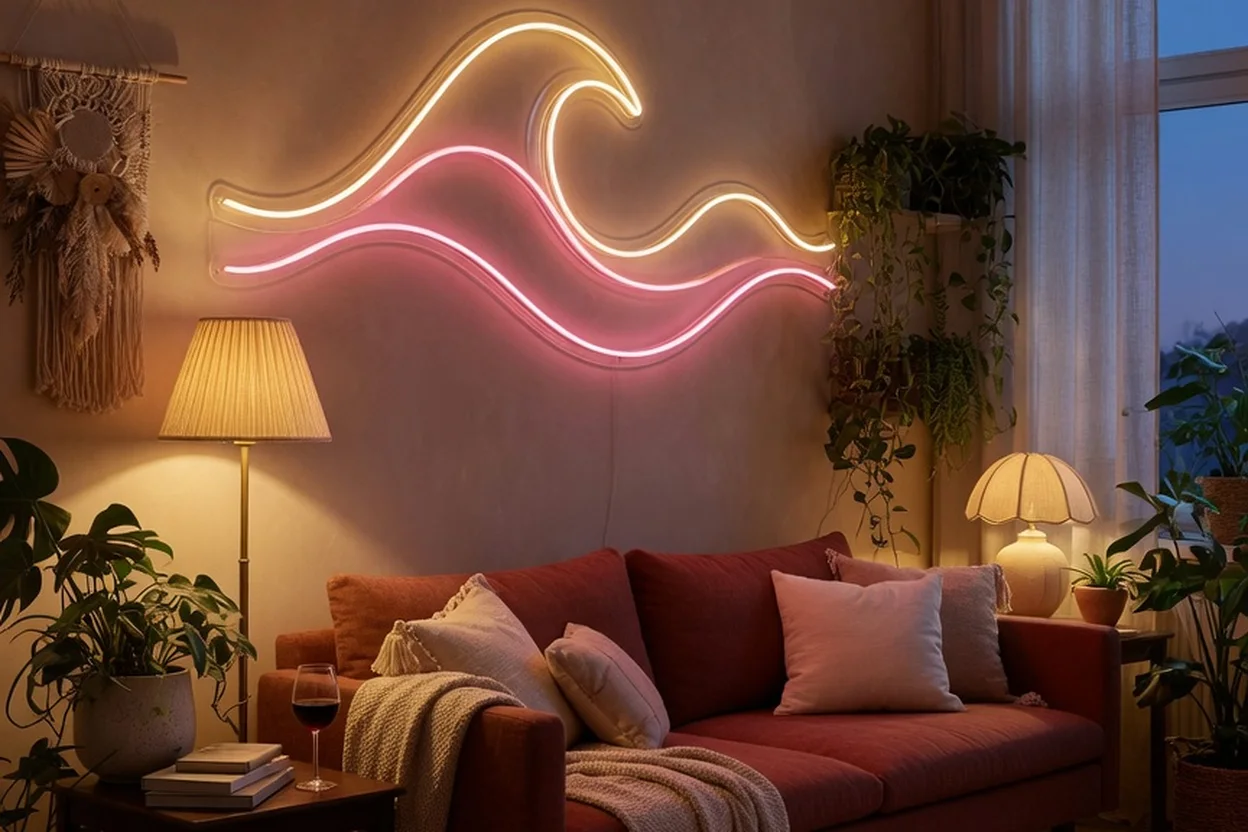
The benefits of LED neon signs are many: low voltage safety, minimal power consumption, a 100,000 hour lifespan, total customization and no heat. The real drawbacks are limited to a higher upfront cost than standard decor and a brightness that depends on the quality of the tube. At Helioneon, we make every custom neon sign from premium silicone, and this guide covers all the pros and cons of LED neon signs, with nothing swept under the rug.
Before investing in an illuminated sign, it is only fair to weigh both sides. LED neon replaced gas neon for excellent reasons, yet it keeps a few limits an honest seller should own up to. With more than 500 neon signs delivered and a 5/5 rating on Trustpilot, we know the expectations as well as the possible letdowns. Here is the full picture, point by point.
What are the main benefits of LED neon signs?
The benefits of LED neon signs boil down to five points: safety, economy, longevity, customization and everyday comfort. Low voltage LED technology erased the historic flaws of glass neon. Put simply, most of what once held people back from buying a neon sign disappeared with the switch to LED.

Each of these strengths deserves a close look, and we dedicate full guides to them. The sections below give the short version and point to the deeper reads that put numbers on every promise.
- Safety: 12V extra low voltage, safe to touch
- Economy: just a few watts of power draw
- Longevity: 100,000 hours, or more than 11 years of continuous 24/7 use
- Customization: custom text, logo, shape, color and size
- Comfort: no heat, no noise, no heavy upkeep
Benefit 1: total everyday safety
The first benefit of LED neon is safety: it runs on 12V, an extra low voltage that is safe to touch, where gas neon demanded 5,000 to 15,000 volts. The silicone tube stays cold and unbreakable, which rules out burns and shattered glass. It goes up without an electrician, even in a child's bedroom.

That safety holds for long sessions, overnight included. No heat also means no fire risk near fabrics. We go deeper in our guides to LED neon safety and 12V LED neon.
Benefit 2: minimal power use and upkeep
The second benefit of LED neon is economic: a few watts are enough, for a yearly cost of just a few dollars, and upkeep amounts to a quick dusting. The diodes turn electricity into light without heat loss, up to 80% savings compared with gas neon. Daily use weighs on neither your bill nor your time.
Longevity strengthens the math, since 100,000 hours mean years without a replacement. For precise figures, see our guides on LED neon sign power consumption, low energy use and the lifespan of an LED neon sign.
Benefit 3: customization without limits
The third benefit of LED neon is creative: the flexible silicone tube follows any text, logo or drawing, in a wide choice of colors and sizes. Where glass imposed simple shapes and a rare craft, LED opens customization to every project. Every sign can be one of a kind.

That freedom covers uses too, from living room decor to a storefront sign. The choice of typeface and color shapes the final look, as explained in our guides to neon fonts and custom neon sign ideas.
What are the real drawbacks of LED neon signs?
The drawbacks of LED neon signs exist, and keeping quiet about them would be dishonest: a higher purchase price than basic light decor, quality that varies a lot from one maker to another, and an intensity that stays decorative rather than illuminating. A decorative neon sign creates a mood, it does not replace a ceiling light. Choose it for what it is.
Tube quality is the real point to watch. Low-grade silicone yellows and diffuses badly, a flaw invisible at purchase but obvious after a few months. That is exactly what the silicone vs PVC comparison covers. None of these drawbacks, though, comes close to the heavy flaws of gas neon: fragility, high voltage and power draw.
- Purchase price: higher than a string light or a basic decor lamp
- Uneven market quality: low-end products yellow and glow poorly
- Mood lighting: a neon sign decorates, it does not light a whole room
- Power to plan for: a nearby outlet is still needed
LED neon sign pros and cons: the summary table
To decide at a glance, the table below weighs the pros and cons of LED neon signs on the criteria that matter at purchase. Each row reflects a verifiable reality, detailed in our dedicated guides.
| Criterion | Benefit | Limit to be aware of |
|---|---|---|
| Safety | Cold 12V, safe to touch | Keep the power supply dry |
| Power use | A few watts, minimal yearly cost | No real one |
| Lifespan | 100,000 hours, 3-year warranty | Low-end products far more fragile |
| Customization | Free choice of text, logo, shape and color | Finish tied to tube quality |
| Brightness | Even, warm glow | Decorative, not a main light |
| Price | Pays off over time | Higher upfront investment |
In other words, the limits of LED neon are a matter of informed choice, not deal breakers, as long as you aim for quality manufacturing.
LED neon or other lighting options: the right choice?
Against gas neon, LED strips or a decor lamp, LED neon stands out for its balance of premium finish, safety and running cost. Gas neon keeps its vintage charm but stacks up fragility, high voltage and a heavy appetite for power. An LED strip lights at lower cost, without the graphic pull of a monoline stroke.
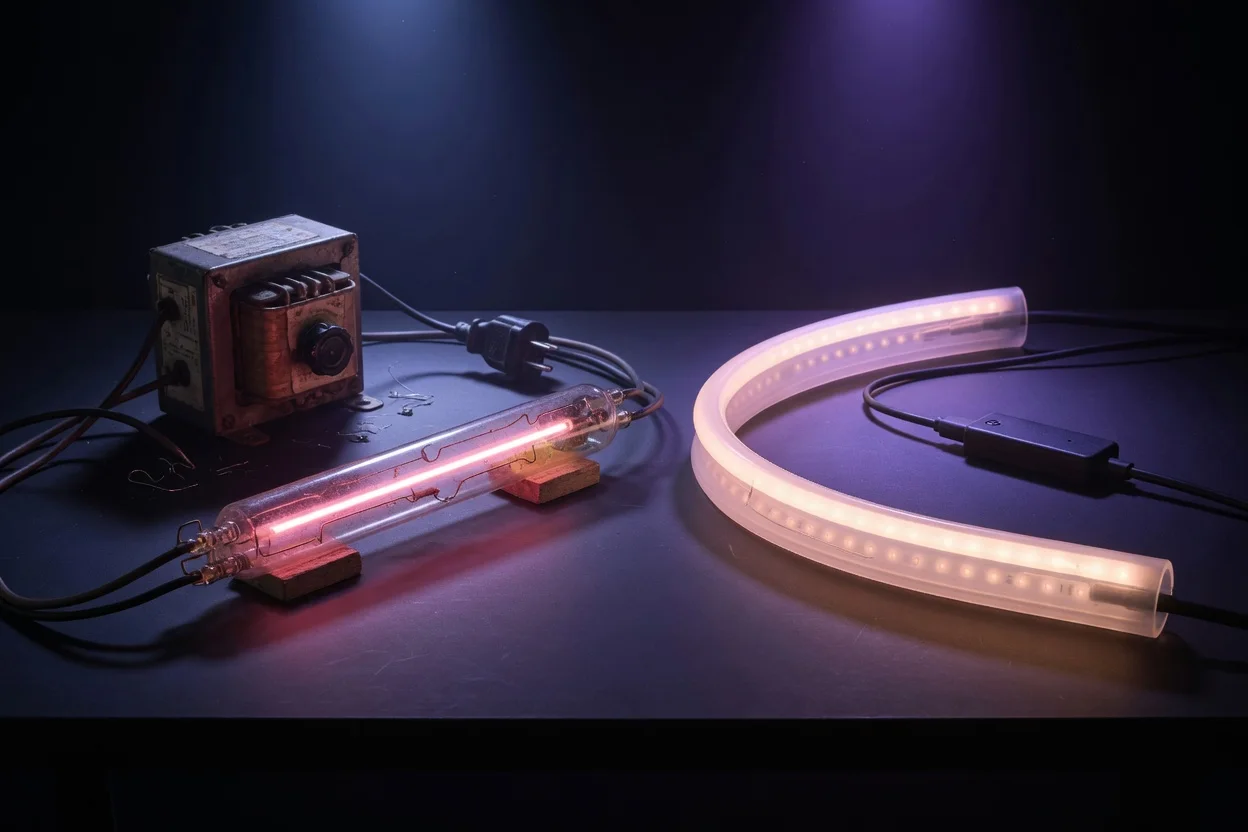
The choice depends on the project. For a signature decor piece or a sign, LED neon wins. For simple shelf backlighting, a strip will do. Our comparisons of glass neon vs LED neon and LED neon vs LED strip lights dig deeper into these trade-offs.
- Decor piece or sign: LED neon, for the graphics and the finish
- Discreet backlighting: the LED strip, cheap and invisible
- True vintage spirit: gas neon, at the price of its constraints
- Functional lighting: classic fixtures, with neon as an accent
Frequently asked questions about LED neon sign pros and cons
What are the main advantages of an LED neon sign?
The main advantages of an LED neon sign are safety, economy and longevity. It runs on 12V extra low voltage, stays cold to the touch and goes up without an electrician. Its power draw stays at a few watts, a few dollars per year, and its lifespan reaches 100,000 hours. Add full customization of text, shape and color, plus next to no upkeep. The silicone tube is also unbreakable, unlike the glass of traditional neon. That combination is what made LED the standard for decorative neon.
What are the drawbacks of an LED neon sign?
The real drawbacks of an LED neon sign are few but worth knowing. Its purchase price is higher than basic light decor, since it is a custom made piece. Quality varies widely from one maker to another: a low-grade tube yellows, diffuses badly and ages fast. Finally, its light sets a mood but does not replace a main light source. None of these points is a deal breaker, provided you pick quality manufacturing in premium silicone and buy it for what it is: a decorative light object.
Is an LED neon sign dangerous?
No, an LED neon sign is not dangerous under normal use. It runs on 12V extra low voltage, far below the risk threshold for the human body, and its silicone tube stays cold even after hours switched on. There is no electrocution risk, no burn risk and no glass that could shatter. Traditional gas neon, by contrast, climbed to several thousand volts. The one precaution concerns the power adapter, to be kept dry like any electrical device. An LED neon sign can hang in a child's bedroom with complete peace of mind.
Is an LED neon sign worth the price?
Yes, a quality LED neon sign is worth its price once you think in total cost. The initial investment is higher than basic decor, but it spreads over a 100,000 hour lifespan, eight to ten years of regular use, with power costing a few dollars per year and no upkeep. A custom model in premium silicone keeps its original look for years, where low-end products yellow fast. Set against its longevity, a well made LED neon sign works out to a few cents a day for a one of a kind decor piece.
Is an LED neon sign bright enough to replace a lamp?
No, a decorative LED neon sign does not replace a main light source, and that is not its purpose. It produces a warm ambient glow that dresses a wall and structures a room, comparable to a beautiful accent light. To light a living room or an office, it works alongside a ceiling light or functional fixtures rather than replacing them. That ambient role is exactly its charm: switched on alone in the evening, it changes the whole feel of a room. For strong, even lighting, turn to dedicated fixtures.
Weigh it all up and the benefits of LED neon signs far outweigh their limits, provided you pick premium silicone manufacturing. To design a custom piece, safe and backed by a 3-year warranty, start your project through our contact page and receive a free 3D mockup within 24 hours.