Georges Claude: Neon Sign Inventor, from Glory to Disgrace
- Georges Claude (1870-1960) invented neon lighting, first shown in Paris in 1910, and helped launch Air Liquide. Decorated for World War I service, he was later convicted in 1945 for collaboration with Nazi Germany.
- This biography covers his neon patents, Air Liquide work, ocean energy experiments, 1945 trial, and the luminous legacy still visible today.
Georges Claude (1870-1960) was a French physicist and chemist who pioneered neon lighting and the first neon signs, shown in Paris from 1910. His work on air liquefaction also helped give rise to Air Liquide. His reputation remains stained by collaboration with the occupying power during World War II. At Helioneon, every personalized neon sign carries forward in LED form the idea he popularized.
His path is one of the most starkly contrasted in the history of science: a prolific inventor, academy member, and decorated figure for his actions in 1914-1918, then convicted in 1945. With more than 500 neon signs delivered, we often tell our clients where this light comes from. Here is his biography, his inventions, what he was charged with, and what remains of his legacy.
Who was Georges Claude?
Claude was born on September 24, 1870 in Paris and died on May 21, 1960 in Saint-Cloud. Trained as an engineer at the Paris School of Physics and Chemistry, he was at once a researcher, inventor, and industrialist, with work on acetylene, liquid air, ammonia, lighting, and ocean thermal energy.
The son of a schoolteacher who encouraged him early on to experiment, he began his career in the electrical industry. He first made his name with a process for storing acetylene by dissolving it in acetone, which made the gas safe to use for lighting and welding.
- 1870: born in Paris
- 1902: industrial air liquefaction process, the basis of what became Air Liquide
- 1910: first neon luminous tubes shown in Paris
- 1924: election to the Academy of Sciences
- 1960: died in Saint-Cloud at age 89
He was elected a member of the Academy of Sciences in 1924, but had to wait until 1933 to be promoted officer of the Legion of Honor. Between the wars he became a media figure, staging spectacular experiments and lectures that mixed science and politics.
How did Georges Claude invent neon lighting?
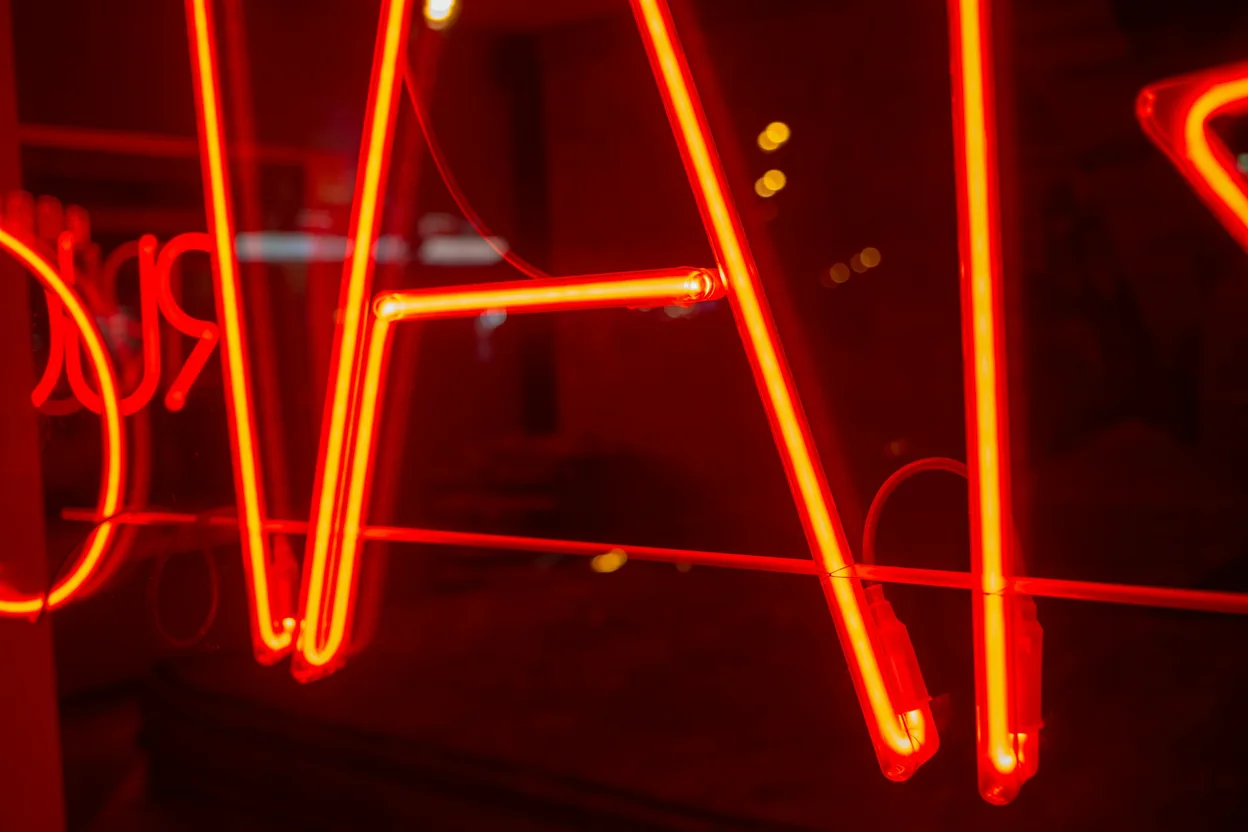
Claude invented neon lighting by putting the rare gases he obtained from distilling liquid air to work. By sending an electric discharge through a glass tube filled with neon, he produced an intense reddish-orange light, which he presented to the public in Paris in 1910.
Neon gas had been discovered in 1898 by British chemists William Ramsay and Morris Travers, who identified it through the red lines of its light spectrum. But the gas was rare and costly, because no one knew how to extract it in quantity. Claude’s liquid-air plant produced it as a byproduct: he found a use for it, and not a minor one.
- Gas source: distillation of liquid air, which separates oxygen, nitrogen, and the rare gases
- Principle: an electric discharge that excites the gas sealed inside a tube
- Color: reddish-orange for pure neon, other hues with other gases and coatings
- Technical challenge: durable electrodes, the subject of his most famous patent
The real stroke of genius concerned the electrodes, the metal parts that bring current into the tube. Early ones wore out quickly and blackened the glass. Claude developed electrodes that lasted far longer, making the tubes usable for years. That patent let him control the neon industry for a long time through licenses sold abroad.
To grasp what his process meant, remember that air is about 78% nitrogen, 21% oxygen, and a little under 1% argon, while neon is only a tiny fraction, around 0.0018%. Because air must be cooled below -190 °C to liquefy it, separating these gases requires huge plants. If Claude could supply neon in quantity, it was because his plant processed enormous volumes of air, and neon was an almost free byproduct. Without liquid air, there would likely have been no neon signs, at least not so early or at that price.
How Georges Claude neon conquered the cities
Neon conquered cities mainly through advertising: from 1912, Claude partnered with a lighted-sign company to build neon signs, one of the first of which dressed a hair salon on the boulevard Montmartre. In the 1920s his tubes crossed the Atlantic.

The Claude Neon company sold licenses in many countries. In the United States, a Los Angeles car dealer bought two “Packard” signs in 1923 that caused a sensation. Within a few years, Times Square, Las Vegas, and major Asian cities were covered in neon light.
| Technology | Inventor or origin | Principle | Use today |
|---|---|---|---|
| Helioneon LED neon | 2010s | 12 V LEDs in a silicone tube | Decor, shops, hotels |
| Claude neon tube | Claude, 1910 | Gas excited by high voltage | Craft signs, art |
| Incandescent lamp | Edison and Swan, around 1879 | Heated filament | Largely phased out |
| Fluorescent tube | 1930s | Mercury and fluorescent powder | On the way out |
The look of the 1920s and 1930s owes a great deal to this light. The tall, geometric letters of period signs live on in Art Deco style, which treats light on the facade as a design element. Our article on the history of neon signs follows the story through decline and revival.
Air Liquide, ammonia, ocean energy: other inventions of Georges Claude
Beyond neon, Claude is best known for his air liquefaction process, developed in 1902 and at the origin of Air Liquide, today one of the world’s leaders in industrial gases. He also worked on ammonia synthesis and ocean thermal energy conversion.
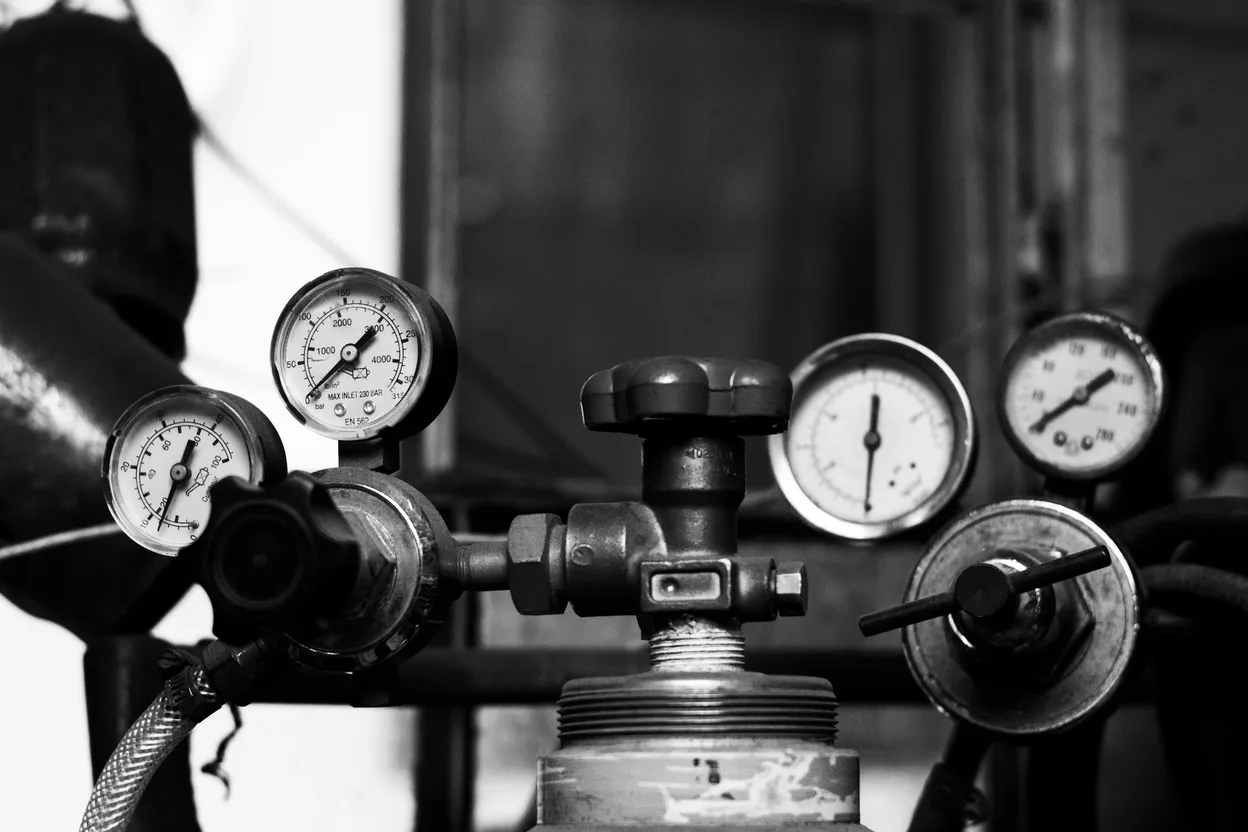
His liquefaction process improved on that of the German Carl von Linde by recovering energy from the expansion of air. It made it possible to separate oxygen, nitrogen, and argon on an industrial scale. The related patents founded Air Liquide, where Claude served as a director and shared in the profits.
- Dissolved acetylene: safe storage of the gas in acetone
- Liquid air: 1902 process, foundation of the industrial gas industry
- Ammonia: a very high-pressure process, around 1,000 atmospheres, in 1917
- Ocean thermal energy: generating electricity from the temperature difference in the ocean
Ocean thermal energy was his great interwar project. He ran a demonstration in Cuba in 1930, then at his own expense converted a 10,000-ton cargo ship to produce ice off the coast of Brazil. A break in the pumping pipe ended the experiment: he later called it the most bitter failure of his career. The principle is still studied today.
Why was Georges Claude convicted in 1945?
Claude was convicted in 1945 for collaboration with Nazi Germany. From November 1940 he publicly declared himself in favor of collaboration and gave many lectures and writings to that effect, which led to his expulsion from the Academy of Sciences in 1944 and a sentence of life imprisonment in June 1945.
A right-wing nationalist activist between the wars and close to Action Française, he shifted after the 1940 defeat. He took part in collaborationist organizations and was appointed to the Vichy National Council in 1941. Air Liquide, alarmed by these positions, asked him to leave his role as director.
- 1940: public stance in favor of collaboration
- 1944: arrest in August, expulsion from the Academy of Sciences in September
- 1945: sentenced by the Seine Court of Justice to life imprisonment
- 1950: conditional release, nearly 80 years old
The rumor that he had invented the V1 missiles for Germany was refuted at his trial, notably by physicist Paul Langevin. That conviction helps explain why Claude has remained a little-celebrated figure in France, despite the importance of his inventions. Historians today separate the scientific contribution from his political choices, without erasing either.
What remains of the legacy of Georges Claude?
Claude’s legacy is visible everywhere: in the gas industry with Air Liquide, and in the luminous look of cities with neon. More than a century after his first signs, the colored line of light remains a universal visual language, from bars to art galleries.

Glass neon has remained the craft of glassblowers who still work at high voltage, often several thousand volts. Since the 2010s, LED neon has taken on the same look with a very different technology. Our article on glass neon vs LED neon compares the two in detail.
- Industry: oxygen, nitrogen, and argon production still rests on air distillation
- City: lighted signs are part of the identity of commercial streets
- Art: artists use luminous tubes as a material in their own right
- Decor: neon has become a design object, from living rooms to restaurants
A Helioneon LED neon runs on 12 V, draws 8 to 15 W per meter, and stays cool to the touch. It holds neither gas nor glass, yet it keeps the same continuous line of light that so struck the Paris public in 1910. Its lifespan reaches about 100,000 hours, with a 3-year warranty.
Where to see traces of Georges Claude today
Traces of Claude appear on many French streets that bear his name, often in industrial zones, in Air Liquide archives, and in surviving vintage neon signs. His personal papers and documents on his work are held in several public collections.
The Seine-et-Marne departmental archives, for example, keep a notice on him linked to his installations near Fontainebleau. Science and technology museums regularly cover the early days of electricity and lighting, where his tubes have a place.
- Georges-Claude streets: found in many towns, especially in business districts
- Vintage signs: a few facades still keep interwar neon
- Archives: departmental holdings and company historical collections
- Exhibits: on the history of lighting and lighted advertising
For a business, nodding to this history can build a strong identity: a tall-letter sign inspired by the 1920s, a reddish-orange neon true to the original color, or a retro touch in a neighborhood bar or shop.
Frequently asked questions about Georges Claude
Who invented neon?
Neon gas was discovered in 1898 by British chemists William Ramsay and Morris Travers. Neon lighting itself is the work of Claude, who in 1910 in Paris presented luminous tubes filled with that gas and developed durable electrodes. From 1912 he built the first neon advertising signs, which then spread worldwide.
Did Georges Claude found Air Liquide?
His work is at the origin of Air Liquide. His industrial air liquefaction process, developed in 1902, provided the basis for creating the company, where he served as one of the directors. The firm is associated with Paul Delorme, who ran it. Air Liquide asked Claude to leave his posts during the Occupation because of his collaborationist positions.
Why is Georges Claude controversial?
Because from 1940 he publicly supported collaboration with Nazi Germany through lectures and writings. He was expelled from the Academy of Sciences in 1944, then sentenced in 1945 to life imprisonment and national degradation. Released on condition in 1950, he died in 1960. His scientific work is still recognized, but his name is rarely put forward.
What was the first neon sign?
The first neon advertising signs appeared in Paris in the early 1910s, after Claude’s tubes were shown in 1910. One of the most often cited dressed a hair salon on the boulevard Montmartre in 1912. In the United States, the two “Packard” signs installed in 1923 at a Los Angeles dealership marked the start of the American wave.
Do today’s neons work like those of Georges Claude?
Glass neons made by craftspeople still rest on his principle: a gas excited by a high-voltage electric discharge. LED neons, now the most common in decor, work differently: 12 V LEDs light a silicone tube that diffuses the glow. The look is close, but they are lighter, tougher, and do not heat up.
Georges Claude gave the world one of its most recognizable lights, then stained his name with his political choices. His invention outlived the century and lives on today in a safer, leaner LED form. To create your own sign or decorative neon, start your project on our contact page and get a free 3D mockup within 24 hours. To go deeper into his biography, the Wikipedia page on Georges Claude covers his work and his trial.
Your custom neon, designed for free in 24 h
- Describe your ideaA text, a logo or a simple sketch. It takes one minute.
- Get your mockup and priceWithin 24 h by email, no commitment.
- Approve, we make itFree express delivery in 7 to 10 days, set up in 3 minutes.
- Mockup and price within 24 h, no commitment
- Free express delivery, received in 7 to 10 days
- 3-year warranty, set up in 3 minutes
Get your free mockup

Guillaume Schlupp
Founder of Helioneon
Over 10 years of entrepreneurship in premium interior design. 500+ LED neons delivered across 13 countries under Helioneon and Light Genius. Leads product strategy, design and professional accounts.