Living room ambient lighting: create a warm atmosphere, source by source
⚡ The essentials in 30 seconds
- LED neon sign power consumption 2026: 8-15 W/m, $6 to $8 per year at the US average electricity rate.
- Compare with gas neon and Helioneon saving tips.
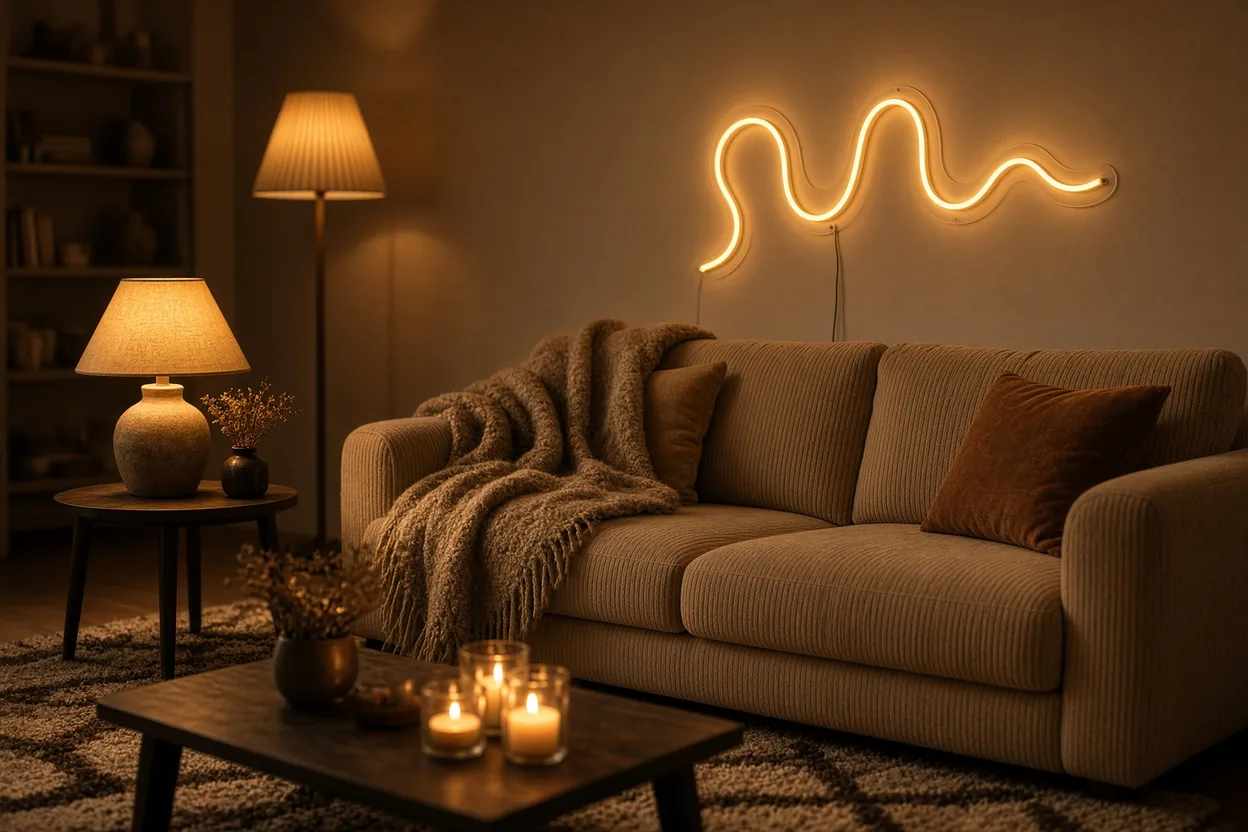
Successful living room ambient lighting relies on three to four soft, low sources in warm white around 2,700 K, spread around the room rather than a single ceiling fixture. Table lamps, sconces, LED strips and decorative neon work together to create a warm evening atmosphere. At Helioneon, our custom neon sign is often the centerpiece of that mix, and this guide shows how to build balanced living room ambient lighting, source by source.
The living room is where lighting is felt most, from morning coffee to movie night. A single ceiling light flattens everything, while a few well placed sources turn the same room into a cocoon. With more than 500 neon signs delivered, most of them for living rooms, we have seen what really works. Here is the method, from core principles to choosing the neon.
What makes good ambient lighting in a living room?
Good living room ambient lighting is indirect, warm and layered. It lights the space without glare and leaves soft pockets of shadow. In practice, it is the opposite of functional ceiling light meant to make everything bright: ambiance is about feeling good. In other words, visual comfort comes before raw light output.
Three rules define it. Color temperature should stay warm, between 2,200 and 3,000 K, intensity should stay low and ideally dimmable, and sources should be multiple and placed at eye level or near the floor. Success depends less on budget than on distribution. The warm white vs cool white distinction is covered in our guide warm white vs cool white neon.
- Warm: 2,200 to 3,000 K, never cool white in the evening
- Indirect: the source is hidden or diffused, not in your direct line of sight
- Layered: three to four light points rather than one
- Variable: a dimmer to move from reading to movie night
How many light sources do you need and where should you place them?
For even living room ambient lighting, plan three to four sources arranged in a triangle or square around the seating area: one near the sofa, one on a low piece of furniture, one on the wall and one decorative accent. That layout removes dead zones and gives the room depth. In short, every corner gets its own glow.
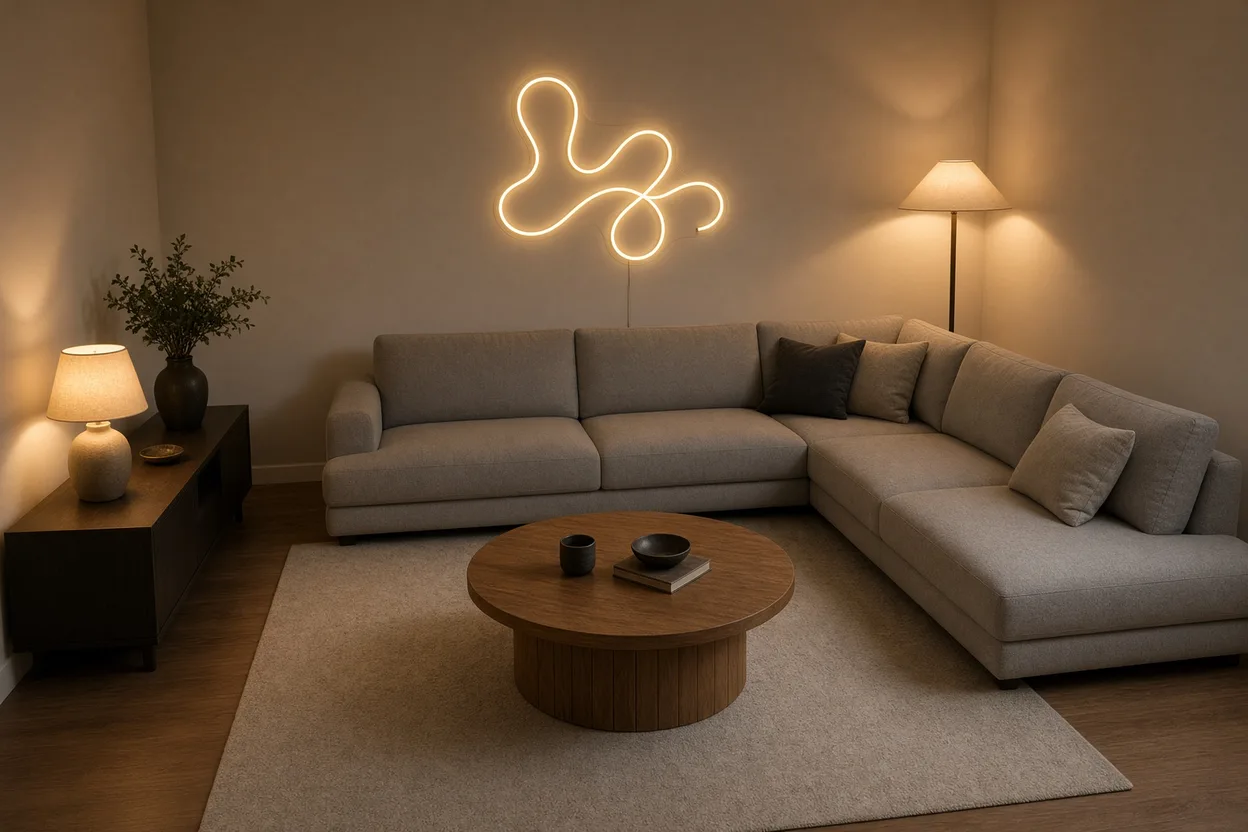
Height matters as much as count. Low sources, table lamps and strips under furniture, create intimacy, while a wall source at eye level structures the main wall. That is exactly the role of decorative neon: a luminous focal point that dresses the sofa wall, as we cover in our neon decor room-by-room guide.
- Near the sofa: table lamp or floor lamp for reading
- On low furniture: accent lamp or LED strip under a shelf
- On the main wall: decorative neon or sconce, at eye level
- As a hot spot: LED candles or a string of lights on a console
Which sources to combine: lamps, strips, sconces and neon?
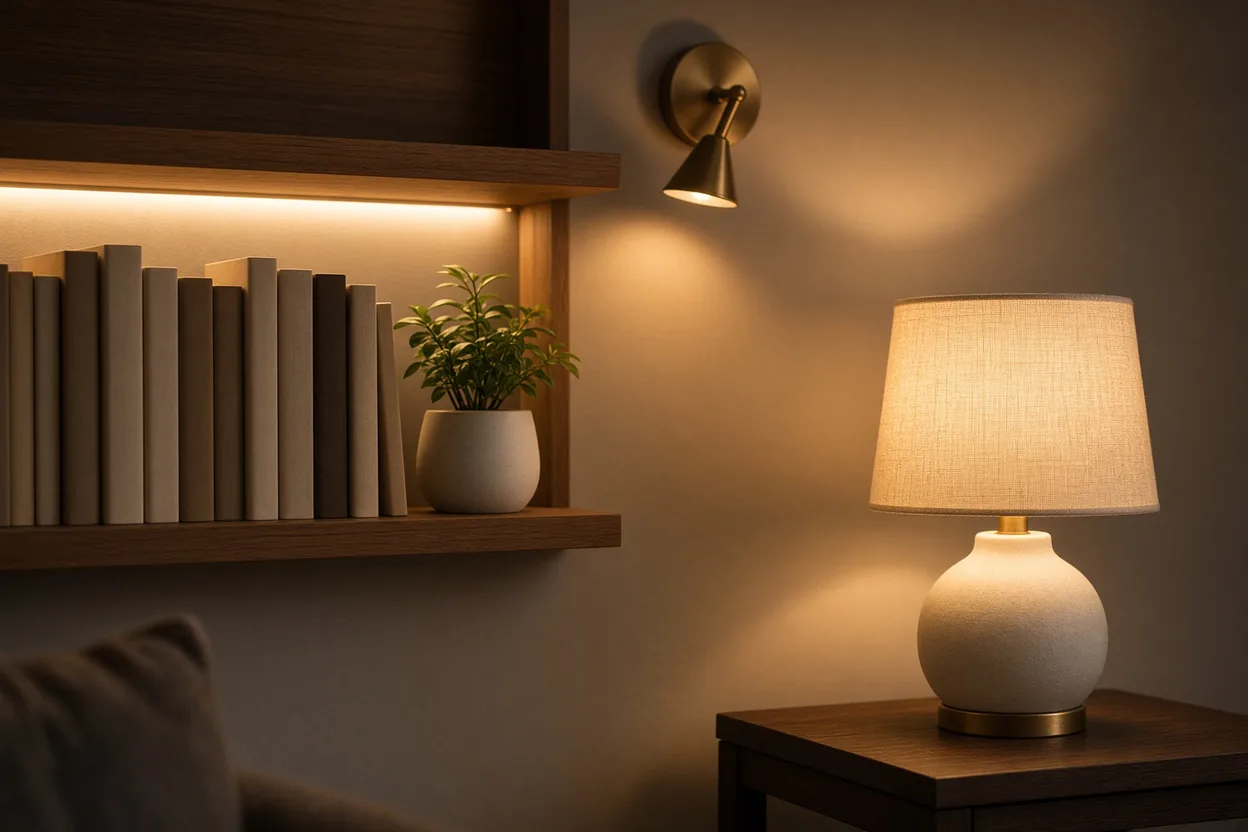
Each source of living room ambient lighting has a job: the table lamp lights a corner, the LED strip outlines furniture, the sconce washes a wall, and LED neon creates the graphic focal point of the room. None is enough on its own, but together they build a scene. The table below sums up who does what.
| Source | Role in the ambiance | Ideal placement |
|---|---|---|
| Decorative LED neon | Focal point, lit word or shape | Sofa wall, at eye level |
| Table lamp | Reading corner, local light | Side table, console |
| Floor lamp | Indirect halo toward the ceiling | Corner near the sofa |
| LED strip | Subtle outline | Under a shelf, behind the TV |
| Wall sconce | Soft wall wash | Side wall, at about 5 ft 7 in |
| Candles and string lights | Sparkling hot spots | Console, fireplace, ledge |
In other words, neon brings what the other sources lack: a message or a shape, on top of the light. For how neon and strip options compare, our guide on LED neon vs LED strip lights breaks down the differences.
What light color for a warm living room?
The warmest living room ambient lighting sits between 2,200 and 2,700 K, a warm white that leans amber and recalls candlelight. That temperature calms, flatters materials and sets the mood for rest, while cool white wakes you up and hardens contrast. Save cool light for work surfaces, never for the living room in the evening.
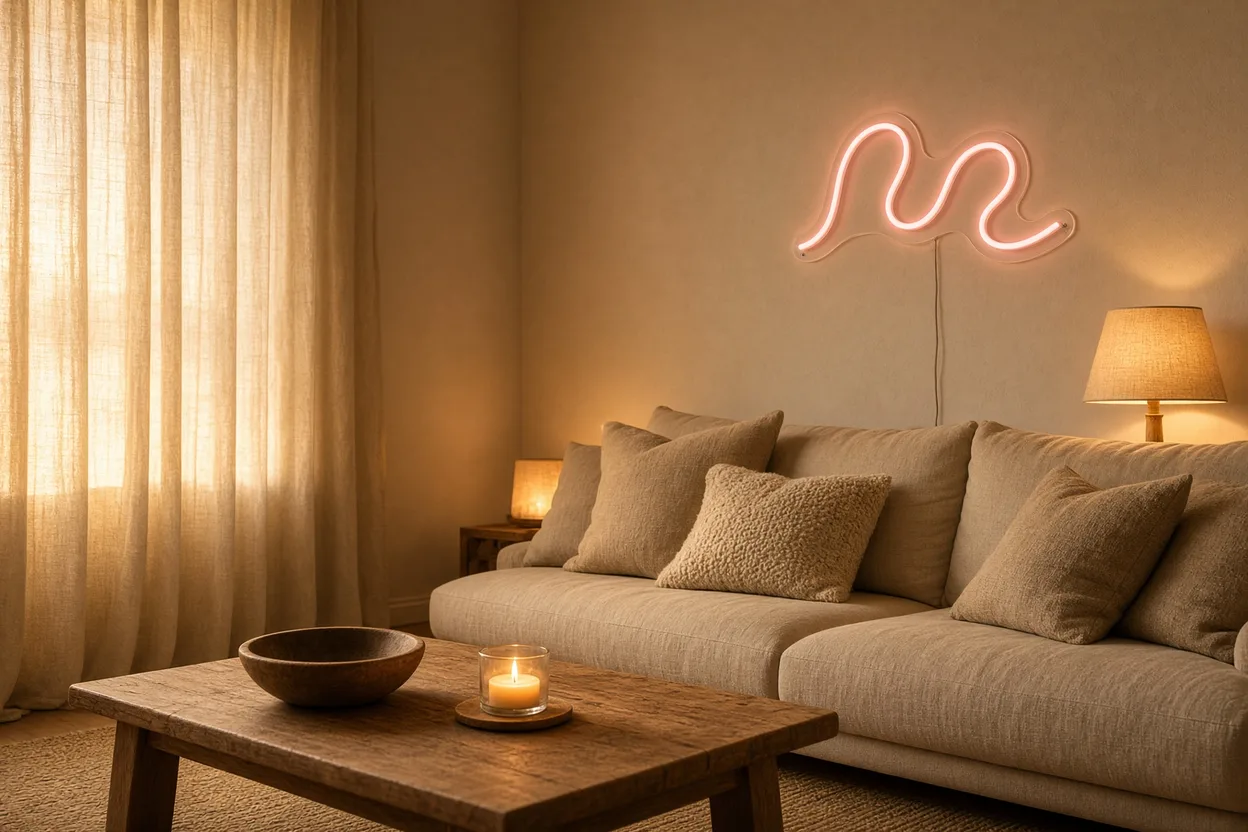
Bold colors have a place too, used with restraint. A soft pink, orange or blue neon as a focal point adds character without harshness, as long as the rest of the sources stay in warm white. How each hue affects mood is unpacked in our guide to neon color psychology. The idea of color temperature explains why kelvins matter so much.
- 2,200 to 2,700 K: amber warm white, the ultimate cocoon vibe
- 3,000 K: neutral warm white, versatile day and night
- Color as accent: one colored neon only, everything else in warm white
- Avoid in the evening: cool white above 4,000 K
How to set brightness for each moment?
Living room ambient lighting should shift through the evening: full intensity for drinks, half for dinner, minimum for a movie. The same setup should cover several uses without swapping fixtures. In short, the dimmer is the highest return accessory in the whole kit.
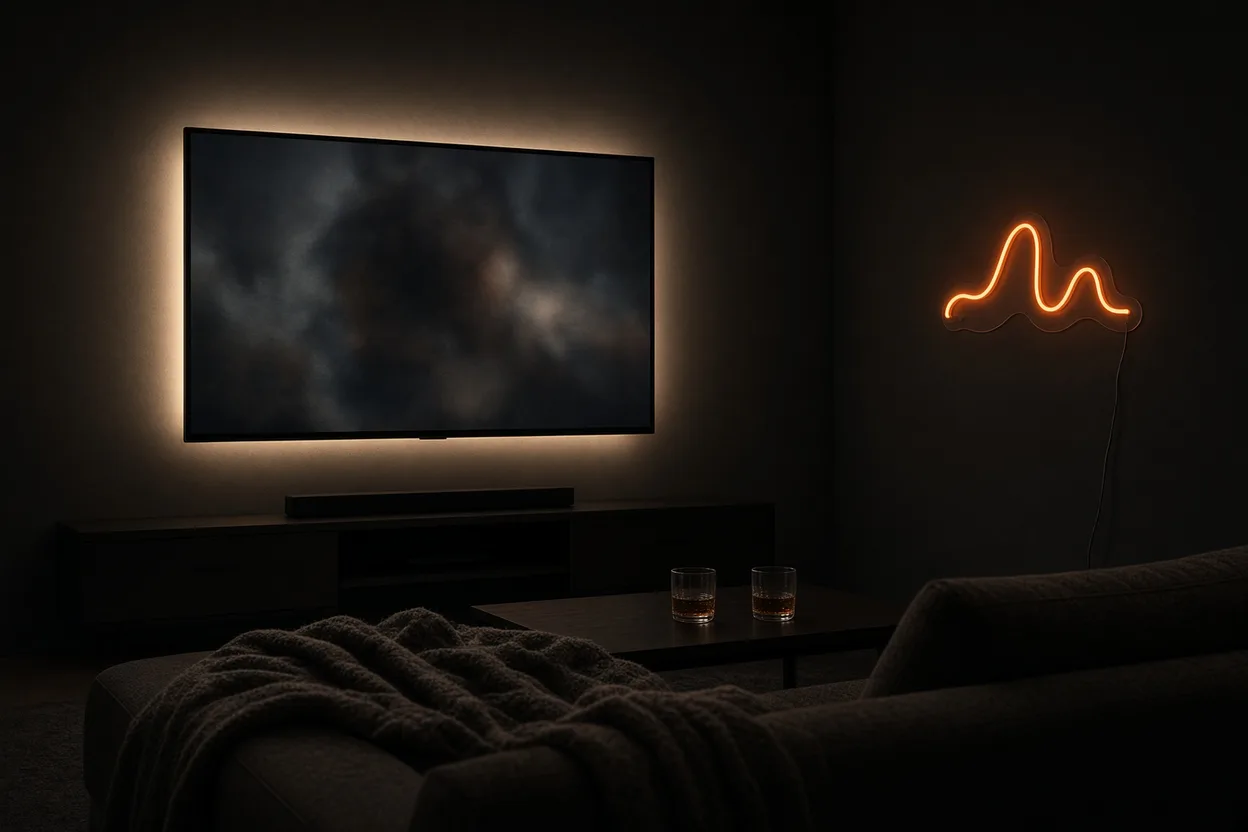
Options range from simple to smart. A wall dimmer, dimmable bulbs, a smart plug or a remote on the neon let you build scenes. LED neon brightness can be tuned finely, a point covered in our guide on how bright LED neon signs are.
- Drinks: all sources on, neon at full power
- Dinner: low sources at mid intensity, neon dimmed
- Movie: strip behind the TV and neon at minimum, everything else off
- Late night: a single warm source, like a night light
Mistakes that ruin living room ambiance
Classic living room ambient lighting mistakes look alike: a lone ceiling fixture, cool white, sources that are too high or too bright, and a main wall left bare. Each one flattens the room or tires the eyes. Fixing them can transform a living room with little or nothing else to buy.
The main wall deserves special care. It gives the room its identity, and a well sized neon works like a luminous piece of art. Keep the format proportional, 1 to 1.5 meters on a large wall, and the color consistent with the furniture palette.
- Ceiling light alone: flat light, harsh shadow zones
- Cool white in the evening: office vibe, disrupted sleep
- Sources in your line of sight: glare and eye fatigue
- Empty main wall: the room lacks a focal point
Frequently asked questions about living room ambient lighting
How do you create ambient lighting in a living room?
Replace the single ceiling fixture with three to four soft sources spread around the room: a table lamp or floor lamp near the sofa, an LED strip under furniture or behind the TV, a wall source at eye level such as decorative neon or a sconce, and a decorative hot spot. Choose bulbs and neon in warm white, between 2,200 and 3,000 K, and add a dimmer so you can match intensity to drinks, dinner or a movie. Light should stay indirect, warm and layered so it illuminates without glare.
What light color for a cozy living room?
Warm white between 2,200 and 2,700 K is the coziest light color for a living room: an amber tone that recalls candlelight, calms and flatters materials. 3,000 K stays warm while working better during the day. Avoid cool white above 4,000 K in the evening, which feels like an office and can disrupt sleep. A bold color, soft pink, orange or blue, can act as an accent on a decorative neon, as long as the other sources stay in warm white to keep the balance.
Is LED neon suitable as ambient lighting?
Yes, LED neon is one of the best ambient sources for a living room, because it pairs soft, diffuse light with a decorative role: a lit word, shape or quote that becomes the focal point on the main wall. It runs on 12V, stays cool to the touch, uses only a few watts and lasts 100,000 hours. Set to warm white or a soft color and dimmed, it creates a warm glow without glare. It complements low lamps and strips without replacing primary functional lighting.
How many lamps does a living room need?
Plan three to four ambient sources for a standard living room, five to six for a large open living space. Distribution matters most: arrange them in a triangle or square around the seating area at varied heights, one low near the sofa, one on furniture, one on the wall, one decorative. Every corner should get its own glow so dead zones disappear. A single lamp, even a beautiful one, is never enough for real ambiance; multiplying soft sources is what builds the cocoon.
Where should you place a neon in a living room for ambiance?
Place the neon on the main living room wall, usually above the sofa, at eye level, where it acts as a focal point and a backdrop for photos. Behind the TV console, it reduces screen contrast and creates a pleasant glow for movie nights. Along a bookcase, it highlights a vertical line. Choose a clear wall without competing frames, and a format of 1 to 1.5 meters on a large wall. One neon per room is enough; it then works with the low lamps and strips.
Living room ambient lighting is built in layers: warm, low sources, a dimmer, and a luminous focal point on the main wall. To create the neon for your living room, in warm white or color, with a dimmer and a 3-year warranty, start your project through our contact page and get a free 3D mockup within 24 hours.