How to Recycle a Neon Sign: The Complete LED and Glass Guide
⚡ The essentials in 30 seconds
- LED neon sign power consumption 2026: 8-15 W/m, $6 to $8 per year at the US average electricity rate.
- Compare with gas neon and Helioneon saving tips.
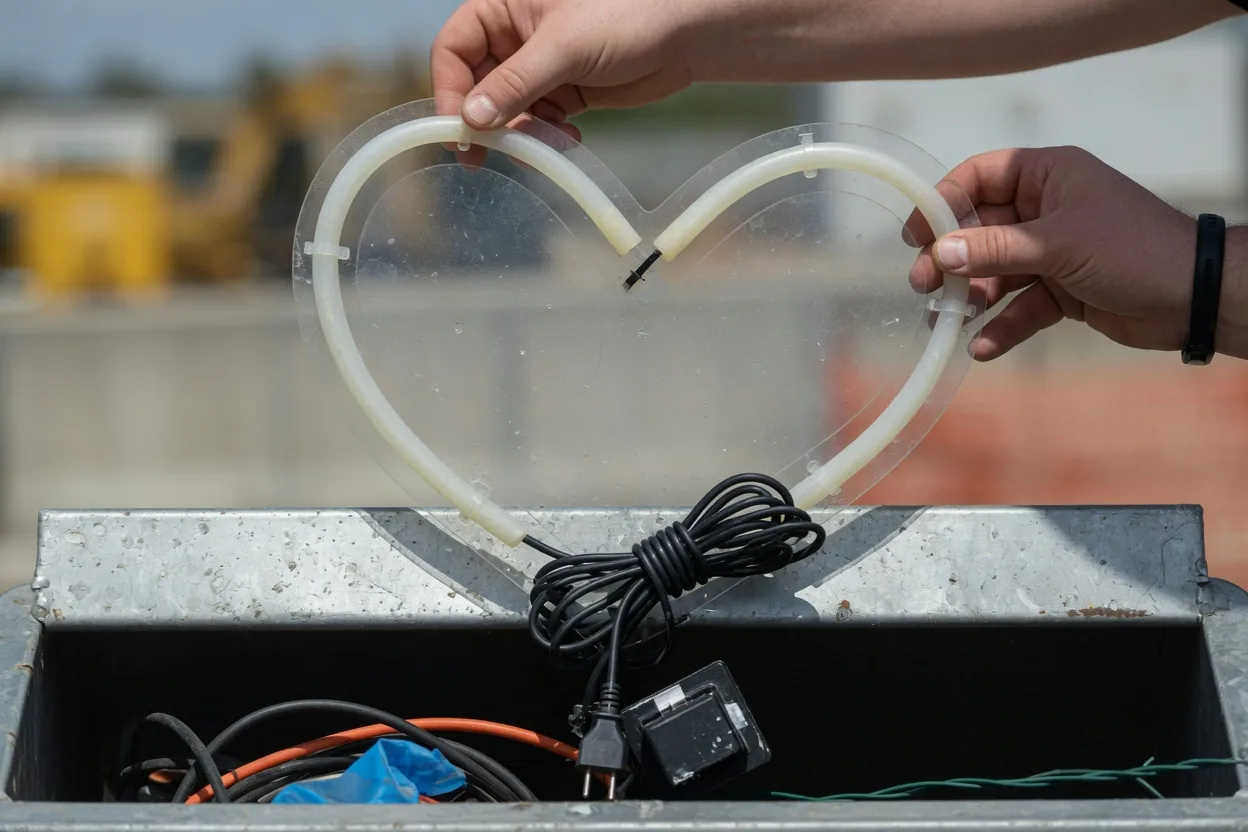
To recycle a neon sign, the rule depends on the technology: a glass gas neon is hazardous waste that belongs at a municipal e-waste drop-off or household hazardous waste (HHW) facility, while an LED neon is recycled like standard electronics through e-waste channels. In both cases, household trash is off limits. At Helioneon, we design every Helioneon neon to last for decades, and this guide explains where and how to recycle a neon sign, LED or glass, at end of life.
The recycling question comes up sooner or later, during a move, a decor change, or when replacing an old tube. Throwing a neon in the wrong place creates real environmental risks, especially with older mercury tubes. With more than 500 neon signs delivered and a lifespan of 100,000 hours, we take that responsibility seriously. Here is what to do, case by case.
Why you should never throw a neon in the trash
A neon sign, whatever the technology, should never end up in household trash, because it contains electronic components and sometimes hazardous substances. Older fluorescent tubes and glass gas neons hold mercury and toxic fluorescent powders. In plain terms, a broken tube in a regular dumpster contaminates the waste stream and puts collection workers at risk.
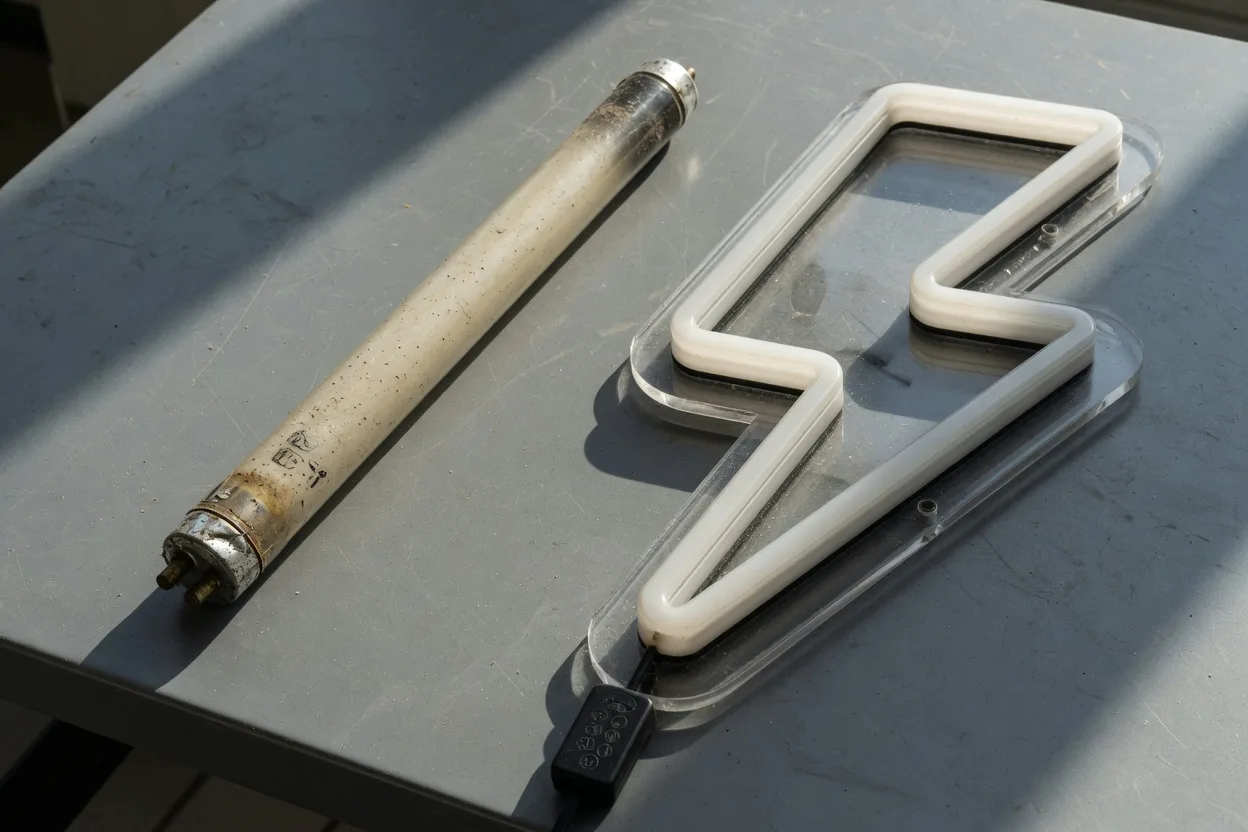
LED neon contains neither mercury nor gas, but it is still electrical equipment. Its diodes, circuit board, and power adapter fall under electronic waste (e-waste). It follows the same path as a charger or a lamp, never the path of regular household garbage.
- Glass neon and fluorescent tubes: mercury and toxic powders, hazardous waste
- LED neon: recyclable electronics through e-waste channels
- Household trash: banned in every case
- Risk: contamination and dangerous breakage in a regular dumpster
Where to recycle an LED neon in practice
Recycling an LED neon is straightforward: drop it at a municipal e-waste drop-off or household hazardous waste (HHW) facility, or use a store collection bin for electronics when one is available. Many big-box and home improvement retailers offer voluntary take-back bins, often near the entrance. There is no federal one-for-one take-back rule in the United States; store take-back is voluntary, and roughly twenty-five states run their own e-waste programs.
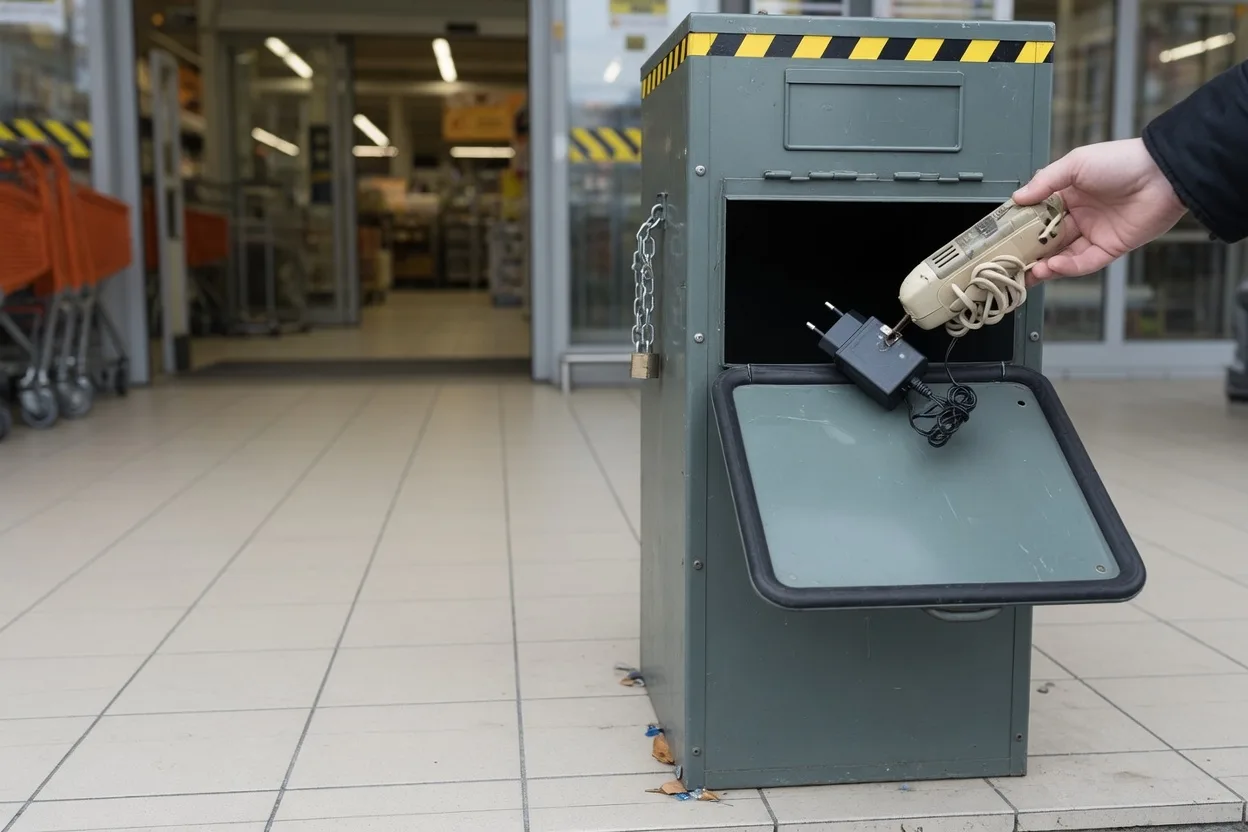
Before you drop it off, two steps matter. Unplug and remove the adapter (it recycles in the same place), and handle the acrylic backing separately if it comes off. You can find the nearest drop-off in seconds on Earth911 by entering your ZIP code.
- Municipal e-waste or HHW facility: free drop-off for residents in most areas
- Store collection bins: home improvement and big-box retailers, often with no purchase required
- Voluntary take-back: some retailers accept small electronics when you shop
- Adapter included: same e-waste stream as the neon itself
How to recycle an old glass neon or fluorescent tube
A glass gas neon or fluorescent tube is recycled only at a municipal e-waste drop-off or household hazardous waste (HHW) facility, because it is mercury-containing hazardous waste. These tubes must stay intact until drop-off: a break releases toxic vapors. Packaging and transport matter as much as the destination. In several states, fluorescent tubes are banned from regular trash.
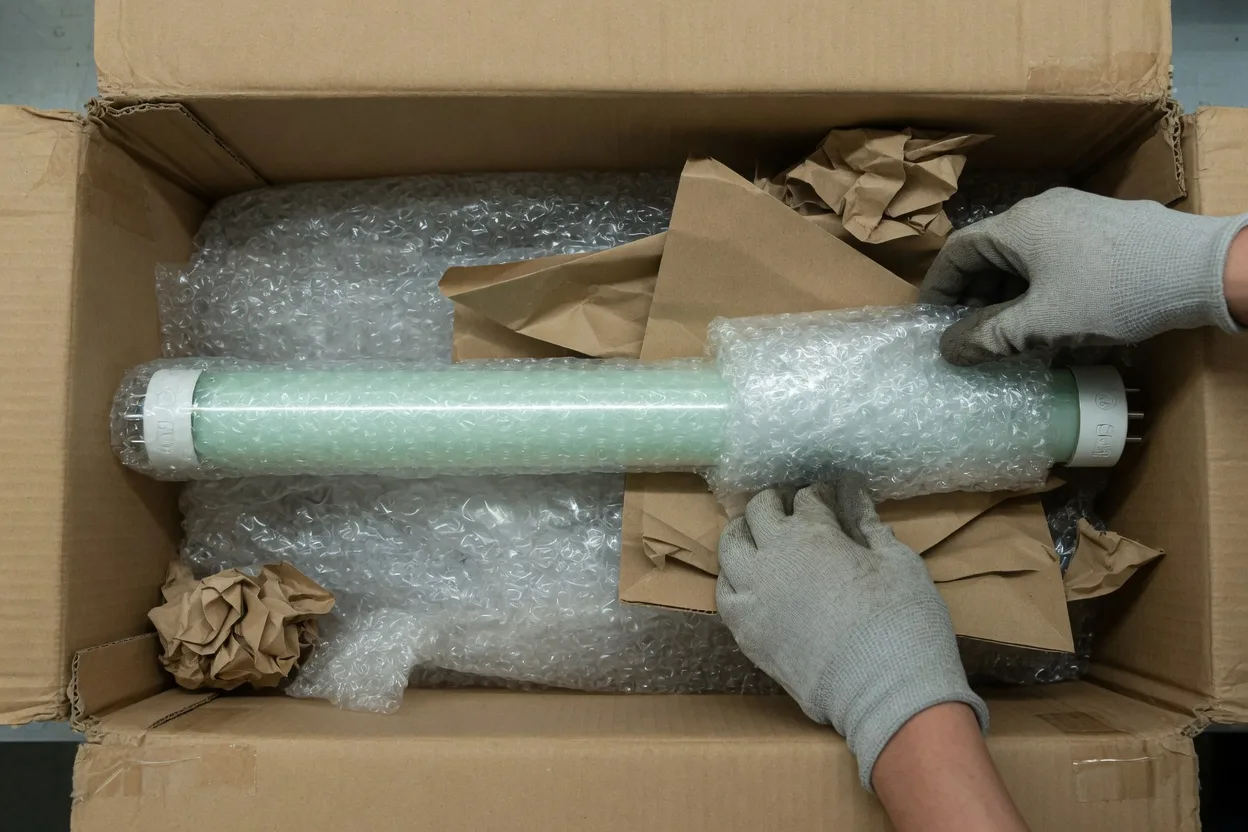
The right method comes down to three precautions. Wrap each tube individually in its original carton or bubble wrap, transport it flat and braced, and hand it over whole to facility staff. If one breaks at home, air out the room and pick up debris with gloves, never with a vacuum. Our comparison of glass neon vs LED neon explains why this older generation is fading out.
- Individual wrapping: carton or bubble wrap to prevent breakage
- Flat transport: tube braced, never loose in the trunk
- Intact drop-off: hand over the whole tube, never break it
- If it breaks: gloves, ventilation, never a vacuum
What happens to recycled neons?
Nearly 90% of the weight of a collected neon is recovered: glass returns as industrial glass, metals go back to the foundry, and plastics are shredded and reused. Certified processors separate each material, neutralize mercury from old tubes, and feed the materials into new products. In other words, a neon dropped off correctly feeds a real circular loop.
For an LED neon, recovery focuses on the diodes, the circuit board, copper wiring, and the acrylic backing. With no hazardous substances, processing is simpler and less costly than mercury glass. That is one more environmental edge for LED technology, on top of its low power consumption.
| Component | Recovery stream | End use |
|---|---|---|
| Silicone tube | Plastic shredding | Recycled raw material |
| Diodes and circuit | E-waste processing | Metals and parts recovered |
| Acrylic backing | Plastic recycling | New sheets and products |
| 12V adapter | E-waste processing | Copper and metals remelted |
| Mercury glass (old neon) | Dedicated treatment | Mercury neutralized, glass recovered |
Repair or donate before you recycle: the alternatives
Before you recycle a neon sign, confirm it is truly at end of life, because most failures can be fixed. A neon that flickers or will not light usually has a worn-out adapter or a loose connection, two simple and low-cost repairs. A quick diagnosis prevents a lot of premature disposal.
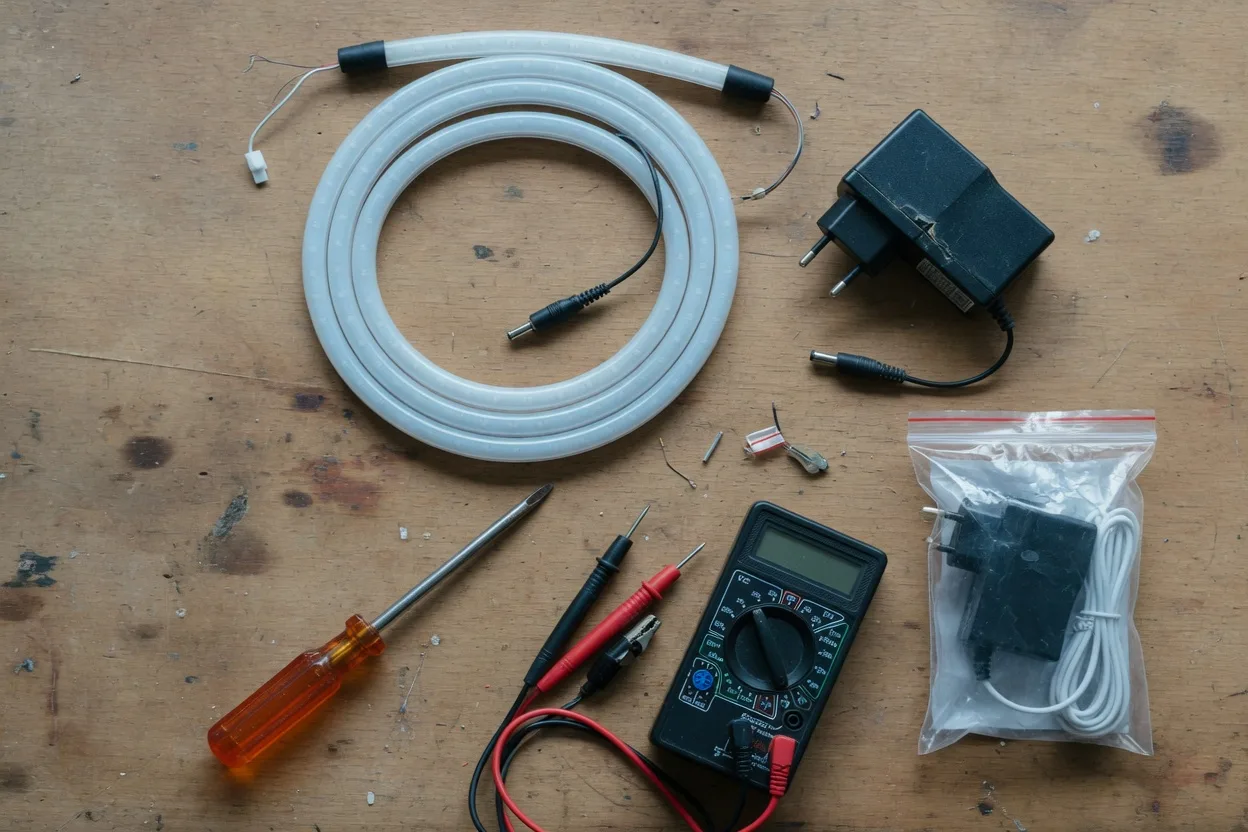
If the neon still works but no longer fits your space, donation and resale extend its life. A decorative neon finds buyers secondhand, and a nonprofit or small business can give it a second career. For day-to-day care that keeps a sign running longer, see our guide on how to clean a LED neon sign before you decide what to do next.
- Diagnose first: adapters and connections cause most failures
- Repair: a new power supply costs far less than a new neon
- Donate or resell: a second life while it still works
- Recycle last: e-waste channels once it is truly out of service
LED neon, a durable choice from day one
The best way to cut waste is still to choose a neon built to last: a premium silicone LED neon runs for 100,000 hours, decades of use before recycling even comes up. Upstream durability matters more than downstream sorting. A quality purchase is already an environmental choice.
That thinking shapes how we build. Our neons carry a 3-year warranty, stay repairable through a standard external power supply, and use UV-resistant silicone that does not yellow. Their 100,000-hour lifespan pushes recycling far into the future. The loop stays coherent, from a responsible purchase to final sorting.
- 100,000 hours: decades before end of life
- 3-year warranty: early failures covered
- Replaceable power supply: the wear part swaps on its own
- Durable silicone: no yellowing and no easy breakage
Frequently asked questions about recycling a neon
Where to throw away an old neon?
An old neon never goes in household trash. If it is an LED neon, drop it free at a municipal e-waste drop-off or household hazardous waste (HHW) facility, or in a store electronics collection bin when available. If it is an old glass gas neon or fluorescent tube, take it to an HHW facility or a lamp-specific drop-off, wrapped carefully because it contains mercury. Earth911 locates the nearest collection point by ZIP code in a few seconds.
Does an LED neon contain mercury?
No. An LED neon contains no mercury, no gas, and no hazardous substance. Its light comes from light-emitting diodes sealed in a silicone tube, powered at low-voltage 12V. That is a major difference from older glass gas neons and fluorescent tubes, which hold mercury and toxic fluorescent powders that require specialized handling. LED neon is still electronics: recycle it through e-waste channels, like a lamp or a charger, so metals, circuit boards, and plastics can be recovered.
Is dropping off a neon at a facility free?
For residents, drop-off at a municipal e-waste site or household hazardous waste (HHW) facility is typically free, whether you bring an LED neon or an old mercury tube. Store collection bins are also free and often open with no purchase required. The United States has no federal one-for-one take-back mandate; retailer take-back is voluntary. There is no eco-fee system like in Europe, so local programs and state rules set the terms. Either way, there is no good reason to put a neon in the trash.
How to transport an old glass neon safely?
Wrap each tube individually in its original carton, bubble wrap, or a blanket, then transport it flat and braced so it cannot shift. The goal is to arrive intact at the drop-off, because a broken tube releases toxic mercury vapor. Hand it over whole to facility staff, and never break it to save space. If one breaks by accident, air out the room for at least fifteen minutes, pick up debris with gloves, and do not use a vacuum, which would spread the particles.
Should you recycle a flickering neon or can you repair it?
Before you recycle a neon that flickers or will not light, run a quick diagnosis: in most cases the fault is the wall adapter or a loose connection, not the LEDs themselves. Replacing a 12V power supply costs far less than a new neon and needs no special skills. The diodes themselves last about 100,000 hours. Repair extends product life and avoids unnecessary waste. E-waste recycling only makes sense once the neon is truly out of service, after you have checked the power supply.
Recycling a neon sign is simple and usually free when you use the right channel: e-waste for LED, household hazardous waste for mercury glass. For a neon built to last from day one, in silicone with a 3-year warranty and designed for 100,000 hours, start your project on our contact page and get a free 3D mockup within 24 hours.