Neon Signs for Shop Windows: The Complete Guide for Businesses

⚡ The essentials in 30 seconds
- A shop window neon sign pulls eyes from across the street.
- What to display, where to place it, which colors convert and the mistakes to avoid.
A shop window neon sign works because glowing light outcompetes every printed poster around it: it creates contrast by day and becomes the brightest thing on the street by night. Get three decisions right (what it says, where it hangs, what color it glows) and it advertises your business every hour it's lit.
Main streets are a fight for attention, and the fight is largely visual. At Helioneon we make window signs for cafes, salons, bars and boutiques across the United States, built from silicone LED tube suitable for indoor and outdoor use, and any business can design a custom neon sign with a free 3D mockup within 24 hours. Here's what a decade of glowing windows teaches.
Why neon pulls eyes: the simple science
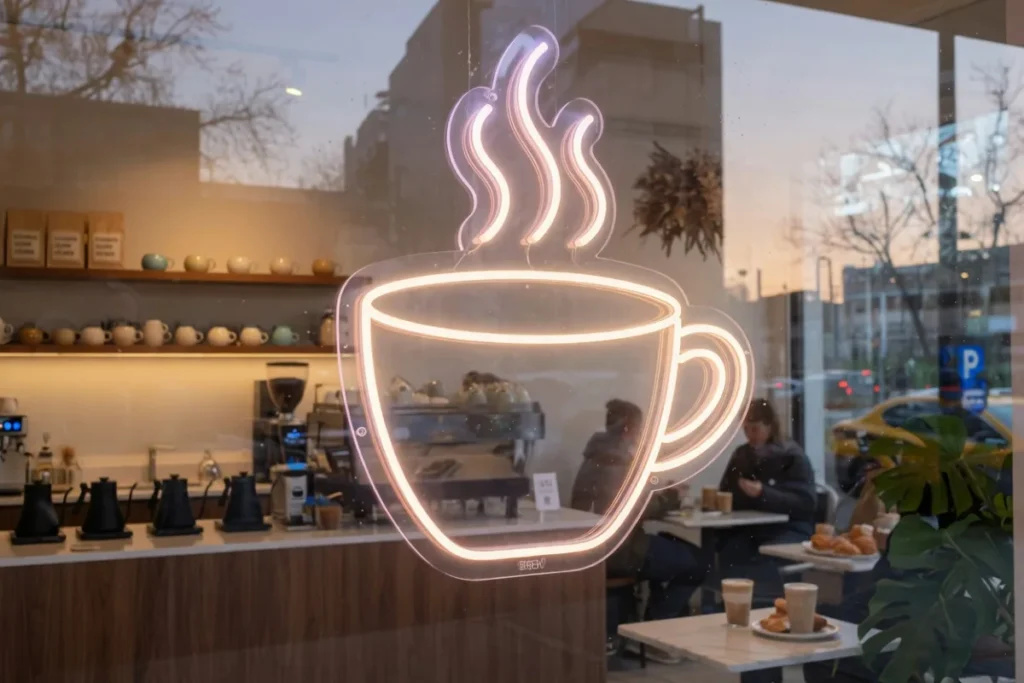
Human vision is wired for two things above all: contrast and light sources. A printed poster reflects ambient light, while a neon sign emits its own, so it registers in peripheral vision from an angle and a distance no poster can match. Pedestrians walking past a window make their glance decisions in about two seconds, and emitted light wins those two seconds almost every time.
Night multiplies the effect. After dark, an unlit storefront disappears from the street entirely, but a lit sign keeps working: it tells everyone walking home that your business exists, what it's called and what it feels like. That's marketing you pay for once and run for around 100,000 hours.
What should your window sign say?
In order of long-term value:
- Your name or logo. The strongest choice for brand recall. Every glance and every photo reinforces who you are.
- A short slogan or mood line. "Fresh pasta daily", "Hello gorgeous", "Coffee first". It sells the feeling, and feelings pull people through doors.
- Open. Unfashionable and quietly lethal: it answers the exact question a passer-by is asking at that moment.
- An offer or category. "Cocktails", "Vinyl", "Brows & lashes". Useful when your storefront doesn't explain itself.
My firm opinion: choose one message, not two. A window with a logo, a slogan and an offer all glowing at once cancels itself out. The businesses that get photographed have a single confident statement and darkness around it.
Placement: height, depth and background
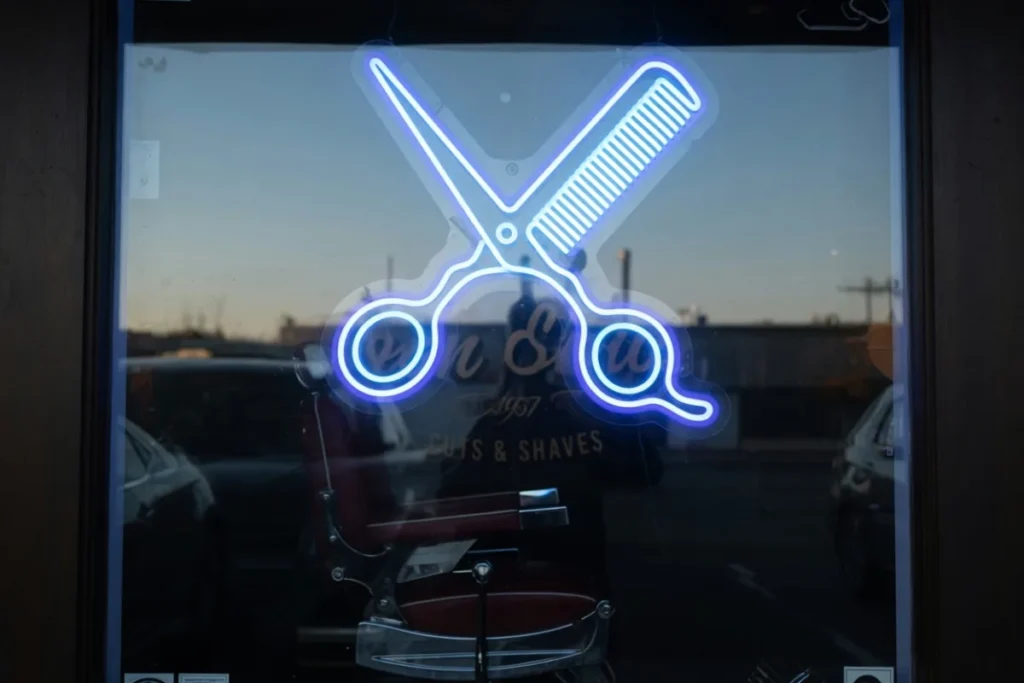
Hang the sign at pedestrian eye level, roughly 1.5 to 1.7 meters from the sidewalk, unless your street traffic is mostly cars, in which case raise it and enlarge it. Center it in the glass or align it deliberately to one side; accidental off-center reads as neglect.
Depth matters more than most owners expect. Set the sign 8 to 16 in (20 to 40 cm) back from the glass and you soften reflections while keeping the glow close enough to dominate the window. Suspend it on chains or rods from the ceiling, or mount it on a back panel; our guide on how to install an LED neon sign covers hanging kits. And mind the backdrop: the sign needs visual quiet behind it, so a cluttered display of products directly behind the tube kills legibility from the street.
Which colors work best in a window?
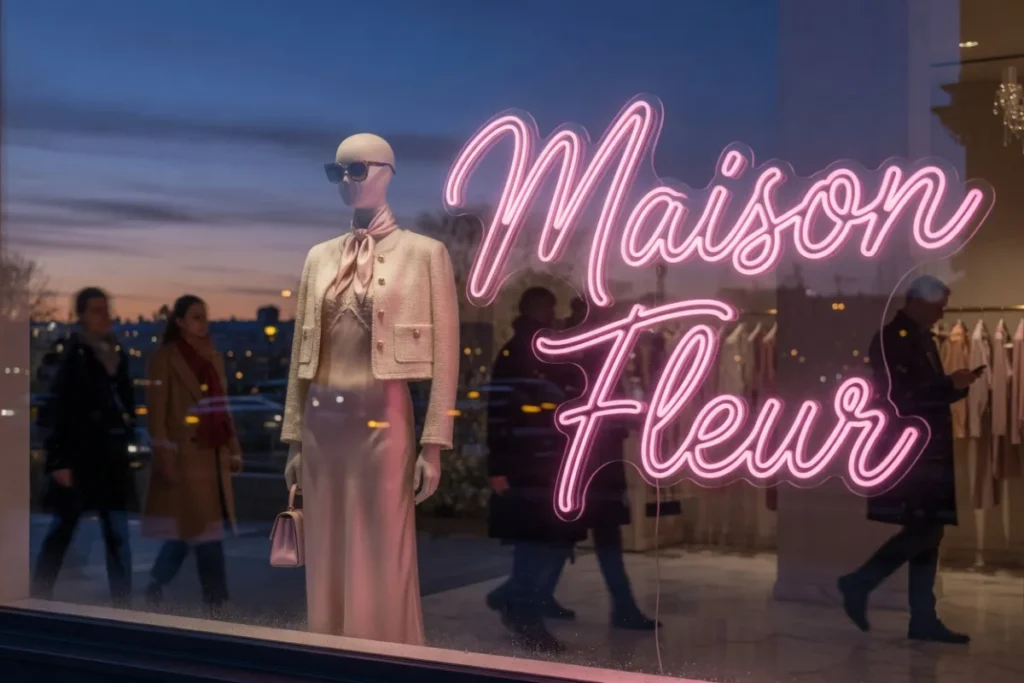
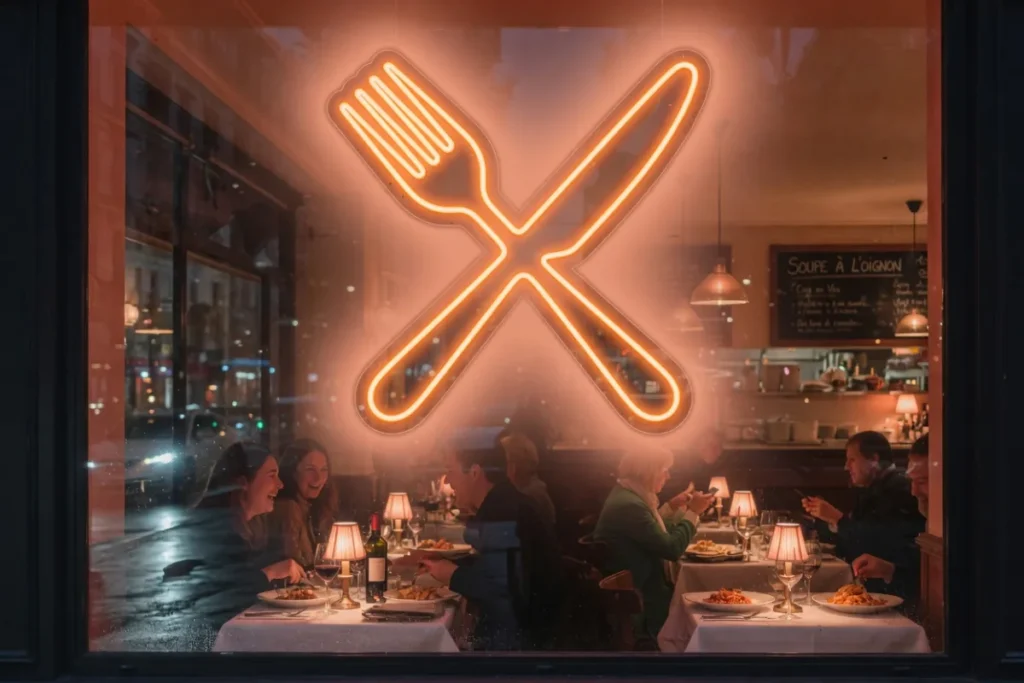
Warm white and yellow offer the best daytime punch, because lighter tubes emit more perceived light. Red and orange carry appetite and urgency, which is why food businesses have used them since the 1920s. Pink is the photo magnet, the choice for salons and cafes courting social media. Blue and green read calm and trustworthy, well suited to studios, pharmacies-adjacent wellness brands and barbershops.
Two practical constraints. First, match or harmonize with your brand palette, since a mismatched glow confuses recall. Second, consider your street: if three neighbors already glow pink, the contrarian move wins, and the only white sign on a colorful street owns the block. Color psychology runs deeper than this summary, so pick with intent.
Five mistakes that waste a good sign
- Overcrowding the window. The sign needs breathing room; every extra poster steals from it.
- Ignoring reflections. Test the view from outside at midday and at dusk, then adjust depth and angle.
- Text too small. Letters should be at least 4 in (10 cm) tall to read from across a typical street; 6 in (15 cm) is safer.
- Switching it off at closing. The overnight hours are free advertising to everyone who passes; the electricity costs a few cents.
- Cheap backing that yellows. Budget PVC backings discolor in sunlight within a couple of years. Ours is transparent laser-cut acrylic with anti-UV treatment, so it stays clear.
The common thread in all five: the sign is an instrument, and instruments need tuning. Walk across the street once a season, look at your own window like a stranger, and adjust. Ten minutes on the opposite sidewalk is the cheapest storefront audit you'll ever run.
Do you need permission for a window neon sign?
Worth knowing before you order: in the United States signage is regulated city by city, through a local sign ordinance and the zoning code, and those rules mostly target exterior signage fixed to the building. A sign hung inside your own window is normally treated far more leniently, though plenty of cities cap the share of the glass a window sign may cover. Thousands of cafes and salons across the country hang one with no paperwork at all. The sensitive cases are the exceptions: a landmarked building or a historic district, and any oversized, flashing or animated display, can require a sign permit from the city.
Two habits cover you. Check your lease first, since some landlords and malls regulate window displays privately. Then, if your building is landmarked or your street sits in a historic district, call the city planning or building department before ordering, because a short email now beats a removal notice later. Penalties for an unpermitted sign are set by each municipality and vary widely, so no one can quote you a national figure. For everyone else, a static decorative sign inside the glass is about as low-risk as storefront improvements get.
What does it cost to run and own?
Less than almost any other signage. A typical window sign draws about as much power as a laptop charger, so twelve lit hours a day costs a few dollars a month at 2026 electricity prices; the exact math is in our power consumption guide. The tube is rated for around 100,000 hours, which at that duty cycle is over twenty years, and the lifespan article explains why LED comfortably outlasts glass here.
Purchase price for a business-sized custom piece typically lands between $200 and $800 depending on size and complexity, with real examples in our US pricing guide. Add a 3-year warranty and 10 to 14 day delivery, and the arithmetic gets blunt: one sign costs less than a month of modest paid ads, and it doesn't stop running when the budget does. For a main-street business in 2026, I'd rank a good window sign above almost any other sub-$1,330 marketing spend.
FAQ: shop window neon signs
Do neon signs actually attract customers?
Yes. Emitted light captures peripheral vision far better than printed signage, especially after dark, when an unlit storefront effectively vanishes. A glowing name or "open" sign answers a passer-by's questions in the two seconds they give your window.
How big should a shop window neon sign be?
Size letters at 4 to 6 in (10 to 15 cm) tall minimum for legibility from across the street, and scale the overall piece to fill roughly a third of the window's width. Bigger suits car-traffic streets; a free 3D mockup helps you judge proportions first.
Should I leave my window sign on overnight?
Generally yes. Overnight glow advertises to everyone who passes, costs cents in electricity and doesn't meaningfully dent a 100,000-hour rated lifespan. Dim it to 50% after closing if you want a softer presence or neighbors above the shop.
Can a neon sign face direct sunlight?
Yes. The silicone tube handles sun exposure, and Helioneon's acrylic backing is anti-UV treated so it won't yellow, a common failure of cheap PVC backings. Expect the glow to read more softly at midday, then dominate from dusk onwards.
What's better for a window: an "open" sign or a logo?
A logo builds brand recall and earns photos; an "open" sign converts immediate foot traffic. If you can only hang one, choose the logo for destination businesses and "open" for impulse trades like takeout counters. Many shops eventually run both, in separate window zones.