LED Neon vs LED Strip Lights: What's the Difference and Which to Choose?
⚡ The essentials in 30 seconds
- LED neon vs LED strip lights: compare light quality, uses, installation, price and lifespan, then pick the right one for your space.
- Full comparison table.
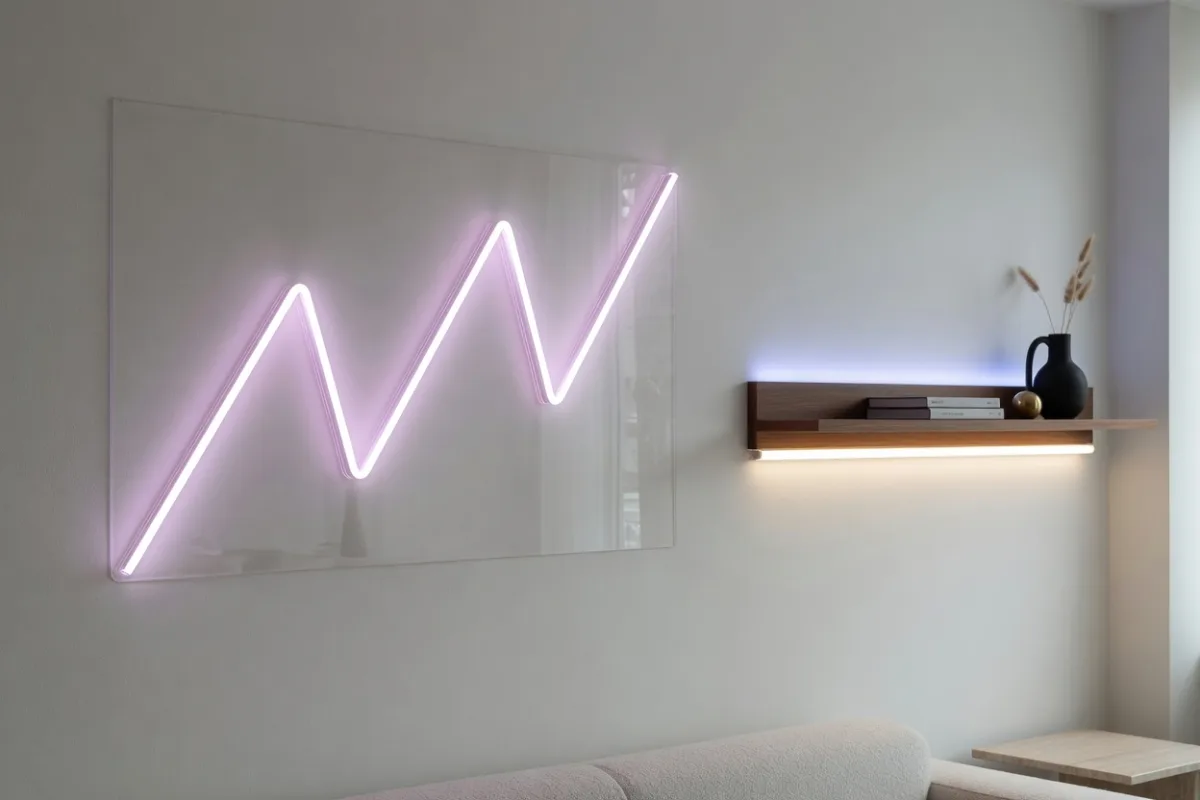
LED neon produces one continuous line of light with no visible dots, which makes it the right choice for signs, lettering and wall art. LED strips show individual light points and suit hidden, indirect lighting under cabinets or behind furniture. They solve different problems, and this guide explains exactly when to use each.
The confusion is understandable, because both technologies rely on the same LED chips. The difference is everything wrapped around them. At Helioneon we work exclusively with the neon side, building personalised signs from 6 mm silicone tube, so you can design your own neon sign and see it as a free 3D mockup within 24 hours. Here's the honest comparison, strip lights included.
How each technology works
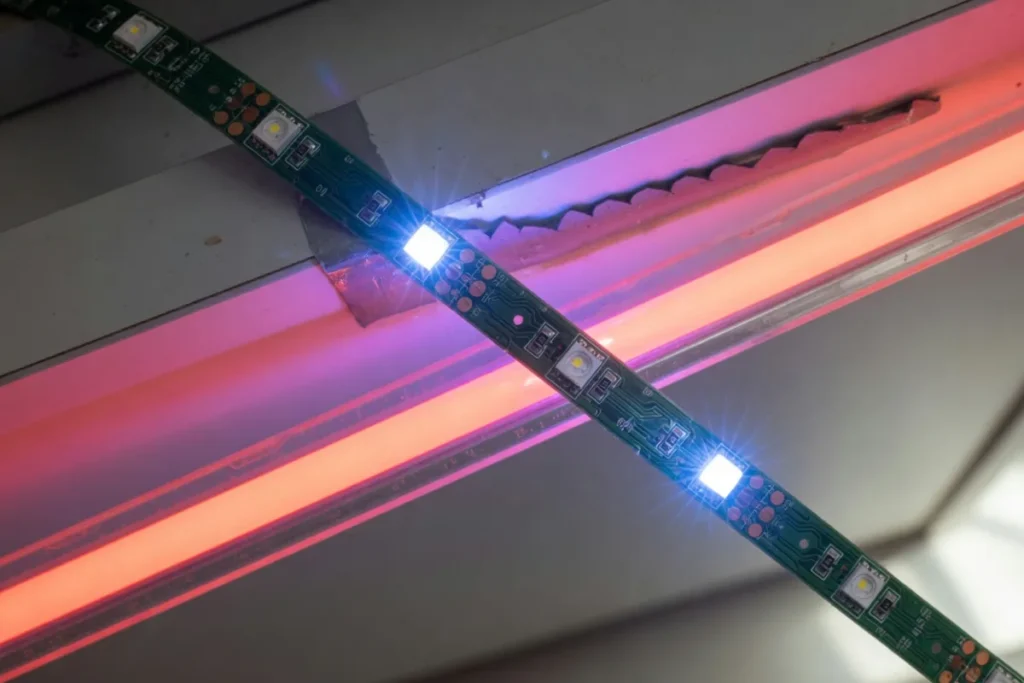
An LED strip is a flat, flexible circuit board, usually 8 to 12 mm wide, with LED chips soldered along it at fixed intervals: 30, 60 or 120 LEDs per metre are common densities. Point it at a wall and you get a wash of light. Look at it directly and you see every individual chip, like a runway.
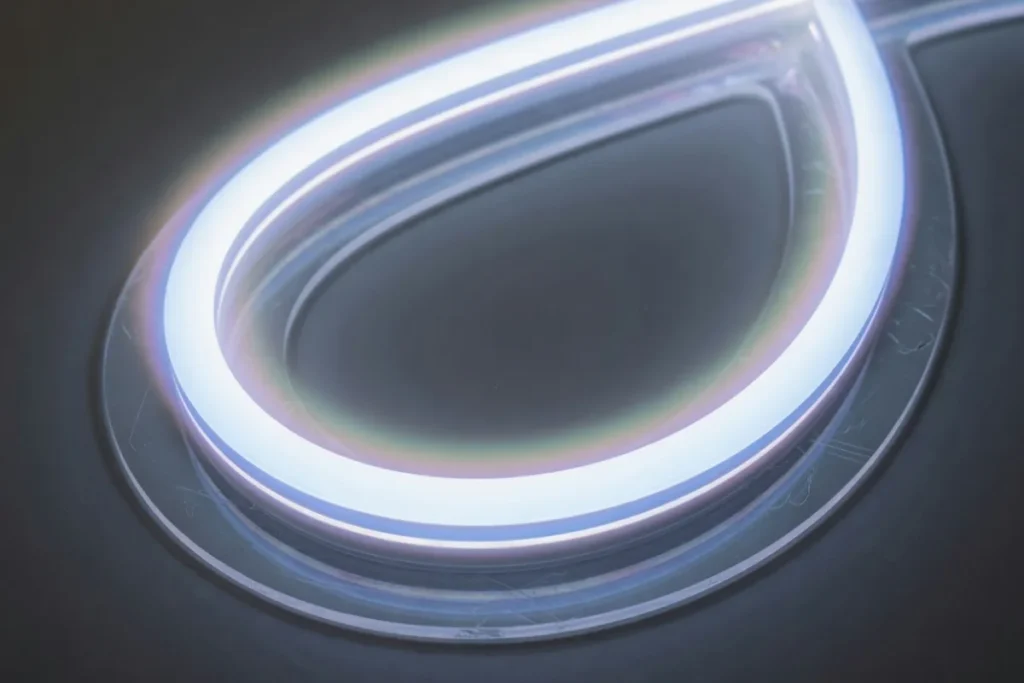
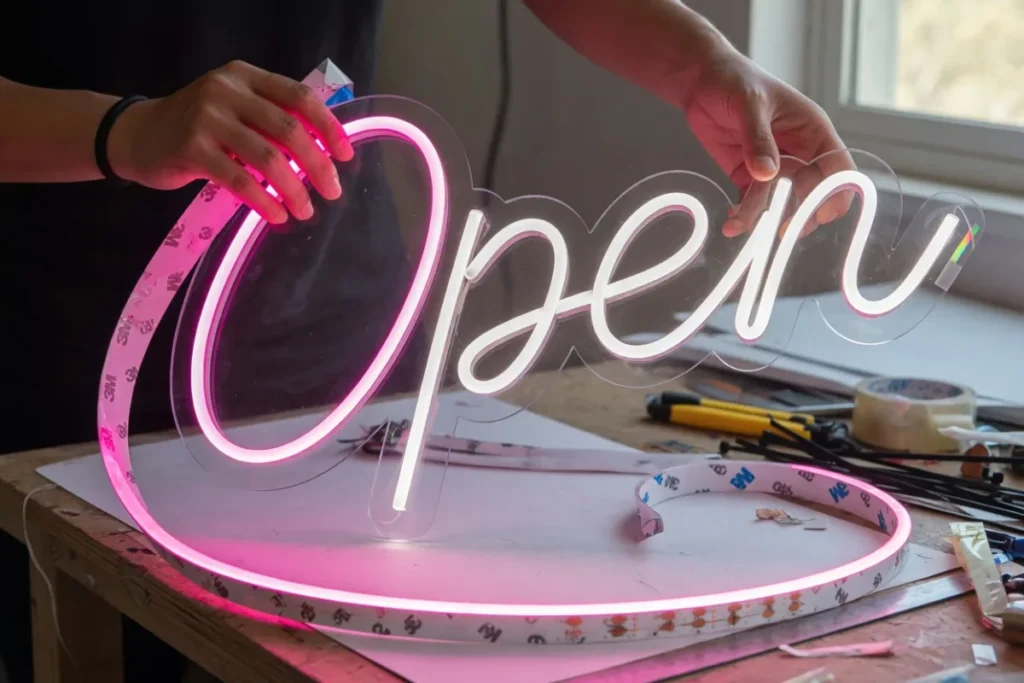
LED neon takes a similar LED array and seals it inside a diffusing tube. In our signs, that tube is silicone, 6 mm across, and the diffusion is total: light exits as one unbroken ribbon, with no dots, no hot spots and no gaps between letters' curves. That tube is what lets LED neon imitate traditional glass neon, a comparison we've covered separately in our glass neon vs LED neon guide. The tube also protects the electronics, which is partly why the technology reaches around 100,000 hours of life.
What LED neon does best
LED neon is decorative by design. It is meant to be looked at, not hidden. Because the light line is continuous, it can be bent into cursive words, logos, hearts, lightning bolts, whatever your design demands, and the result reads cleanly from across a room.
Typical uses: name signs, wedding backdrops, business logos, bar and cafe slogans, outline art around a mirror or headboard. It runs on 12V, stays cool to the touch, and in our case comes mounted on transparent laser-cut acrylic treated against UV, so it won't yellow over the years the way cheap PVC backings do. My view after seeing hundreds of installs: if the light itself is the decoration, neon wins every single time.
What LED strips do best
Strips are the workhorse of indirect lighting. Tucked under a kitchen cabinet, inside a coving detail or behind a TV, they add glow without ever being seen themselves. They are cheap, widely available and easy to cut to length at marked intervals, often every 5 or 10 cm.
They also do tricks neon doesn't attempt. Addressable strips can run animations, colour chases and music sync, which explains their grip on gaming setups. But mount a bare strip in view and the spell breaks: you see dots, glare and a plastic strip stuck to the wall. Strips are brilliant support actors and poor leads, and pretending otherwise is how people end up disappointed.
LED neon vs LED strips: the comparison table
| LED neon | LED strip lights | |
|---|---|---|
| Light appearance | Continuous line, no visible dots | Individual light points visible |
| Best for | Signs, lettering, logos, wall art | Indirect lighting, coves, under cabinets |
| Meant to be seen? | Yes, it is the feature | No, usually concealed |
| Shapes | Bent into words and custom designs | Straight runs, gentle curves |
| Installation | Hang or screw the acrylic backing, plug in | Adhesive backing, cut to length, wire in |
| Voltage | 12V low voltage | Typically 12V or 24V |
| Lifespan | Around 100,000 hours | Commonly 30,000 to 50,000 hours |
| Typical UK price | £100-£500 for a personalised sign | £10-£30 per 5-metre reel |
Installation and everyday use
Strips look easier on paper. Peel, stick, done. In practice the adhesive fails on textured walls, corners need soldered connectors or clip joints, and a clean result around a whole room takes real patience. Budget an afternoon, sometimes two.
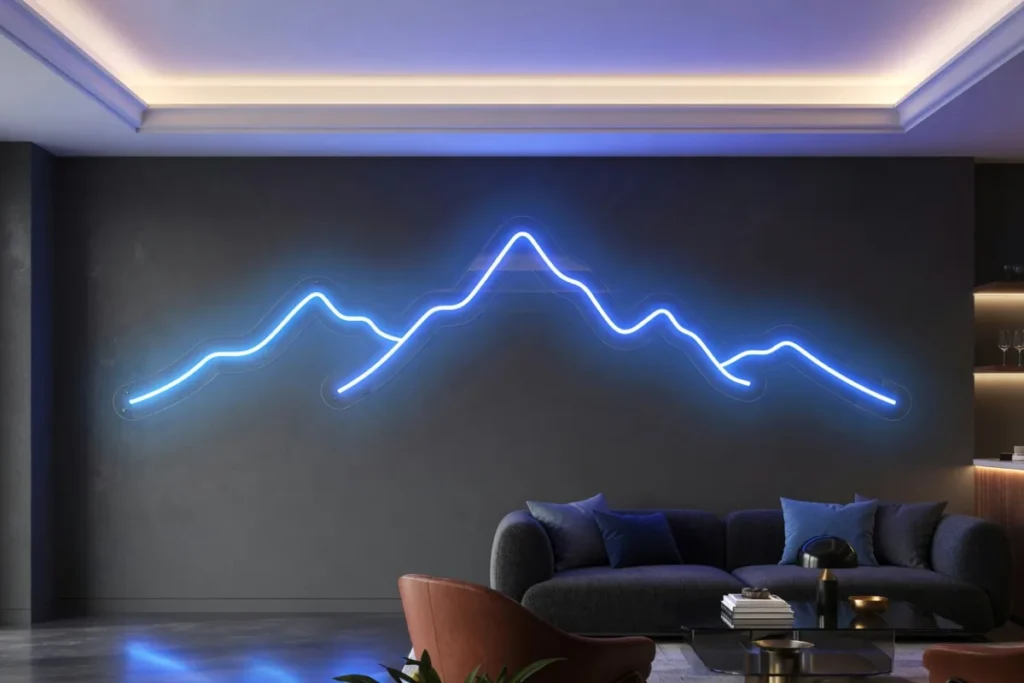
A neon sign arrives as one finished object: tube already shaped, mounted on its clear acrylic backing, with pre-drilled holes. You fix it like a picture frame and plug it in, usually within 20 minutes. We've documented the whole process, drill-free options included, in our guide on how to install an LED neon sign. Day to day, both run cool and both sip electricity; a typical sign draws about as much as a laptop charger, so running costs are pennies per evening.
Outdoors, the gap widens further. Standard strip reels are indoor products, and their adhesive and bare circuitry fail fast in British weather, while weather-resistant versions cost several times more and still demand careful sealing at every cut and joint. LED neon built for exterior use, like ours, arrives sealed as standard: the silicone tube shrugs off rain and the UV-treated acrylic backing keeps its clarity through summer after summer. For a garden bar sign or a glowing house number, that difference decides the whole purchase.
What about price?
No contest on raw numbers: a 5-metre strip reel costs £10 to £30, while a personalised neon sign typically runs £100 to £500. But it's a false comparison, because you aren't buying the same thing. The strip is a component. The sign is a finished, custom-made object with your words, your font and your colour, backed in our case by a 3-year warranty and delivered in 10 to 14 days.
Compare like for like instead. Try getting a strip to spell your name in cursive: you can't, and the attempts you'll find online prove the point vividly. Price the two per job, not per metre, and each one wins comfortably in its own lane.
The verdict: use both, differently
This is one of those comparisons where the honest answer is both. Strips for the glow you feel but never see: behind the headboard, above the wardrobe, under the shelf. Neon for the statement you actually look at: the name, the phrase, the logo. The best-lit rooms I've seen in 2026 combine them, with strips at 10% of the budget doing ambience and one neon piece doing personality. If the sign is fated to outlast a few strip reels anyway (100,000 hours against 30,000 to 50,000), spend where the eyes land.
A budget guideline from real projects: allow £20 to £40 for the hidden strips in an average living room, then put the rest into one sign you'll still love in ten years. Delivery on our side takes 10 to 14 days, and the free 3D mockup arrives within 24 hours, so the neon half of the plan moves faster than most furniture orders do.
FAQ: LED neon vs LED strip lights
Is LED neon the same as an LED strip?
No. Both use LED chips, but LED neon seals them inside a diffusing silicone tube that turns the light into one continuous, dot-free line. An LED strip is a bare flexible circuit board where each chip remains visible as a separate point of light.
Which lasts longer, LED neon or LED strips?
LED neon generally lasts longer. Quality neon tube is rated around 100,000 hours because the silicone shell protects the electronics from dust and knocks. Consumer strips are commonly rated 30,000 to 50,000 hours, and cheap reels often fade or fail sooner.
Can LED strips be shaped into words?
Not convincingly. Strips only bend along one axis and show visible dots, so lettering ends up angular and patchy. LED neon was developed precisely for this job: the flexible tube follows cursive curves and lights them as one smooth, continuous stroke.
Are LED strips cheaper than LED neon?
Per metre, yes: a 5-metre reel costs £10 to £30 against £100 to £500 for a personalised neon sign. But a strip is a raw component while a sign is a finished custom object, so the fair comparison is per project, not per metre.
Can I use LED neon and strips together?
Absolutely, and it's often the best approach. Use concealed strips for ambient glow behind furniture or inside coves, then add one LED neon sign as the visible centrepiece. Keep colour temperatures consistent between the two and the room reads as designed, not decorated.