Glass neon vs LED neon: the complete 2026 comparison

⚡ The essentials in 30 seconds
- Glass neon vs LED neon compared: lifespan, energy, cost, safety and looks.
- See which neon sign suits your project, with a clear comparison from Helioneon.
Glass neon vs LED neon comes down to this: glass neon uses gas-filled tubes under high voltage for a vintage glow, while LED neon uses flexible silicone tubing lit by low-voltage LEDs. LED neon lasts up to 100,000 hours, uses around 80 percent less power, runs cool, contains no mercury and costs far less to own. Glass neon is chosen mainly for its nostalgic look.
For most buyers in 2026, the choice in the glass neon vs LED neon debate is clearer than it first appears. According to industry data, LED neon lasts roughly eight times longer than glass and can be up to ten times more energy efficient for the same design. Understanding why starts with how each technology actually produces light.
At Helioneon we craft every LED neon sign from soft silicone tubing on a custom acrylic backing, powered by a safe 12V supply. Our workshop has delivered more than 500 bespoke neon signs for professionals for clients such as Accor, Pullman, Radisson and Jacquemus. From that experience we can compare both technologies honestly, including where glass neon still has genuine appeal. In practice, the right answer depends on your use, your budget and your space.
This guide breaks down glass neon vs LED neon across lifespan, energy, cost, safety, design and looks, then helps you decide which suits your project. We base it on lighting-industry figures, the relevant EU rules on mercury and our own workshop measurements. As a result, you get a comparison built on facts, not sales talk. For further advice see our all-in-one UK guide on how to choose a neon sign.
What is the difference between glass neon and LED neon?
The core difference in glass neon vs LED neon is the light source: glass neon glows because electricity excites gas inside a glass tube, while LED neon glows because LEDs light up inside a flexible silicone tube. Glass neon needs several thousand volts, LED neon runs on a safe 12V supply. Consequently, the two technologies behave very differently in daily use.
Glass neon is the original technology, dating back over a century. A glassblower bends each tube by hand and fills it with neon or argon gas, which is why the craft is beautiful but fragile. You can explore the full story in The History of Neon Signs: 1898 to LED. LED neon, by contrast, is a modern alternative that imitates the same glow without gas, high voltage or breakable glass. Put another way, LED neon keeps the look while removing the drawbacks.
- Glass neon: hand-bent glass tubes filled with neon or argon gas under high voltage.
- LED neon: flexible silicone tubing lit by low-voltage LED strips.
- Voltage: glass needs thousands of volts, LED neon runs on 12V.
- Weight: glass is heavy and rigid, LED neon is light and bendable.
- Heat: glass tubes warm up, LED neon stays cool to the touch.
In our workshop we still admire the artistry of glass neon, but we build in LED because it fits modern interiors and brand signage. Anyone choosing a bespoke LED neon sign gets the same vibrant glow with none of the fragility. As a result, the technology choice shapes everything from safety to running costs.

Glass neon vs LED neon: the full comparison table
Across every practical criterion, LED neon outperforms glass neon, except for one thing: the vintage character that some buyers love. The table below sets the two technologies side by side so you can weigh them at a glance. Note especially the lifespan and energy rows, because they drive the long-term cost.
In the glass neon vs LED neon comparison, the numbers come from lighting-industry benchmarks and our own measurements. For a fair view, we list the strengths of each technology honestly rather than dismissing glass entirely.
| Criterion | LED neon | Glass neon |
|---|---|---|
| Lifespan | Up to 100,000 hours | 10,000 to 30,000 hours |
| Energy use | Around 80 percent less | High, 60 to 100 W per metre |
| Voltage | Safe 12V | Several thousand volts |
| Safety | Cool, mercury-free, shatterproof | Hot, fragile, often mercury |
| Weight | Light and bendable | Heavy and rigid |
| Long-term cost | Lower to own | Higher, up to 4x |
| Look | Clean, even, modern | Warm, vintage character |
In practice, the table shows why LED dominates new installations. A glass sign may cost up to four times more for the same design and last a fraction of the time. At Helioneon we recommend LED for almost every brief, while being upfront that glass keeps a nostalgic charm that no LED fully replicates. Therefore the decision often hinges on whether you value longevity or vintage authenticity.
Which lasts longer and costs less to run?
LED neon wins decisively on both lifespan and running cost, lasting up to 100,000 hours against 10,000 to 30,000 for glass. That is roughly eight times longer, which alone reshapes the total cost of ownership. Moreover, LED uses around 80 percent less power, so the savings compound year after year.
Glass neon ages because its electrodes corrode and the tubes begin to flicker or fail. LED neon instead fades very slowly, keeping over 70 percent of its brightness deep into its life. Consequently, a glass sign may need replacing several times during the lifespan of a single LED sign. Put another way, the cheaper-looking option can become the expensive one.
- Lifespan LED: up to 100,000 hours, often two decades of use.
- Lifespan glass: 10,000 to 30,000 hours, a few years.
- Energy LED: roughly 8 to 15 W per metre of tube.
- Energy glass: about 60 to 100 W per metre, often more.
- Maintenance: LED is near maintenance-free, glass needs periodic repair.
A restaurant we fitted in 2019 replaced an ageing glass sign with an LED one and cut its sign energy bill noticeably while ending the flicker complaints. In practice, this confirms the figures: over a decade, LED neon pays back its purchase price through lower energy and zero repairs.
Is LED neon safer than glass neon?
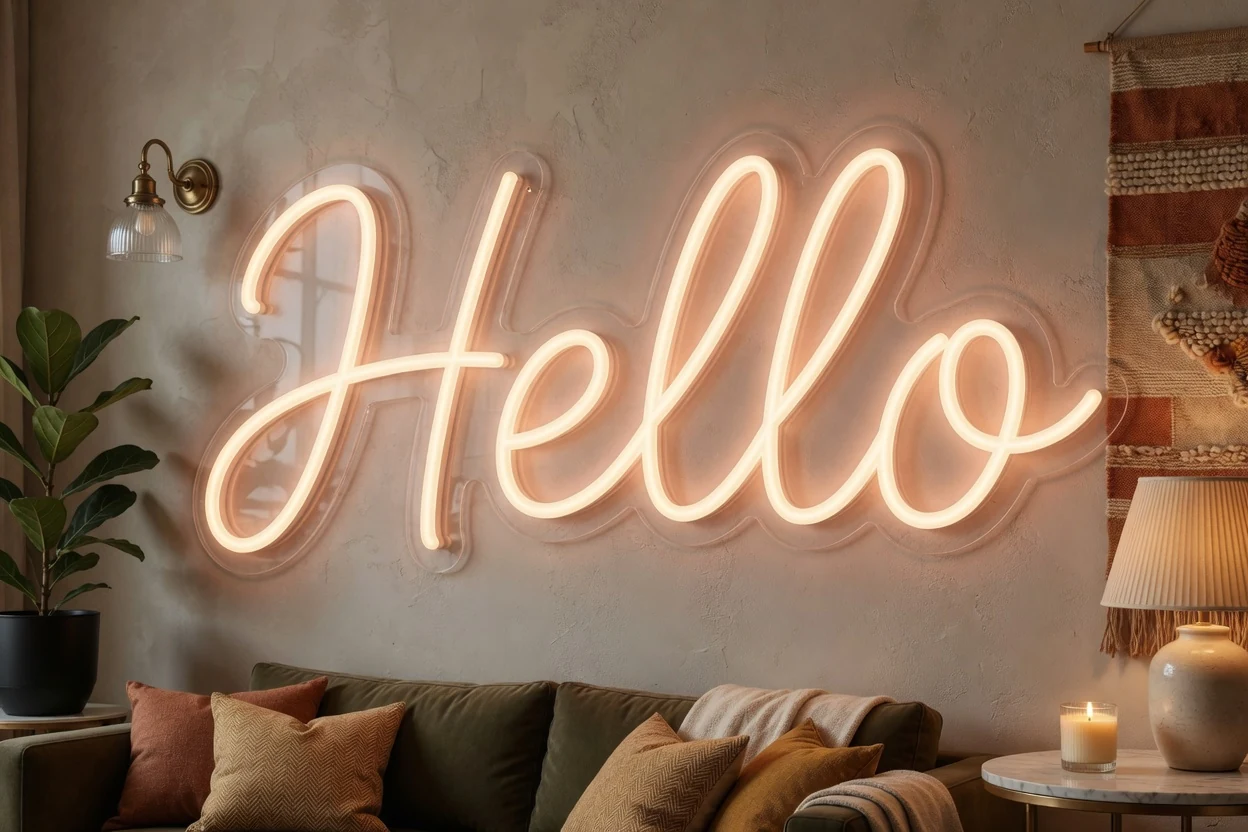
LED neon is significantly safer than glass neon, because it runs on a low 12V supply, stays cool and contains no mercury. Glass neon, by contrast, runs on several thousand volts, heats up and can shatter. For homes, families and busy venues, that safety gap matters as much as the running cost.
There is also an environmental dimension that many buyers weigh in 2026. Glass neon often contains mercury, which EU rules increasingly restrict, while LED neon is mercury-free. Consequently, LED is the easier choice for compliance and disposal. You can read more about the technology on the Wikipedia page for the light-emitting diode.
- Low voltage: 12V means no electrician needed to plug it in.
- Cool to touch: safe near people, fabrics and shelving.
- Shatterproof: flexible silicone instead of breakable glass.
- Mercury-free: no hazardous gas, easier to recycle.
Because of this low-voltage design, you install an LED sign simply by plugging the supplied 12V adaptor into a socket. At Helioneon every adaptor ships tested and CE-certified. As a result, an LED neon sign is safe to live with day after day.
Which gives more design freedom?
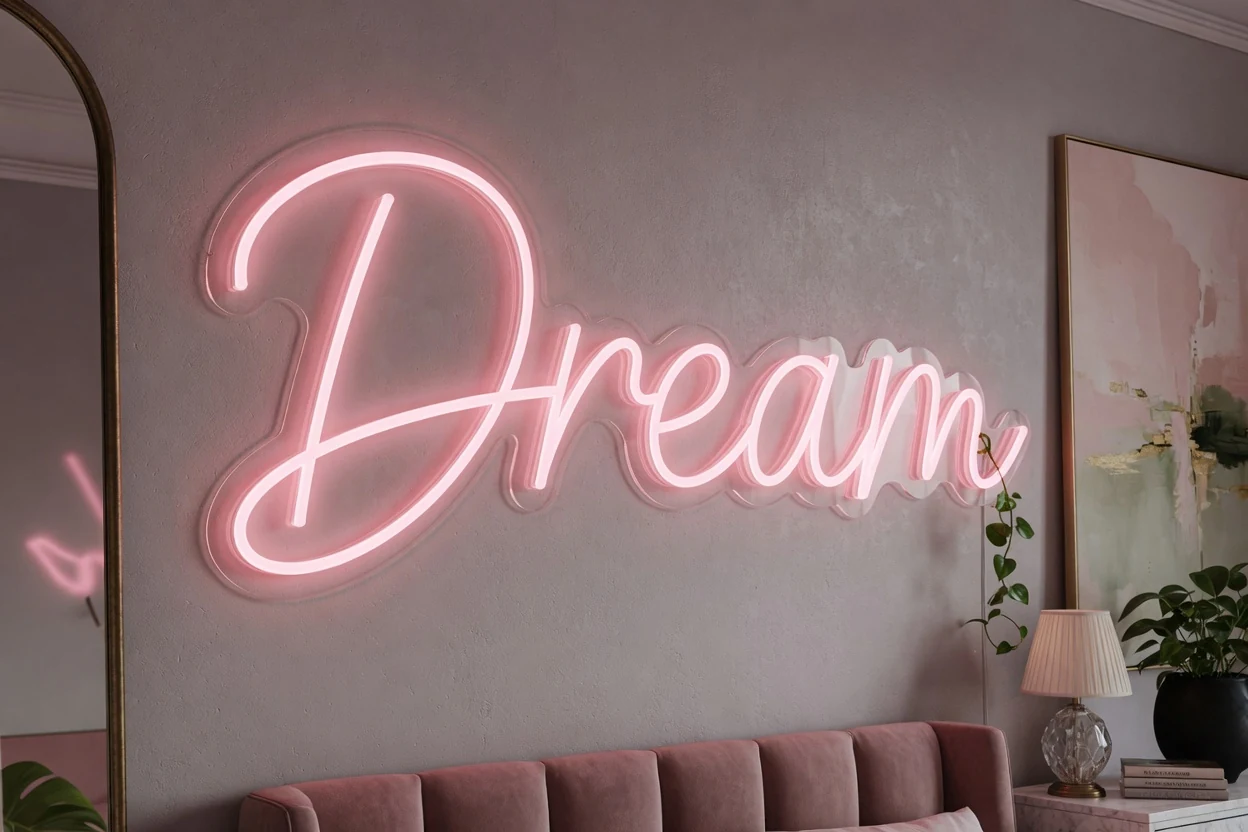
LED neon offers more design freedom than glass neon, because the silicone tube bends into tighter shapes and comes in a wider range of colours. Glass neon is limited by what a glassblower can safely bend without cracking the tube. Consequently, intricate logos and fine lettering are far easier in LED.
LED also adds modern features that glass cannot match, such as dimming, colour change and remote control. These options let a single sign shift mood through the day, which is ideal for hotels, bars and shops. Brands like Jacquemus and Air France rely on LED precisely because the look stays consistent and controllable. Anyone who wants to design their own custom neon sign therefore gains both flexibility and control.
- Tighter bends: fine detail and small lettering are possible.
- More colours: a broad palette including pastels and RGB.
- Dimmable: adjust brightness for the time of day.
- Controllable: remote, timer and colour-change options.
That said, glass neon still wins admirers for one reason: authenticity. The slightly warm, grainy glow of real gas has a character that purists prize. In practice, we recommend glass only when that vintage feel is the whole point of the project.
When should you still choose glass neon?
You should still choose glass neon when authentic vintage character matters more than lifespan, energy or cost. For a heritage bar, a film set or a collector who wants the real thing, glass delivers a look that LED imitates but never fully copies. In those niche cases, the trade-offs are worth it.
For almost everything else, however, LED neon is the practical winner. Homes, shops, restaurants, offices and events benefit from its safety, longevity and low running cost. Put another way, glass is a specialist choice, while LED is the sensible default. The table earlier in this guide makes that trade-off easy to see at a glance.
- Choose glass: heritage venues, film sets, vintage collectors.
- Choose LED: homes, brands, hospitality, events, outdoor use.
- Budget-led: LED for lower total cost over time.
- Safety-led: LED for families and high-traffic spaces.
At Helioneon we guide each client to the right technology for their brief, without pushing a one-size-fits-all answer. Most choose LED, and a few rightly stay with glass. As a result, the decision is yours, made with the full picture in front of you.
Frequently asked questions about glass neon vs LED neon
Is LED neon better than glass neon?
For most uses, yes, LED neon is the better choice because it lasts longer, uses far less energy, runs cool and contains no mercury. It also offers more colours, tighter bends and features like dimming and remote control. Glass neon keeps one real advantage, its authentic vintage glow, which appeals to heritage venues and collectors. So the better option depends on your priorities: LED wins on practicality and cost, while glass wins on nostalgic character. For homes, brands and hospitality, LED is almost always the sensible default.
Does LED neon look as good as real glass neon?
LED neon looks very close to glass neon, and for many viewers, indistinguishable from a short distance. It produces an even, vibrant glow in a wide palette of colours and holds that brightness consistently for years. Real glass neon has a slightly warmer, grainier light that purists prize as more authentic. For modern interiors and brand signage, the clean LED look is often preferred. If absolute vintage authenticity is the goal, glass still has a small edge, otherwise LED matches it beautifully.
Which is cheaper, glass neon or LED neon?
LED neon is cheaper, both to buy and to own. For an equivalent design, glass neon can cost up to four times more upfront, and it uses far more electricity over its life. Glass also lasts only a fraction as long, so it may need replacing several times during the life of a single LED sign. When you add purchase, energy and repairs together, LED is clearly the more economical option. Glass is worth its higher cost only when the vintage look is the main reason for buying.
Is glass neon being phased out?
Glass neon is not banned, but it is steadily declining as LED neon takes over new installations. Part of the reason is environmental, since glass neon often contains mercury, which EU rules increasingly restrict. The higher running cost, fragility and shorter lifespan also push buyers towards LED. Glass neon survives as a specialist craft for heritage projects and collectors who value authenticity. For everyday signage, however, LED has become the standard, and that shift is expected to continue through 2026 and beyond.
Can LED neon be used outdoors like glass neon?
Yes, LED neon works outdoors and often handles weather better than glass. For outdoor use it needs an IP65 rating, meaning dust-tight and protected against water jets under the IEC 60529 standard. Glass neon is more exposed to breakage and weather stress, and its high-voltage supply adds complications outside. LED neon, with its low 12V supply and flexible silicone, is both safer and more durable in the open air. At Helioneon we build the correct IP rating into any sign destined for outdoor placement.
How long does LED neon last compared to glass?
LED neon lasts up to 100,000 hours, while glass neon typically lasts 10,000 to 30,000 hours, so LED lasts around eight times longer. At ten hours of use a day, that is roughly two decades for LED against just a few years for glass. LED also fades gradually rather than failing suddenly, keeping most of its brightness deep into its life. This long lifespan is a major reason LED has become the default for signage. At Helioneon we back our LED signs with a three-year full warranty on top of that lifespan.
Ready to choose LED neon for your project? Request your free 3D mock-up from Helioneon UK today. Within 48 hours you receive a photorealistic design, within seven days your finished sign, made in our workshop with 12V technology, optional IP65 and a three-year full warranty. That way you get the glow of neon with the longevity, safety and savings of modern LED.