Neon Signs for Shop Windows: The Complete Guide for Businesses

- A shop window neon sign pulls passers-by with its own light, works day and night for around 100,000 hours, and a business-sized custom piece typically lands between A$550 and A$1,650.
- You get message choices, placement rules, colour picks, permit notes, running costs and the mistakes that kill a good window sign.
A shop window neon sign works because glowing light outcompetes every printed poster around it: it creates contrast by day and becomes the brightest thing on the street by night. Get three decisions right (what it says, where it hangs, what colour it glows) and it advertises your business every hour it's lit.
Main streets are a fight for attention, and the fight is largely visual. At Helioneon we make window signs for cafes, salons, bars and boutiques across Australia, built from silicone LED tube suitable for indoor and outdoor use, and any business can design a custom neon sign with a free 3D mockup within 24 hours. Here's what a decade of glowing windows teaches.
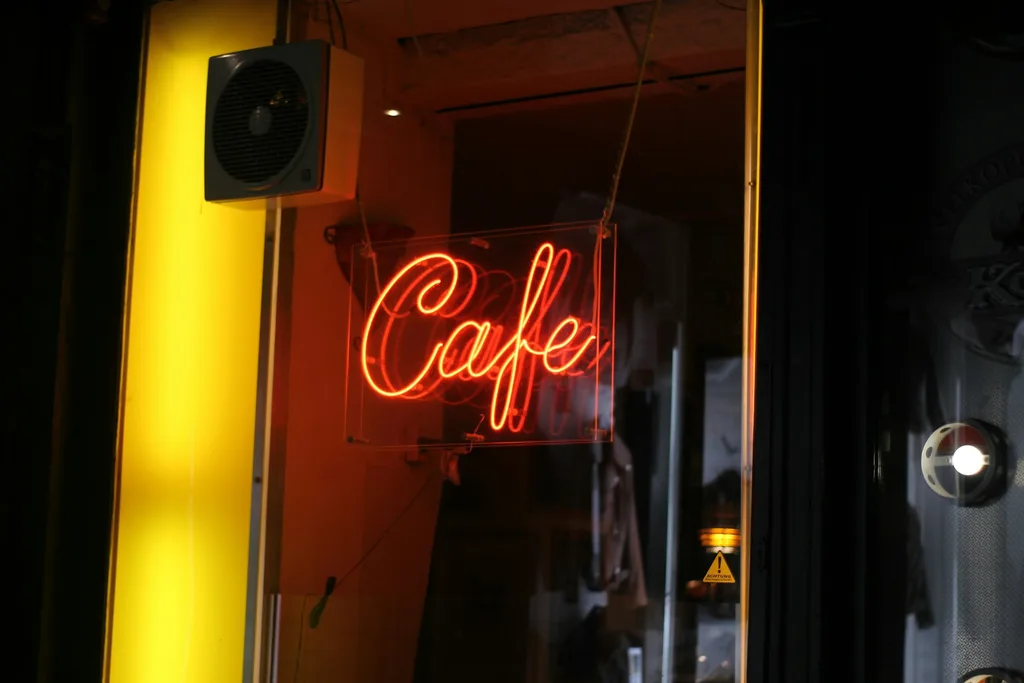
Why neon pulls eyes: the simple science
Human vision is wired for two things above all: contrast and light sources. A printed poster reflects ambient light, while a neon sign emits its own, so it registers in peripheral vision from an angle and a distance no poster can match. Pedestrians walking past a window make their glance decisions in about two seconds, and emitted light wins those two seconds almost every time.
Night multiplies the effect. After dark, an unlit shopfront disappears from the street entirely, but a lit sign keeps working: it tells everyone walking home that your business exists, what it's called and what it feels like. That's marketing you pay for once and run for around 100,000 hours.
What should your window sign say?
In order of long-term value:
- Your name or logo. The strongest choice for brand recall. Every glance and every photo reinforces who you are.
- A short slogan or mood line. "Fresh pasta daily", "Hello gorgeous", "Coffee first". It sells the feeling, and feelings pull people through doors.
- Open. Unfashionable and quietly lethal: it answers the exact question a passer-by is asking at that moment.
- An offer or category. "Cocktails", "Vinyl", "Brows & lashes". Useful when your shopfront doesn't explain itself.
My firm opinion: choose one message, not two. A window with a logo, a slogan and an offer all glowing at once cancels itself out. The businesses that get photographed have a single confident statement and darkness around it.
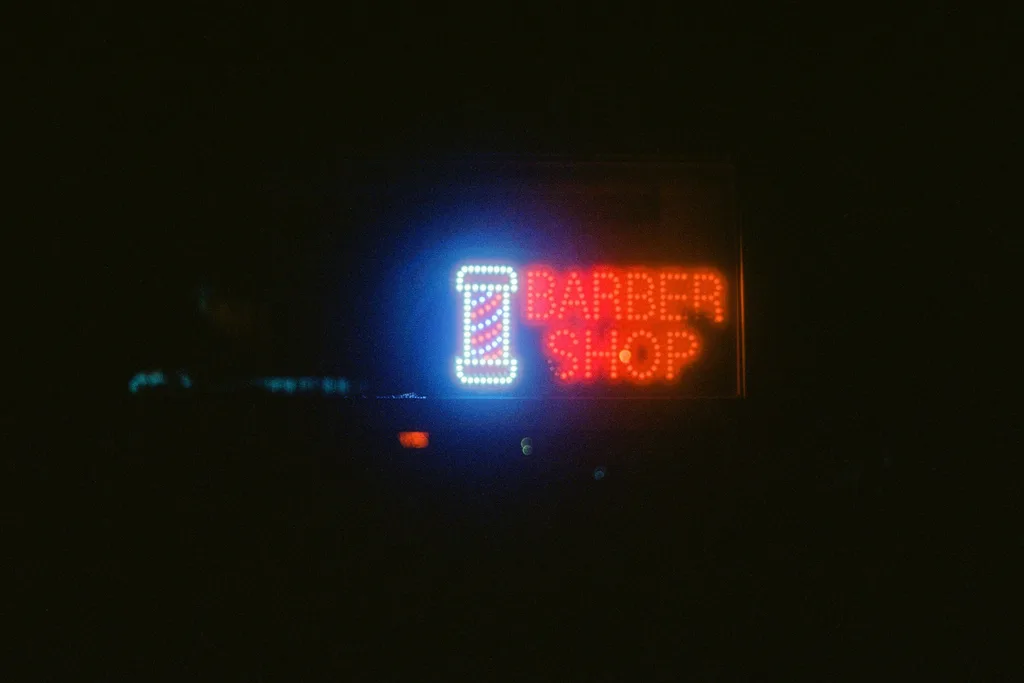
Placement: height, depth and background
Hang the sign at pedestrian eye level, roughly 1.5 to 1.7 metres from the footpath, unless your street traffic is mostly cars, in which case raise it and enlarge it. Centre it in the glass or align it deliberately to one side; accidental off-centre reads as neglect.
Depth matters more than most owners expect. Set the sign 20 to 40 cm back from the glass and you soften reflections while keeping the glow close enough to dominate the window. Suspend it on chains or rods from the ceiling, or mount it on a back panel; our guide on how to install an LED neon sign covers hanging kits. And mind the backdrop: the sign needs visual quiet behind it, so a cluttered display of products directly behind the tube kills legibility from the street.
Which colours work best in a window?
Warm white and yellow offer the best daytime punch, because lighter tubes emit more perceived light. Red and orange carry appetite and urgency, which is why food businesses have used them since the 1920s. Pink is the photo magnet, the choice for salons and cafes courting social media. Blue and green read calm and trustworthy, well suited to studios, pharmacies-adjacent wellness brands and barbershops.
Two practical constraints. First, match or harmonise with your brand palette, since a mismatched glow confuses recall. Second, consider your street: if three neighbours already glow pink, the contrarian move wins, and the only white sign on a colourful street owns the block. Colour psychology runs deeper than this summary, so pick with intent.
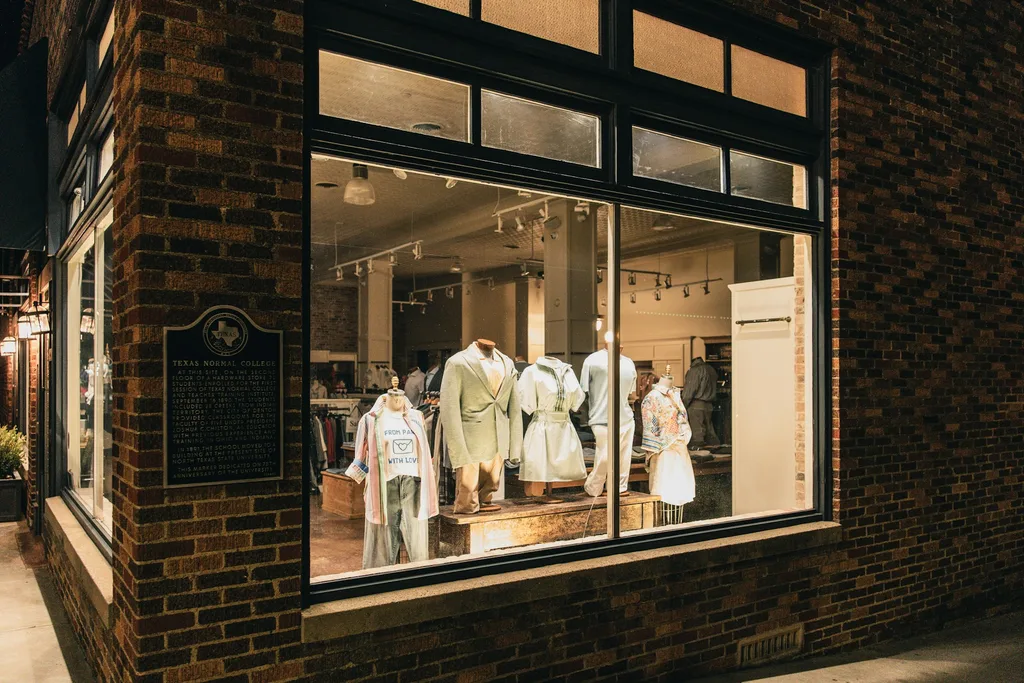
Five mistakes that waste a good sign
- Overcrowding the window. The sign needs breathing room; every extra poster steals from it.
- Ignoring reflections. Test the view from outside at midday and at dusk, then adjust depth and angle.
- Text too small. Letters should be at least 10 cm tall to read from across a typical street; 15 cm is safer.
- Switching it off at closing. The overnight hours are free advertising to everyone who passes; the electricity costs a few cents.
- Cheap backing that yellows. Budget PVC backings discolor in sunlight within a couple of years. Ours is transparent laser-cut acrylic with anti-UV treatment, so it stays clear.
The common thread in all five: the sign is an instrument, and instruments need tuning. Walk across the street once a season, look at your own window like a stranger, and adjust. Ten minutes on the opposite footpath is the cheapest shopfront audit you'll ever run.
Do you need permission for a window neon sign?
Worth knowing before you order: in Australia, business signage is regulated by the local council under the state or territory planning scheme. Some small signs are exempt; others need a planning or development approval (and sometimes a building permit for the structure), with fees set by the council, and those rules mostly target exterior signage fixed to the building. An indoor neon not visible from the street is generally not concerned. Thousands of cafes and salons across the country hang one with no paperwork at all. The sensitive cases are the exceptions: a heritage overlay, and any oversized, flashing or animated display, can require a planning or development approval from the council.
Two habits cover you. Check your lease first, since some landlords and malls regulate window displays privately. Then, if your building sits under a heritage overlay, contact the local council before ordering, because a short email now beats a removal notice later. Penalties for an unpermitted sign are set by each council and vary widely, so no one can quote you a national figure. For everyone else, a static decorative sign inside the glass is about as low-risk as shopfront improvements get.
What does it cost to run and own?
Less than almost any other signage. A typical window sign draws about as much power as a laptop charger, so twelve lit hours a day costs a few dollars a month at 2026 electricity prices (examples at average American electricity rates; use your supplier's tariff); the exact math is in our power consumption guide. The tube is rated for around 100,000 hours, which at that duty cycle is over twenty years, and the lifespan article explains why LED comfortably outlasts glass here.
Purchase price for a business-sized custom piece typically lands between A$550 and A$1,650 depending on size and complexity, with real examples in our pricing guide. Add a 3-year warranty and 7 to 10 day delivery, and the arithmetic gets blunt: one sign costs less than a month of modest paid ads, and it doesn't stop running when the budget does. For a main-street business in 2026, I'd rank a good window sign above almost any other sub-A$2,740 marketing spend.
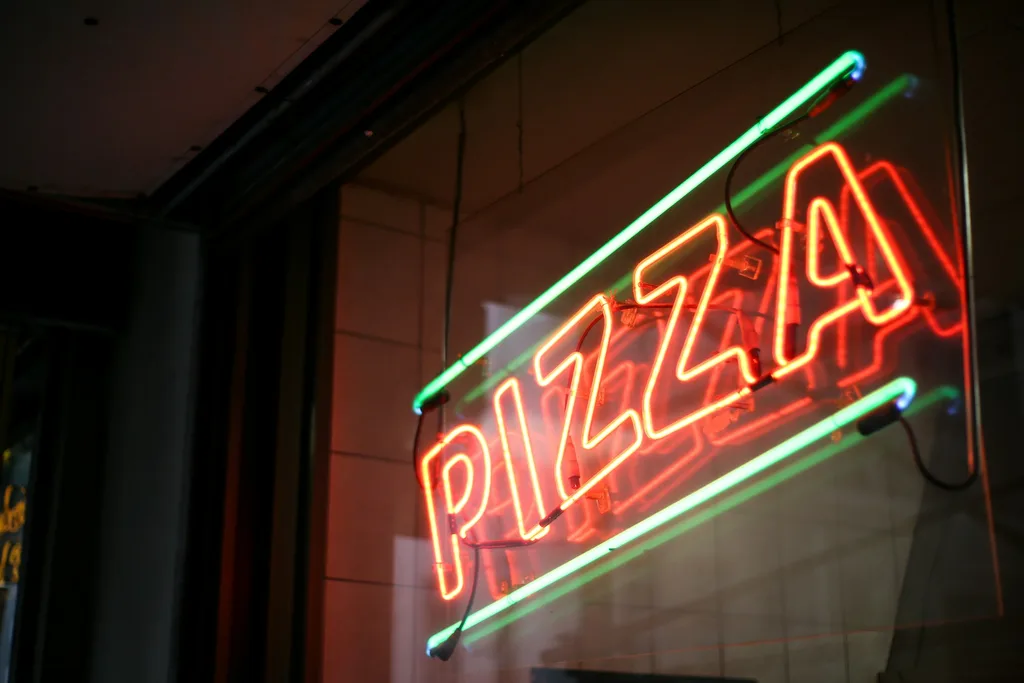
Day-to-day use of a window neon
After the sign is up, three habits keep it earning its place on the glass.
- Leave it on after close. Late walkers and early commuters still see your name. Power draw stays low at laptop-charger levels. Prefer a softer night presence? Dim to 50%. Practical detail lives in our guide on leaving an LED neon on overnight.
- Clean the tube and the glass. Dust and fingerprints steal punch. Wipe silicone with a soft dry cloth and skip harsh solvents. Clean glass cuts reflections that bury the glow at midday.
- Recheck the view from the footpath. Holiday props, new product stacks or a darker awning can crowd the sign. Cross the street once a season, read your window like a stranger, then fix depth or clutter if the message softens.
Plan the hang for a quiet morning, not peak Saturday. The 3 m cable usually reaches a nearby power point, and the acrylic backing with anti-UV treatment stays clear so you are not replacing a yellowed panel two summers later.
LED neon or glass for a shop window
Glass neon still has a classic look, but a working shopfront is hard on fragile tubes. Glass breaks in shipping and during routine cleaning. It runs hotter and needs high-voltage gear most shops do not want near staff or customers.
LED neon built as a silicone tube on an acrylic backboard fits window use better for most businesses. Helioneon pieces run on 12 V low-voltage power, carry a rated life around 100,000 hours, ship with a 3-year warranty and a 3 m cable, and hang in about 3 minutes. More than 500 neons have gone out on that setup, with delivery in 7 to 10 days after mockup approval.
If you want the full side-by-side on glow, heat, upkeep and safety, read glass neon vs LED neon. For a window the short read is simple: LED keeps the glow, cuts running cost and survives the daily wipe-down when someone cleans the glass each morning.
What your display window is really for
A shop window is not just glass between you and the street. The Wikipedia page Display window defines it as a street-facing window used to show goods and draw people into the store. Your neon does that same job with light you control: it stays readable when print goes dull, and it keeps working after dark when an unlit facade disappears.
Treat the whole pane as one frame. One clear message, open glass around it, and a quiet backdrop beat a collage of posters fighting the tube. If your trade is coffee, cuts, plates or product you can point at, a simple icon with your name often lands faster than a long slogan. Pedestrians give you a glance; one cue is enough.
Sketch the full window before you lock the design, then place the neon inside that sketch. A free 3D mockup shows scale against the glass so you are not guessing from a product photo. A custom neon sign cut to your wording and size keeps the frame honest instead of forcing a stock shape into a space that fights it.
FAQ: shop window neon signs
Do neon signs actually attract customers?
Yes. Emitted light captures peripheral vision far better than printed signage, especially after dark, when an unlit shopfront effectively vanishes. A glowing name or "open" sign answers a passer-by's questions in the two seconds they give your window.
How big should a shop window neon sign be?
Size letters at 10 to 15 cm tall minimum for legibility from across the street, and scale the overall piece to fill roughly a third of the window's width. Bigger suits car-traffic streets; a free 3D mockup helps you judge proportions first.
Should I leave my window sign on overnight?
Generally yes. Overnight glow advertises to everyone who passes, costs cents in electricity and doesn't meaningfully dent a 100,000-hour rated lifespan. Dim it to 50% after closing if you want a softer presence or neighbours above the shop.
Can a neon sign face direct sunlight?
Yes. The silicone tube handles sun exposure, and Helioneon's acrylic backing is anti-UV treated so it won't yellow, a common failure of cheap PVC backings. Expect the glow to read more softly at midday, then dominate from dusk onwards.
What's better for a window: an "open" sign or a logo?
A logo builds brand recall and earns photos; an "open" sign converts immediate foot traffic. If you can only hang one, choose the logo for destination businesses and "open" for impulse trades like takeout counters. Many shops eventually run both, in separate window zones.
Your custom neon, designed for free in 24 h
- Describe your ideaA text, a logo or a simple sketch. It takes one minute.
- Get your mockup and priceWithin 24 h by email, no commitment.
- Approve, we make itFree express delivery in 7 to 10 days, set up in 3 minutes.
- Mockup and price within 24 h, no commitment
- Free express delivery, received in 7 to 10 days
- 3-year warranty, set up in 3 minutes
Get your free mockup

Guillaume Schlupp
Founder of Helioneon
Over 10 years of entrepreneurship in premium interior design. 500+ LED neons delivered across 13 countries under Helioneon and Light Genius. Leads product strategy, design and professional accounts.