Incandescent light bulb: how it works, where it comes from and why it disappeared

- An incandescent light bulb works by heating a tungsten filament above 2,500 °C to emit light. It was invented around 1879 by Edison and Swan and disappeared because about 95% of its energy turns into heat.
- This guide covers the science of incandescence, its history, the Australian phase-out, and how it compares to LED and neon options.
An incandescent light bulb produces light by heating a tungsten filament to more than 2,500 °C with electric current. It gives a warm and pleasant light, but wastes most of its energy as heat. That is why Australia restricted the import of inefficient incandescent bulbs from 2009 under minimum energy performance standards. At Helioneon, its golden white remains the reference when we set the warm white of a custom neon sign.
For more than a century, the incandescent light bulb lit homes, businesses and streets. Understanding how it works helps choose what replaces it today, from halogen to LED, and to compare powers and atmospheres correctly. With more than 500 neon signs delivered, we often answer this question: "does my neon light as much as a 40 W bulb?". This guide covers it.
What is incandescence?
Incandescence is the emission of light by a body heated to a very high temperature. The hotter an object is, the more visible light it emits, and its colour shifts from dark red to orange, then yellow and white.
It is the same phenomenon that makes embers glow, molten metal shine or a candle flame light up, thanks to soot particles brought to high temperature. A classic bulb applies this principle in a controlled way, with a very thin metal wire heated by electricity.
- Dark red: around 500 to 700 °C, like a hot plate
- Orange: around 1,000 °C, like hot embers
- Yellow and warm white: above 2,000 °C, like the filament of a bulb
- Bright white: over 5,000 °C, like the surface of the Sun
This link between temperature and colour gave its name to a well-known unit in lighting: the kelvin. When we say a light is at 2,700 K, we compare it to the colour of a body heated to that temperature. Our guide warm white vs cool white neon explains how to use this scale.
How does an incandescent light bulb work?
In this type of lamp, the electric current passes through a very thin tungsten filament, which resists the passage of electrons. This resistance heats it to about 2,500 to 2,700 °C, a temperature at which it emits visible light.
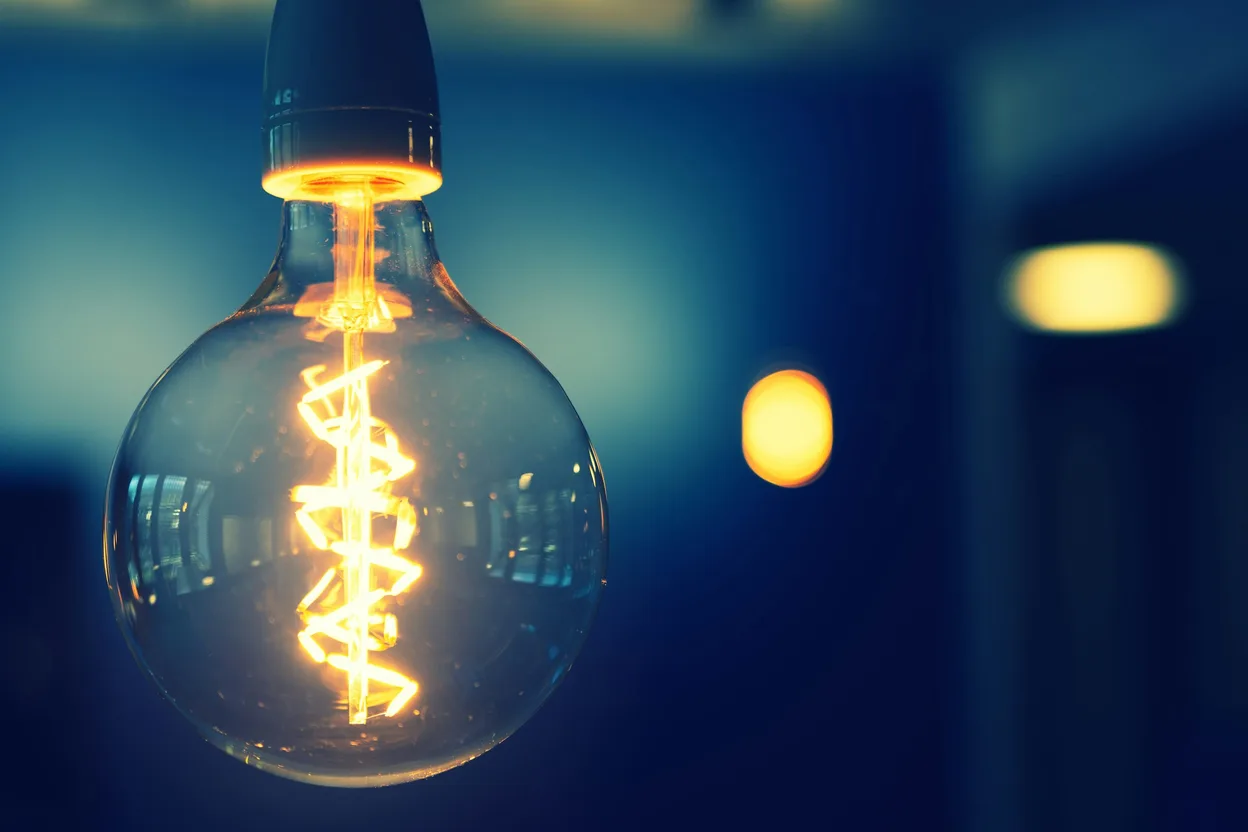
The filament is enclosed in a glass bulb filled with an inert gas, such as argon or nitrogen, or placed under vacuum. Without this protection, the tungsten would burn instantly on contact with the oxygen in the air. The gas also slows the evaporation of the metal, which extends the life of the lamp.
- Base: the metal part that screws or snaps in, E27, E14 or B22
- Filament: a tungsten wire coiled in a spiral, sometimes double spiral
- Bulb: the glass envelope, clear or frosted
- Fill gas: argon, nitrogen or krypton, which protects the filament
Over the hours, the tungsten evaporates little by little and deposits on the glass, which darkens slightly. The filament thins, until the day it breaks, often at the moment of lighting, when the current surge is strongest. A classic lamp lasted on average around 1 000 hours.
A technical detail also explains the fragility of these bulbs. When cold, tungsten has an electrical resistance about 10 to 15 times lower than when hot. At the moment the switch is pressed, a current peak therefore crosses the filament for a fraction of a second, which wears the metal at each lighting. That is why one often heard a small "clack" at the precise moment the bulb burned out. Halogen lamps improved things thanks to a chemical cycle that redeposits part of the evaporated tungsten on the filament, without eliminating the heat problem.
Who invented the incandescent light bulb?
It does not have a single inventor: several researchers worked on it in the 19th century, but Thomas Edison in the United States and Joseph Swan in England developed, around 1879, the first reliable and marketable versions, with a carbon filament.
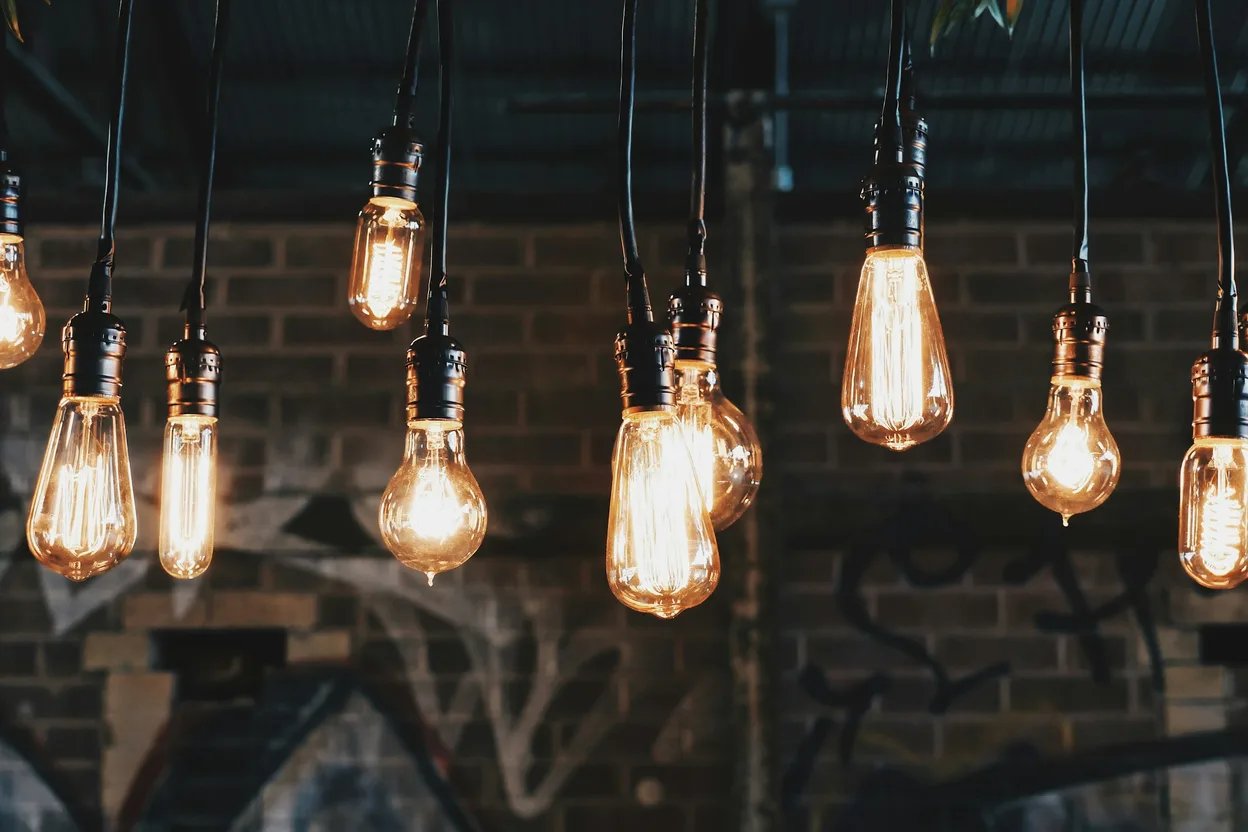
Edison especially had the idea of thinking of a complete system: the lamp, but also electricity production, cables, metres and switches. That is what allowed the electrification of cities from the 1880s. The carbon filament was then replaced by tungsten at the beginning of the 20th century, much more resistant.
- Around 1879: first reliable carbon filament lamps, by Swan and Edison
- 1880s: first power plants and city lighting
- Beginning of the 20th century: switch to tungsten filament
- 1950s-1960s: appearance of halogen lamps, a more efficient variant
Neon arrived almost at the same time: Georges Claude presented his first neon tubes in Paris in 1910, before luminous signs conquered the cities. Two very different technologies, one that heats a filament, the other that excites a gas. Our article on the glass neon vs LED neon tells the rest.
Why were incandescent light bulbs banned?
These bulbs had their import restricted in Australia because they waste energy: about 95% of the electricity consumed turns into heat, and only about 5% becomes visible light. Minimum energy performance standards led to their removal from the market from 2009.
Inefficient incandescent bulbs were restricted under minimum energy performance standards. Further restrictions on other lamp types followed according to the applicable regulation, including where mercury content was a factor.
- Efficiency: 10 to 15 lumens per watt, against more than 100 for many LEDs
- Lifespan: about 1 000 hours, against 15 000 to 50 000 hours for an LED
- Heat: a 60 W bulb becomes burning hot in a few minutes
- Usage cost: for equal light, it consumes 5 to 8 times more than an LED
The restriction only concerns placing on the market. It remains possible to use already purchased bulbs, and certain special lamps, like those for ovens or signalling devices, benefit from exceptions according to the applicable regulation. The "filament" bulbs sold today are, in their great majority, LEDs that imitate the appearance of the filament.
Incandescent light bulb, halogen, fluorescent, LED or neon: what are the differences?
Incandescence, halogen, fluorescent tube, LED and neon all produce light, but by different processes: a heated filament, an excited gas or an electronic diode. These processes explain the differences in consumption, heat, lifespan and colour.
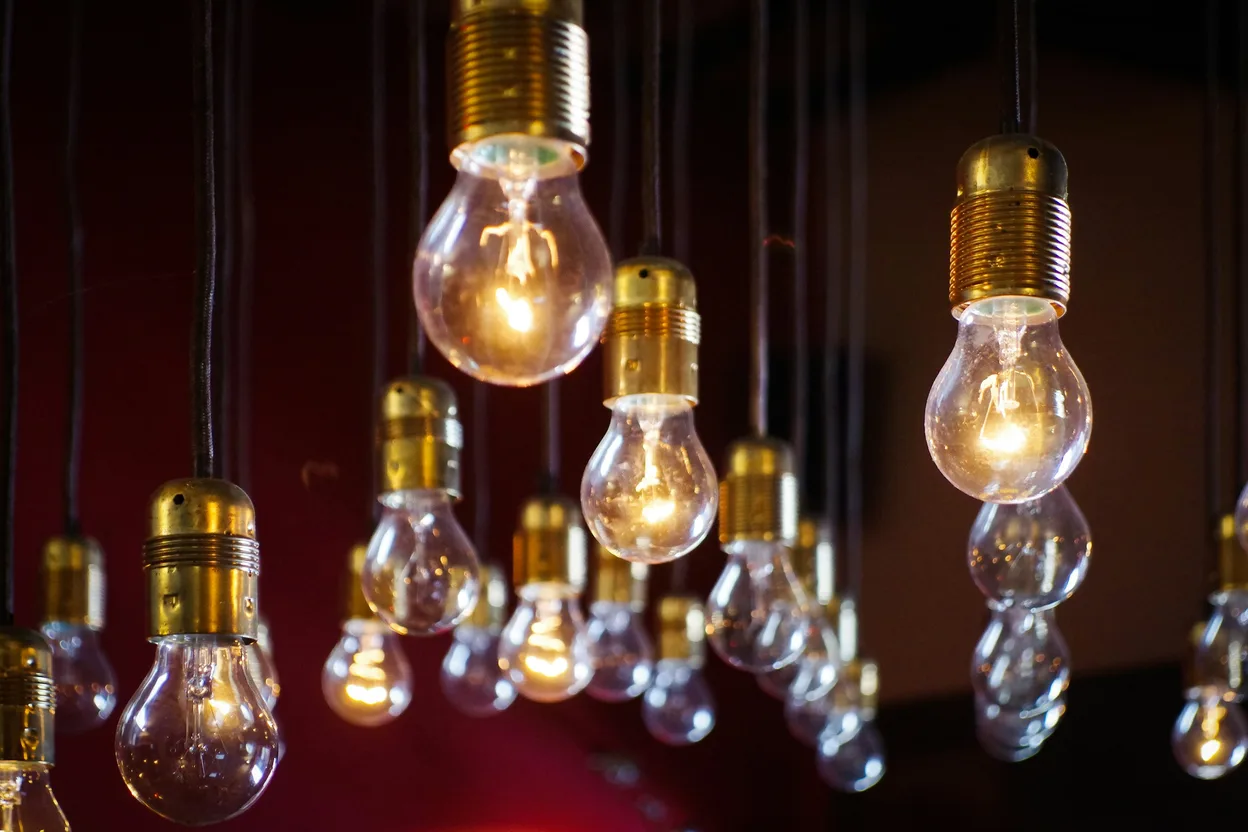
| Light source | Principle | Indicative lifespan | Heat released |
|---|---|---|---|
| Helioneon LED neon | 12V LED in a silicone tube | About 100 000 hours | Cold to the touch |
| Incandescent light bulb | Heated tungsten filament | About 1 000 hours | Very strong |
| Halogen lamp | Filament and halogen gas | 2 000 to 4 000 hours | Very strong |
| Fluorescent tube | Mercury vapor and fluorescent powder | 10 000 to 20 000 hours | Moderate |
| LED bulb | Electroluminescent diode | 15 000 to 50 000 hours | Low |
To compare the light produced, one must reason in lumens and not in watts. An old 60 W bulb produced about 700 to 800 lumens; an LED does the same with 7 to 9 W. Our lumen to watt equivalence chart gives all the correspondences.
- To light a room: LED bulbs, in lumens adapted to the surface
- For a warm atmosphere: LED or neon in warm white, around 2,500 to 2,700 K
- For a luminous decor: LED neon, which draws a line or a word
- For a vintage use: filament LED bulbs, which imitate incandescence
Why do we still love the light of incandescence?
We love the light of incandescence because it is warm, around 2,700 K, it renders colours very faithfully, with a colour rendering index close to 100, and it decreases becoming more orange when dimmed, like a flame.
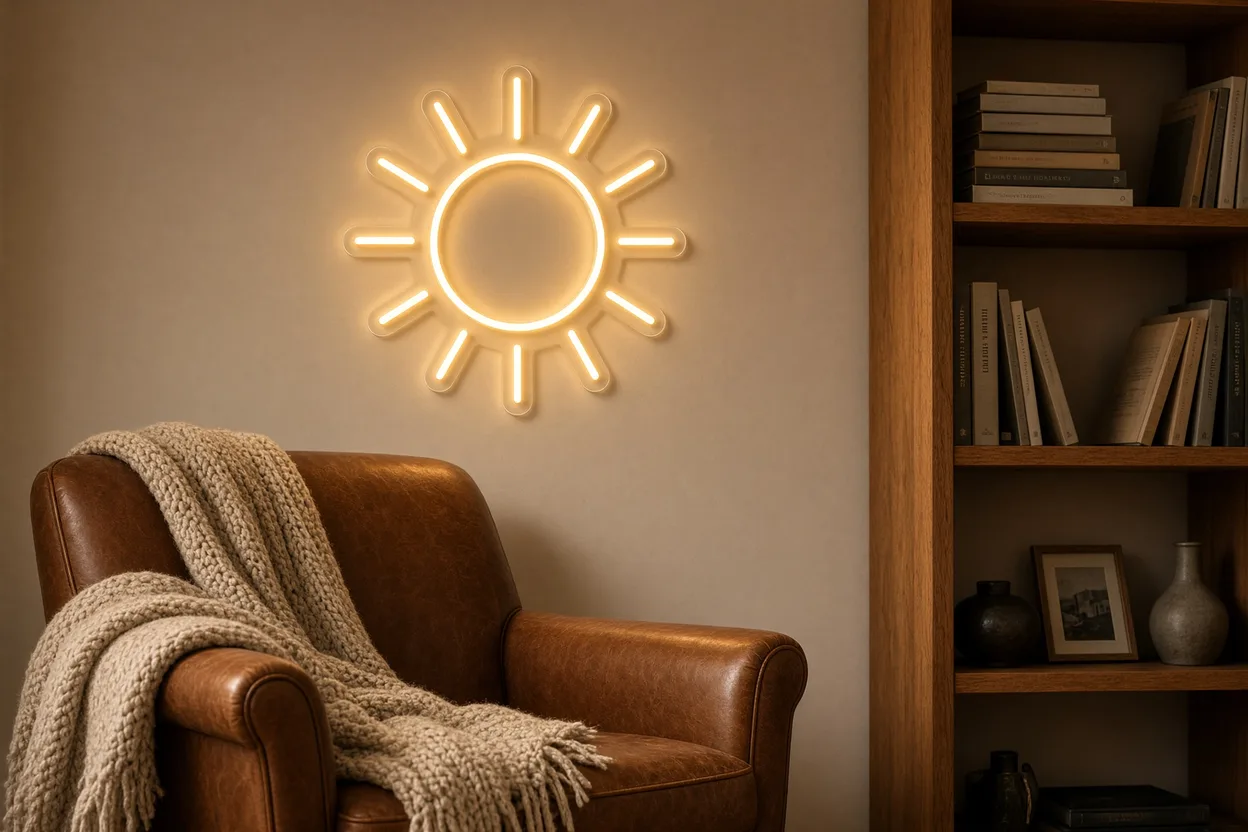
This rendering shaped our idea of the "cosy" atmosphere for generations. LED manufacturers have long sought to reproduce it, with high colour rendering LEDs and models that warm up when their intensity is lowered. Filament LED bulbs have also brought back the look of Edison bulbs in cafes and restaurants.
- Colour temperature: warm white, close to candle light
- Colour rendering: excellent, skin tones and materials appear natural
- Dimming: the light becomes more orange when lowered
- Aesthetics: the visible filament has become a decorative object
A warm white LED neon recaptures part of this atmosphere without the heat or the consumption. At Helioneon, our warm white is set around 2,500 K, slightly more golden than a classic bulb, for an atmosphere close to incandescence.
Replacing an incandescent light bulb today: what to choose?
To replace an incandescent light bulb, choose an LED bulb of the same base, with an equivalent luminous flux in lumens and a colour temperature of 2,700 K to regain a warm atmosphere. For decor, an LED neon or a filament LED bulb brings the visual charm in addition.
- Check the base: E27, E14, B22 or GU10 according to the socket
- Compare in lumens: about 806 lumens to replace an old 60 W
- Choose the shade: 2,700 K for a living room, 3,000 K for a kitchen
- Check dimmer compatibility: not all LEDs dim
For decorative lights, the savings are even clearer. A Helioneon LED neon consumes from 8 to 15 W per metre, roughly what a single small classic bulb consumed to light a bedside lamp. Our article on LED neon sign power consumption details the real annual cost.
Finally think about recycling. Old classic and halogen bulbs do not contain mercury and can join the non-recyclable glass of household waste according to local instructions, while LEDs and fluorescent lamps must be dropped off at dedicated collection points.
Frequently asked questions about the incandescent light bulb
What is the principle of the incandescent light bulb?
An incandescent light bulb produces light by passing electric current through a very thin tungsten filament. The filament, which resists the passage of the current, heats up to about 2,500 to 2,700 °C and becomes luminous. It is protected by a glass bulb filled with inert gas or placed under vacuum, otherwise it would burn instantly on contact with the air.
Why do we no longer use incandescent light bulbs?
Because they waste energy: about 95% of the electricity consumed is transformed into heat, and only about 5% into light. Australia therefore restricted the import of inefficient incandescent bulbs from 2009 under minimum energy performance standards. LEDs offer the same light while consuming 5 to 8 times less and last much longer.
What is the difference between an incandescent light bulb and an LED bulb?
The first heats a filament to produce light, while the LED uses an electronic component that emits light almost without heat. Result: an LED consumes 5 to 8 times less for the same amount of light and lasts 15 000 to 50 000 hours, against about 1 000 hours for an incandescent. Current LEDs also reproduce warm white very well.
Who invented the incandescent light bulb?
Several inventors worked on it in the 19th century, but it was Thomas Edison in the United States and Joseph Swan in England who developed, around 1879, the first reliable incandescent light bulbs, with a carbon filament. Edison also developed the entire electrical distribution system that allowed their spread. The tungsten filament established itself at the beginning of the 20th century.
Does an LED neon light as much as an incandescent light bulb?
It is not the same use. An LED neon is first a decorative light, which draws a line, a word or a logo and creates an atmosphere, while a bulb serves to light a room. An LED neon consumes from 8 to 15 W per metre and can complement the main lighting, but it does not replace a ceiling light for reading or cooking.
The incandescent light bulb lit the world for more than a century thanks to a simple principle, a white-hot filament, before giving way to much more sober technologies. Its warm white remains a reference nonetheless. To find this atmosphere in a living room, a bedroom or a business with economical decorative light, start your project via our contact page and receive a free 3D mockup within 24 h. For the detailed history, the Wikipedia article on the incandescent light bulb is a good starting point.
Your custom neon, designed for free in 24 h
- Describe your ideaA text, a logo or a simple sketch. It takes one minute.
- Get your mockup and priceWithin 24 h by email, no commitment.
- Approve, we make itFree express delivery in 7 to 10 days, set up in 3 minutes.
- Mockup and price within 24 h, no commitment
- Free express delivery, received in 7 to 10 days
- 3-year warranty, set up in 3 minutes
Get your free mockup

Guillaume Schlupp
Founder of Helioneon
Over 10 years of entrepreneurship in premium interior design. 500+ LED neons delivered across 13 countries under Helioneon and Light Genius. Leads product strategy, design and professional accounts.